LEE MILLER – Tate Britain – October 2, 2025 | February 15, 2026
LEE MILLER
This autumn, Tate Britain will present the UK’s largest retrospective of photographer Lee Miller. Spanning the full breadth of Miller’s multifaceted practice, from her participation in French surrealism to her war reportage, the exhibition will reveal how her innovative and fearless approach pushed the boundaries of photography, producing some of the most iconic images of the modern era. Around 230 vintage and contemporary prints, including works on display for the first time, will be presented alongside unseen archival material and ephemera, shining a light on the richness of her photographic legacy.
Miller was born in 1907 in Poughkeepsie, New York State. She initially studied painting and stage design, but her time as a professional model inspired her to pursue photography. Tate Britain’s exhibition will trace her journey from modelling in New York, where she was photographed by celebrated figures like Cecil Beaton and Edward Steichen, to working behind the lens in Paris where she moved in 1929. There she began working with Man Ray, combining surrealist ideas with technical experimentation in a period of explosive creative exchange. Together they discovered solarisation, in which reversed halo-like effects are created through exposure to light during processing, exemplified by the newly discovered Sirène (Nimet Eloui Bey) c.1930-32. Alongside her work with Man Ray, Miller also apprenticed at French Vogue, established her own commercial photographic studio and starred in Jean Cocteau’s groundbreaking surrealist film Le Sang d’un poète 1930, extracts of which will be shown in the exhibition.
By the early 1930s, Miller was fully enmeshed within Paris’s avant-garde circles. Turning her lens to the city’s streets, she created a series of photographs capturing the surreal in the everyday: an early example shows a web of semi-congealed tar oozing across the pavement towards a pair of anonymous feet. Through crops, disorienting angles and reflections, Miller reimagined familiar Parisian sights ranging from Notre Dame Cathedral to a Guerlain shop window. Returning to New York in 1932, she set up Lee Miller Studios Inc. and opened her first solo exhibition. In both the United States and Europe, Miller exhibited regularly alongside fellow pioneers of modern photography, and her work was published in numerous artistic journals and magazines. Moving to Cairo in 1934, she continued to use her camera as a tool of exploration. Tate Britain will present her celebrated surrealist image of the Siwa Oasis Portrait of Space 1937, alongside depictions of contemporary Cairo, the Egyptian desert, and travels across rural Syria and Romania, some of which have never previously been exhibited. By this point in her career, Miller had a sprawling transnational network of friends, and the show will present her playful portraits of artists, writers, actors and filmmakers, including Charlie Chaplin and Leonora Carrington.
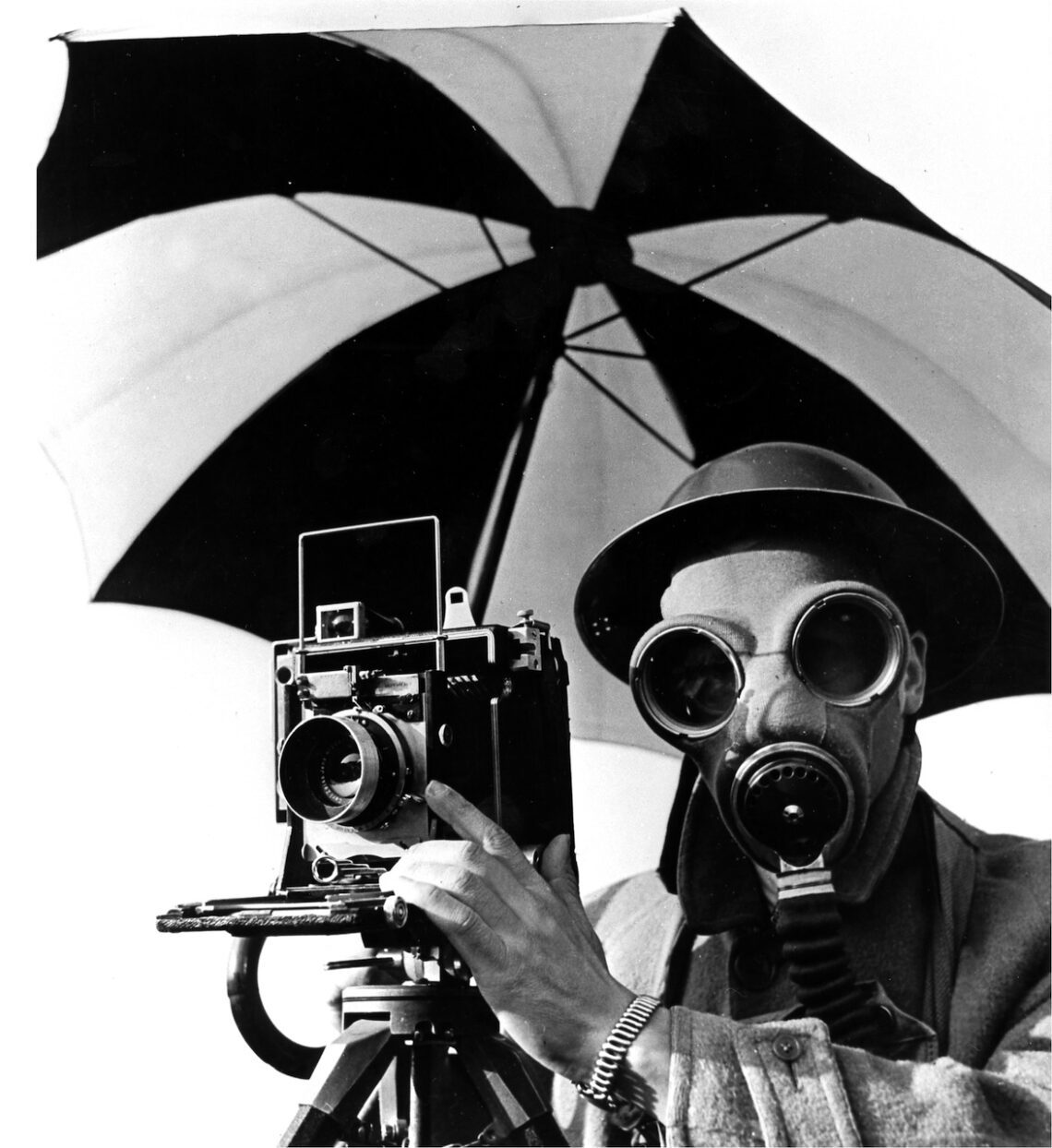
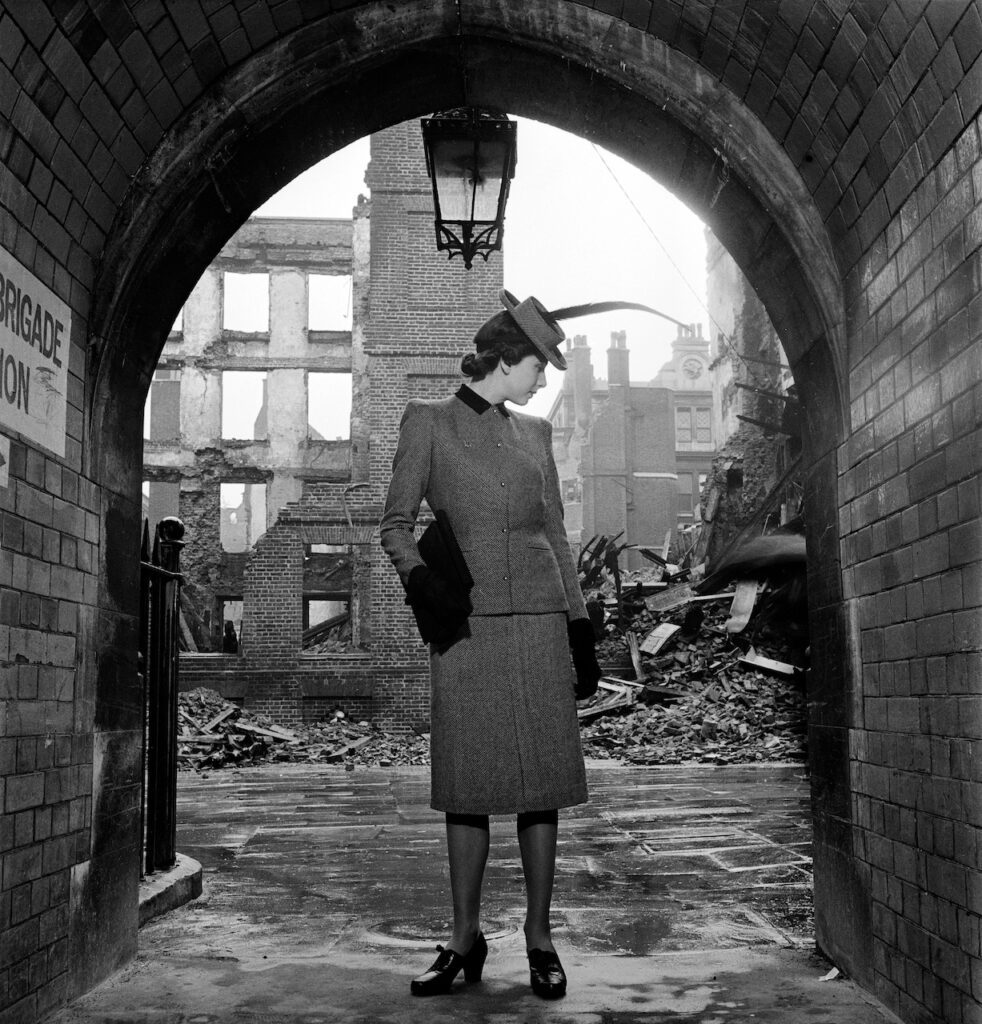
Miller moved to London in 1939 at the outbreak of war and quickly became a leading fashion photographer for British Vogue. Presented alongside original magazines and archival material, the exhibition will showcase her inventive body of work made in Blitz-torn London. Works such as You will not lunch in Charlotte Street today 1940, and Fire Masks 1941, convey the pathos and absurdity of the city in wartime. Miller went on to become one of the few accredited female war correspondents, documenting not only women’s contributions on the home front, but also harrowing scenes from the front line, as well as the devastation and deprivation in post-liberation communities across France, Germany, Luxembourg, Belgium, Denmark, Austria, Hungary and Romania. Presented in dialogue with extracts from her vivid first-person essays, published in British and American Vogue, these photographs probe the brutal realities of war and its aftermath. The show will also include the portraits of Miller and David E. Scherman in Hitler’s private bath in April 1945. A radical performative gesture staged directly after the pair returned from photographing the Dachau concentration camp, these are considered to be some of the most extraordinary images of the 20th century.
In the years after 1945, Miller remained deeply engaged with an international circle of artist friends. From Isamu Noguchi in New York and Dorothea Tanning in Arizona, to Henry Moore and Jean Dubuffet visiting Farley Farm, Miller’s home in Sussex, these portraits were her most powerful post-war works. Before leaving the exhibition, visitors will see a rare 1950 self-portrait showing Miller posed precariously on a ladder between two mirrors in Oskar Kokoschka’s London studio. Looking directly into her camera lens, flanked by artworks, she captures herself as an artist among artists.
Please support us
TheAppWhisperer has always had a dual mission: to promote the most talented mobile artists of the day and to support ambitious, interested viewers worldwide. As the years pass, TheAppWhisperer has gained readers and viewers and has found new venues for that exchange.
All this work thrives with the support of our community. Your support helps protect our independence, and we can keep delivering open, global promotion of mobile artists. Every contribution, however big or small, is valuable for our future.

Joanne Carter
Joanne Carter is a British photographer, photography journalist, editor and curator and the founder and editorial director of TheAppWhisperer.com, an independent international photography publication established in 2009.Her journalism, criticism and commentary have appeared in The Times, The Sunday Times, The Guardian, Financial Times, BBC, Vogue Italia, LensCulture, Popular Photography, Android Magazine, NikonPro, DPReview, Which Digital Camera and Which Camera. She has lectured internationally on photography and mobile art, served as a juror for international photography awards, and exhibited her own photographic work across the UK, Europe, South Korea and the United States.Alongside her editorial work, Joanne's photographic and postgraduate research explores death, grief, memory, representation and social inequality through contemporary photography, participatory practice and visual research methods, with the longer-term aim of developing this work through doctoral research.Through TheAppWhisperer, she continues to publish independent photography journalism spanning contemporary photographic practice, mobile imaging, photographic apps, computational photography and emerging imaging technologies.Joanne is available for editorial commissions, photography projects, judging, curatorial work, speaking engagements, consultancy and selected collaborations.