Unseen Photo Fair Returns to Amsterdam with Fresh Leadership and a New Home
Unseen Photo Fair Returns to Amsterdam with Fresh Leadership and a New Home
Five years after its commercial arm collapsed into bankruptcy, Unseen Photo Fair is making a comeback in Amsterdam—this time under new leadership and at a different venue.
Launched in 2012 by Foam (the city’s photography museum), Vandejong Creative Agency, and Platform A, Unseen quickly carved out a niche as a dynamic alternative to major photography fairs like Paris Photo and Photo London. Held at a former gasworks in Westerpark, it built a strong reputation for spotlighting rising talent and offering collectors access to fresh, cutting-edge photography.
But in early 2020, the fair’s three commercial entities—Unseen International BV, Unseen Media BV, and Unseen Amsterdam BV—filed for bankruptcy, citing unsustainable costs and weak revenues. The closure left several artists unpaid, and the future of the event was in question. At the time, organisers clarified that the bankruptcy only affected the for-profit companies and not the broader Unseen brand or concept.
That same year, Fons Hof—founder and director of Art Rotterdam—acquired Unseen’s assets and began the process of rebuilding. Now stepping into the role of Unseen’s director, Hof is spearheading the fair’s relaunch.
“We’ve approached the revival as a gradual process,” Hof explains. “Rebuilding trust with galleries and stakeholders has been central. Our aim has always been to create a financially and artistically sustainable model.”
Although the new ownership wasn’t legally obligated to cover previous debts, Hof and his team made a point of settling outstanding payments owed to artists by the former management. “This was about restoring faith in the fair,” he says. “It sent a message to the photography community that we’re serious about doing things differently.”
Transparency and consistency have been key to the reboot, Hof adds. The new iteration of Unseen focuses on clear communication, timely payments, and strong collaboration with galleries and partners. Backed by the experienced Art Rotterdam team, the fair is positioning itself for long-term stability.
Unseen’s return signals a new chapter for the fair—one that aims to honour its roots while building a more resilient foundation for the future.
Unseen Returns with Expanded Vision and Bold New Venue in Amsterdam Noord
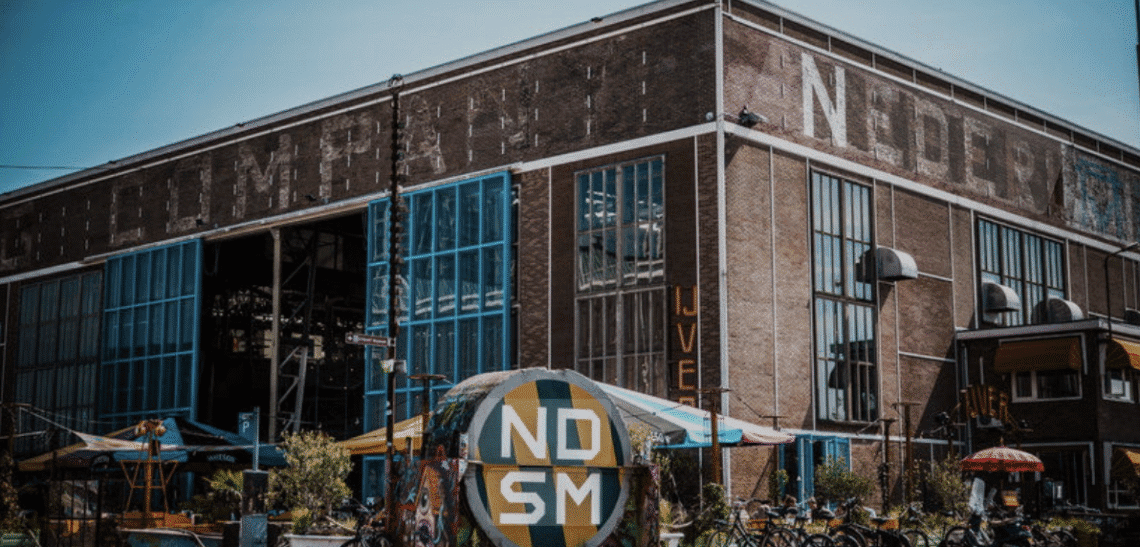
Unseen Photo Fair is reemerging with a broader artistic scope and a striking new venue. The 13th edition of the fair will run from 18 to 21 September at the NDSM Loods, a cavernous 20,000-square-metre cultural space housed in a former shipbuilding warehouse in Amsterdam Noord. “It offers more room and flexibility than ever before,” says Unseen director Fons Hof.
This year marks a significant evolution for Unseen—not just in location, but in ambition. Moving beyond a strict focus on photography, the fair will debut Unfold, a new section dedicated to contemporary art that engages with, but isn’t limited to, photographic practice. The fair will also feature five themed sections curated by leading international voices, including Susan Bright (UK), Domenico de Chirico (Italy), and Théo-Mario Coppola (France/Italy). Meanwhile, the beloved Unseen Book Market returns with 60 independent publishers, remaining free and open to the public.
A New Home with Industrial Roots
Unseen’s shift to NDSM Loods is part of a broader trend transforming Amsterdam and Rotterdam’s once-abandoned docklands into vibrant cultural quarters. Originally part of the vast Nederlandsche Dok en Scheepsbouw Maatschappij shipyard, the warehouse was a key player in 20th-century European shipbuilding before falling into disuse.
Beginning in the late 1990s, artists and collectives began reclaiming the space. Today, it’s managed by Kinetisch Noord—a foundation that grew out of that early artist-led movement. Architecture studio Jim du Pan has overseen the site’s redesign, preserving industrial features like steel beams, gantry cranes, and raw concrete floors, while adding flexible exhibition infrastructure suited to large-scale art events.
Port Cities Reimagined
Unseen’s move mirrors a wave of cultural renewal sweeping through the Dutch waterfront. In Rotterdam, the Nederlands Fotomuseum is preparing to relocate to the historic Santos warehouse in Rijnhaven. The eight-story, 19th-century landmark—one of the Netherlands’ best-preserved port buildings—is being converted into a new home for the museum’s archive of over 6.5 million images. The reopening is timed to coincide with Unseen’s September edition.
“This will be a place where photography is truly celebrated—from snapshots to fine art,” says Birgit Donker, director of the Fotomuseum.
Rotterdam will also soon welcome Fenix, a new international museum dedicated to migration and identity. Opening on 16 May in Katendrecht, the former red-light and dockworker district, Fenix occupies a restored harbour warehouse transformed by acclaimed Chinese architect Ma Yansong and his firm MAD Architects.
The museum’s first show, The Family of Migrants, takes its cue from Edward Steichen’s legendary 1955 MoMA exhibition, The Family of Man. Featuring 194 images from 55 countries—including icons like Dorothea Lange’s Migrant Mother and Steve McCurry’s Afghan Girl—the exhibition explores the universal and deeply personal stories of migration.
With this convergence of renewed spaces, expanded programming, and international vision, Unseen’s comeback is not just about revival—it’s about reinvention.
Please support us
The AppWhisperer has always had a dual mission: to promote the most talented mobile artists of the day and to support ambitious, interested viewers worldwide. As the years pass, TheAppWhisperer has gained readers and viewers and has found new venues for that exchange.
All this work thrives with the support of our community. Your support helps protect our independence, and we can keep delivering open, global promotion of mobile artists. Every contribution, no matter how big or small, is valuable for our future.

Joanne Carter
Joanne Carter is a British photographer, photography journalist, editor and curator and the founder and editorial director of TheAppWhisperer.com, an independent international photography publication established in 2009.Her journalism, criticism and commentary have appeared in The Times, The Sunday Times, The Guardian, Financial Times, BBC, Vogue Italia, LensCulture, Popular Photography, Android Magazine, NikonPro, DPReview, Which Digital Camera and Which Camera. She has lectured internationally on photography and mobile art, served as a juror for international photography awards, and exhibited her own photographic work across the UK, Europe, South Korea and the United States.Alongside her editorial work, Joanne's photographic and postgraduate research explores death, grief, memory, representation and social inequality through contemporary photography, participatory practice and visual research methods, with the longer-term aim of developing this work through doctoral research.Through TheAppWhisperer, she continues to publish independent photography journalism spanning contemporary photographic practice, mobile imaging, photographic apps, computational photography and emerging imaging technologies.Joanne is available for editorial commissions, photography projects, judging, curatorial work, speaking engagements, consultancy and selected collaborations.