Stick ‘Em Up’ – Steve Jobs Questioned in Apple iPhone 4 Scandal
Its all been very quiet the past few months regarding the police invesitgation into the saga concerning the disappearance of the ‘lost’ iPhone prototype 4 that Gizmodo netted but now it seems, according to a CNET report that police are close to wrapping it up.
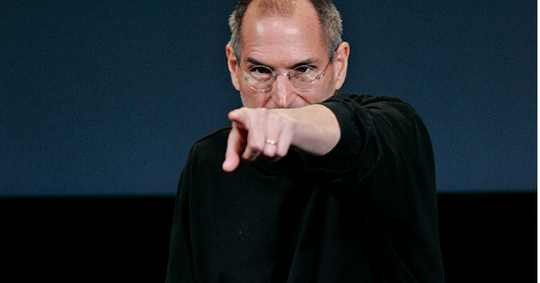
Stephen Wagstaffe, chief deputy district attorney for San Mateo County, Calif., told CNET today that police are close to wrapping up their theft investigation and could forward their final report to his office within the next few weeks. Wagstaffe will then review the information and determine whether to file criminal charges.
As part of the investigation, police interviewed a "number of Apple employees" and other people connected to the case, including Apple CEO Steve Jobs, Wagstaffe said. An Apple spokeswoman declined to comment – not surprisingly.
Information about Apple products rarely leak and it’s rarer still that the public gets a look at one of the company’s prototypes. A story about the prototype and the events that followed stirred huge interest among Apple fans.
In March 2010, an Apple employee lost contact with a prototype of the next-generation iPhone during a visit to a bar in Redwood City, Calif. A 21-year-old student, Brian Hogan, obtained the phone and later sold the handset to the tech blog Gizmodo. After Gizmodo published photos and a story on the experimental phone, Apple requested it be returned. The company later contacted the police.
Police launched a theft investigation and served a subpoena at the Fremont, Calif., home of Jason Chen, one of Gizmodo’s editors. Since then, Chen and Gawker Media, Gizmodo’s parent company, voluntarily agreed to turn over information related to the acquisition of the phone. Wagstaffe said his office has received all of that material.
Ever since police began investigating, Gizmodo has maintained that reporters there did nothing illegal by purchasing the phone. Hogan’s attorney, Jeff Bornstein, concedes his client erred in judgment but argues his client never committed any crime. Under a California law dating back to 1872, any person who finds lost property and knows who the owner is likely to be–but "appropriates such property to his own use"–is guilty of theft. In addition, a second state law says any person who knowingly receives property that has been obtained illegally can be imprisoned for up to one year.
Gizmodo has claimed that its employees did nothing wrong, at least partially claiming protection under journalist shield laws. Others, however, have pointed to California laws regarding requirements for the handling of lost property as potential cause for charges to be filed against one or more of the parties involved.

Joanne Carter
Joanne Carter is a British photography journalist, editor, curator, and the founder of *TheAppWhisperer.com*, one of the world’s leading platforms dedicated to mobile photography and art. Since its launch in 2009, TheAppWhisperer has become an international hub for artists of all levels to discover, learn, exhibit, and engage with contemporary photographic practice.Built on principles of inclusivity, accessibility, and artistic excellence, Joanne has spent almost two decades championing mobile photography as a serious artistic medium. Through interviews, critical essays, exhibitions, competitions, and education, she has helped shape and document the evolution of mobile art on a global scale.Her work has taken her internationally, lecturing on photography and mobile art at institutions and events including the Museum of Art in Seoul, South Korea, alongside appearances in the UK and Europe. She has served as a juror for international photography and mobile art awards across Portugal, Canada, the United States, South Korea, Italy, and the UK.Joanne is also the founder of *TheAppWhispererPrintSales.com*, one of the first online galleries dedicated exclusively to collectible mobile art, connecting artists with collectors across Europe, the United States, and Asia.Before founding TheAppWhisperer, Joanne worked extensively in print journalism and photographic publishing, including roles at a paparazzi photo agency and as deputy editor of a leading photography magazine. Her freelance journalism, criticism, and commentary have been published widely in both the UK and the US, with bylines in *The Times*, *The Sunday Times*, *The Guardian*, *Popular Photography*, *NikonPro*, *DPReview*, *Which?*, *Vogue Italia*, *LensCulture*, the *BBC*, and more recently, the *Financial Times*, where her published letters on photography continue to contribute to wider conversations around the medium.Alongside her editorial and curatorial work, Joanne’s own photographic practice has been exhibited internationally across the UK, Europe, South Korea, and the United States. Her work increasingly explores themes of grief, loss, death, memory, and the body.Her current research interests centre on grief, death, and poverty, with forthcoming postgraduate study leading towards doctoral research in these areas.Joanne is currently developing new long-form writing and photographic projects and is available for commissions, editorial projects, speaking engagements, and collaborations.Contact: joannetheappwhisperer@gmail.com)