
Normalising Nudity – Powerful Photo Series
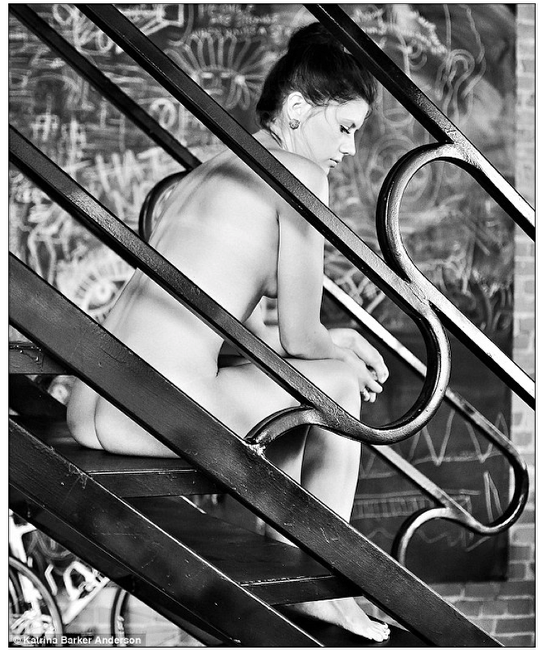
Don’t panic, I’m not about to strip off but I was intrigued by this article in the Mail Online today. A new photography project featuring naked Mormon women ‘hopes to shed light on the religion’s strict codes of modesty’. Well that’s what the blurb says and I wonder if it’s true. I think images of naked women, at least ‘natural images’ have always and will continue to be controversial in society, whatever religion has to say about it. Not that I agree, I think it’s almost a preconceived notion.
Take a look at the article and images and let me know your thoughts…

Joanne Carter
Joanne Carter is a British photography journalist, editor, curator, and the founder of *TheAppWhisperer.com*, one of the world’s leading platforms dedicated to mobile photography and art. Since its launch in 2009, TheAppWhisperer has become an international hub for artists of all levels to discover, learn, exhibit, and engage with contemporary photographic practice.Built on principles of inclusivity, accessibility, and artistic excellence, Joanne has spent almost two decades championing mobile photography as a serious artistic medium. Through interviews, critical essays, exhibitions, competitions, and education, she has helped shape and document the evolution of mobile art on a global scale.Her work has taken her internationally, lecturing on photography and mobile art at institutions and events including the Museum of Art in Seoul, South Korea, alongside appearances in the UK and Europe. She has served as a juror for international photography and mobile art awards across Portugal, Canada, the United States, South Korea, Italy, and the UK.Joanne is also the founder of *TheAppWhispererPrintSales.com*, one of the first online galleries dedicated exclusively to collectible mobile art, connecting artists with collectors across Europe, the United States, and Asia.Before founding TheAppWhisperer, Joanne worked extensively in print journalism and photographic publishing, including roles at a paparazzi photo agency and as deputy editor of a leading photography magazine. Her freelance journalism, criticism, and commentary have been published widely in both the UK and the US, with bylines in *The Times*, *The Sunday Times*, *The Guardian*, *Popular Photography*, *NikonPro*, *DPReview*, *Which?*, *Vogue Italia*, *LensCulture*, the *BBC*, and more recently, the *Financial Times*, where her published letters on photography continue to contribute to wider conversations around the medium.Alongside her editorial and curatorial work, Joanne’s own photographic practice has been exhibited internationally across the UK, Europe, South Korea, and the United States. Her work increasingly explores themes of grief, loss, death, memory, and the body.Her current research interests centre on grief, death, and poverty, with forthcoming postgraduate study leading towards doctoral research in these areas.Joanne is currently developing new long-form writing and photographic projects and is available for commissions, editorial projects, speaking engagements, and collaborations.Contact: joannetheappwhisperer@gmail.com)

2 Comments
Jennifer Sharpe
Yes indeed I agree – a woman’s body unclothed and on public display will always be controversial – particularly in societies where the only women who are publicly naked are not considered “good” women.
Ironically, I am reading Infidel by Ayaan Hirsi Ali, and there is a passage in the book where a Somali man talks about the fact that before women covered up, no one thought much of an elbow or a knee. But when they started to cover, a neck (for example)suddenly became extremely erotic. In other words, in cultures where women are clothed, and nudity outside of a private area is not normal, a state of nudity is extremely taboo and provokes the strongest primal feelings – perhaps much more than it would otherwise be in a culture where nudity is the norm. I’m referring to nudist camps here.
How does nudity work with art in clothed societies? With a lot of guts on the part of the model and artist, and an insistence to fight against charges of obscenity from people who cannot control their sexual urges very well nor separate them from what is normal, natural, and beautiful. I don’t think it’s a war that will ever be won, honestly, as we will never go back to a place where nudity for both sexes is not a big deal. We’ve had too many centuries of clothing. But that doesn’t mean that artists should give up – it’s one of the important roles of the artist to mirror back to us what we can’t see well on our own, and make us at least think about and question ourselves and our ways. Lack of clothing equalizes everyone and brings home the fact that first and foremost we are creatures of the earth like everything else (i.e. not purely spiritual beings), despite all our attempts to ignore that fact, despise it and wage war on it with every excuse in the book.
Jennifer Sharpe
*correction* – WASN’T referring to nudist camps – but ancient societies where clothing is minimal.
Sheesh editing… 🙂