Introducing Apple M1 Pro and M1 Max: the most powerful chips Apple has ever built
Introducing Apple M1 Pro and M1 Max: the most powerful chips Apple has ever built
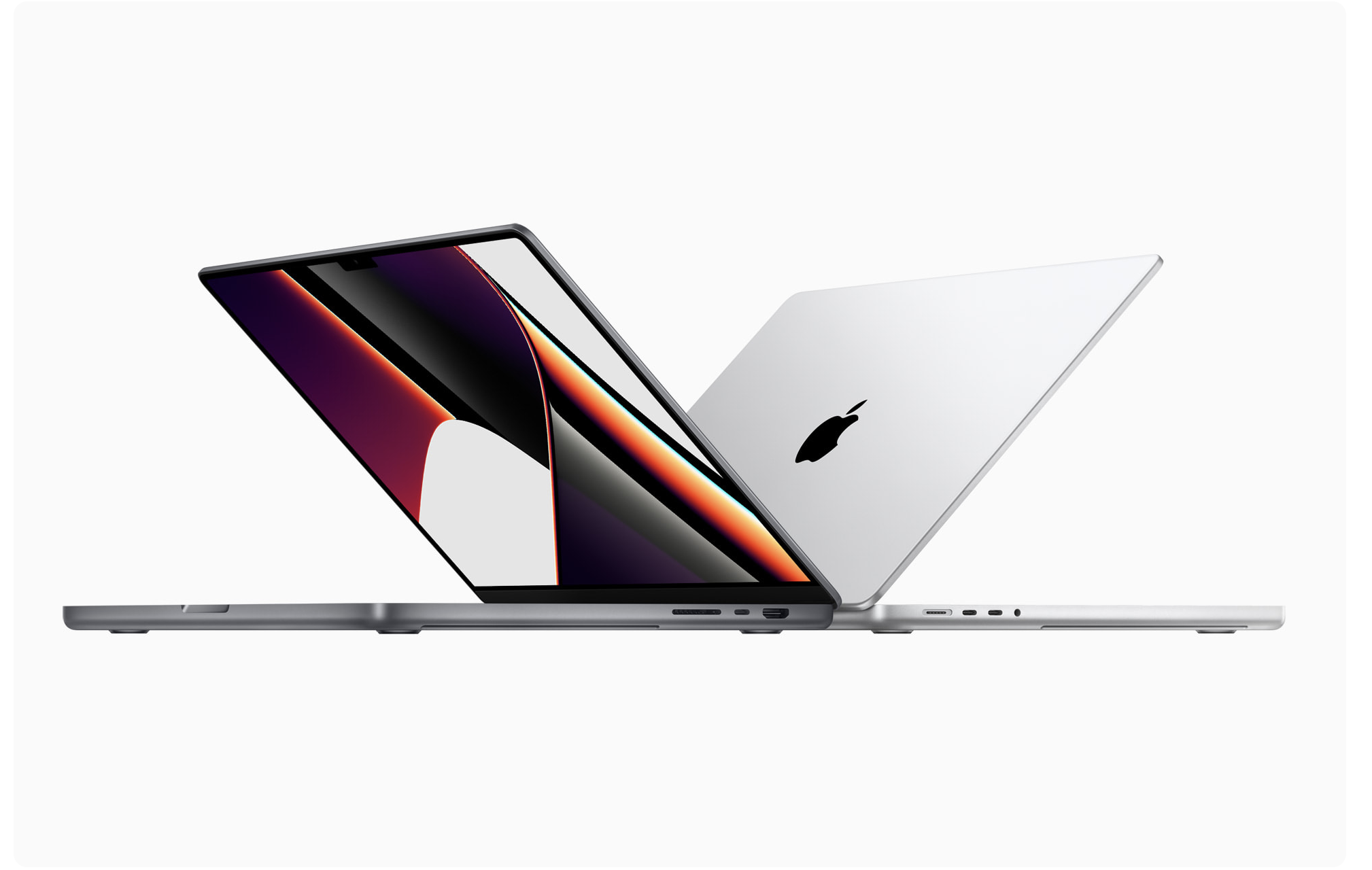
Apple have announced the M1 Pro and M1 Max, the next breakthrough chips for the Mac. Scaling up M1’s transformational architecture, M1 Pro offers amazing performance with industry-leading power efficiency, while M1 Max takes these capabilities to new heights. The CPU in M1 Pro and M1 Max delivers up to 70 percent faster CPU performance than M1, so tasks like compiling projects in Xcode are faster than ever. The GPU in M1 Pro is up to 2x faster than M1, while M1 Max is up to an astonishing 4x faster than M1, allowing pro users to fly through the most demanding graphics workflows.
M1 Pro and M1 Max introduce a system-on-a-chip (SoC) architecture to pro systems for the first time. The chips feature fast unified memory, industry-leading performance per watt, and incredible power efficiency, along with increased memory bandwidth and capacity. M1 Pro offers up to 200GB/s of memory bandwidth with support for up to 32GB of unified memory. M1 Max delivers up to 400GB/s of memory bandwidth — 2x that of M1 Pro and nearly 6x that of M1 — and support for up to 64GB of unified memory. And while the latest PC laptops top out at 16GB of graphics memory, having this huge amount of memory enables graphics-intensive workflows previously unimaginable on a notebook. The efficient architecture of M1 Pro and M1 Max means they deliver the same level of performance whether MacBook Pro is plugged in or using the battery. M1 Pro and M1 Max also feature enhanced media engines with dedicated ProRes accelerators specifically for pro video processing. M1 Pro and M1 Max are by far the most powerful chips Apple has ever built.
“M1 has transformed our most popular systems with incredible performance, custom technologies, and industry-leading power efficiency. No one has ever applied a system-on-a-chip design to a pro system until today with M1 Pro and M1 Max,” said Johny Srouji, Apple’s senior vice president of Hardware Technologies. “With massive gains in CPU and GPU performance, up to six times the memory bandwidth, a new media engine with ProRes accelerators, and other advanced technologies, M1 Pro and M1 Max take Apple silicon even further, and are unlike anything else in a pro notebook.”
M1 Pro: A Whole New Level of Performance and Capability
Utilising the industry-leading 5-nanometre process technology, M1 Pro packs in 33.7 billion transistors, more than 2x the amount in M1. A new 10-core CPU, including eight high-performance cores and two high-efficiency cores, is up to 70 percent faster than M1, resulting in unbelievable pro CPU performance. Compared with the latest 8-core PC laptop chip, M1 Pro delivers up to 1.7x more CPU performance at the same power level and achieves the PC chip’s peak performance using up to 70 percent less power.1 Even the most demanding tasks, like high-resolution photo editing, are handled with ease by M1 Pro.
M1 Pro has an up-to-16-core GPU that is up to 2x faster than M1 and up to 7x faster than the integrated graphics on the latest 8-core PC laptop chip.1 Compared to a powerful discrete GPU for PC notebooks, M1 Pro delivers more performance while using up to 70 percent less power.2 And M1 Pro can be configured with up to 32GB of fast unified memory, with up to 200GB/s of memory bandwidth, enabling creatives like 3D artists and game developers to do more on the go than ever before.
M1 Max: The World’s Most Powerful Chip for a Pro Notebook
M1 Max features the same powerful 10-core CPU as M1 Pro and adds a massive 32-core GPU for up to 4x faster graphics performance than M1. With 57 billion transistors — 70 percent more than M1 Pro and 3.5x more than M1 — M1 Max is the largest chip Apple has ever built. In addition, the GPU delivers performance comparable to a high-end GPU in a compact pro PC laptop while consuming up to 40 percent less power, and performance similar to that of the highest-end GPU in the largest PC laptops while using up to 100 watts less power.2 This means less heat is generated, fans run quietly and less often, and battery life is amazing in the new MacBook Pro. M1 Max transforms graphics-intensive workflows, including up to 13x faster complex timeline rendering in Final Cut Pro compared to the previous-generation 13-inch MacBook Pro.
M1 Max also offers a higher-bandwidth on-chip fabric, and doubles the memory interface compared with M1 Pro for up to 400GB/s, or nearly 6x the memory bandwidth of M1. This allows M1 Max to be configured with up to 64GB of fast unified memory. With its unparalleled performance, M1 Max is the most powerful chip ever built for a pro notebook.
Fast, Efficient Media Engine, Now with ProRes
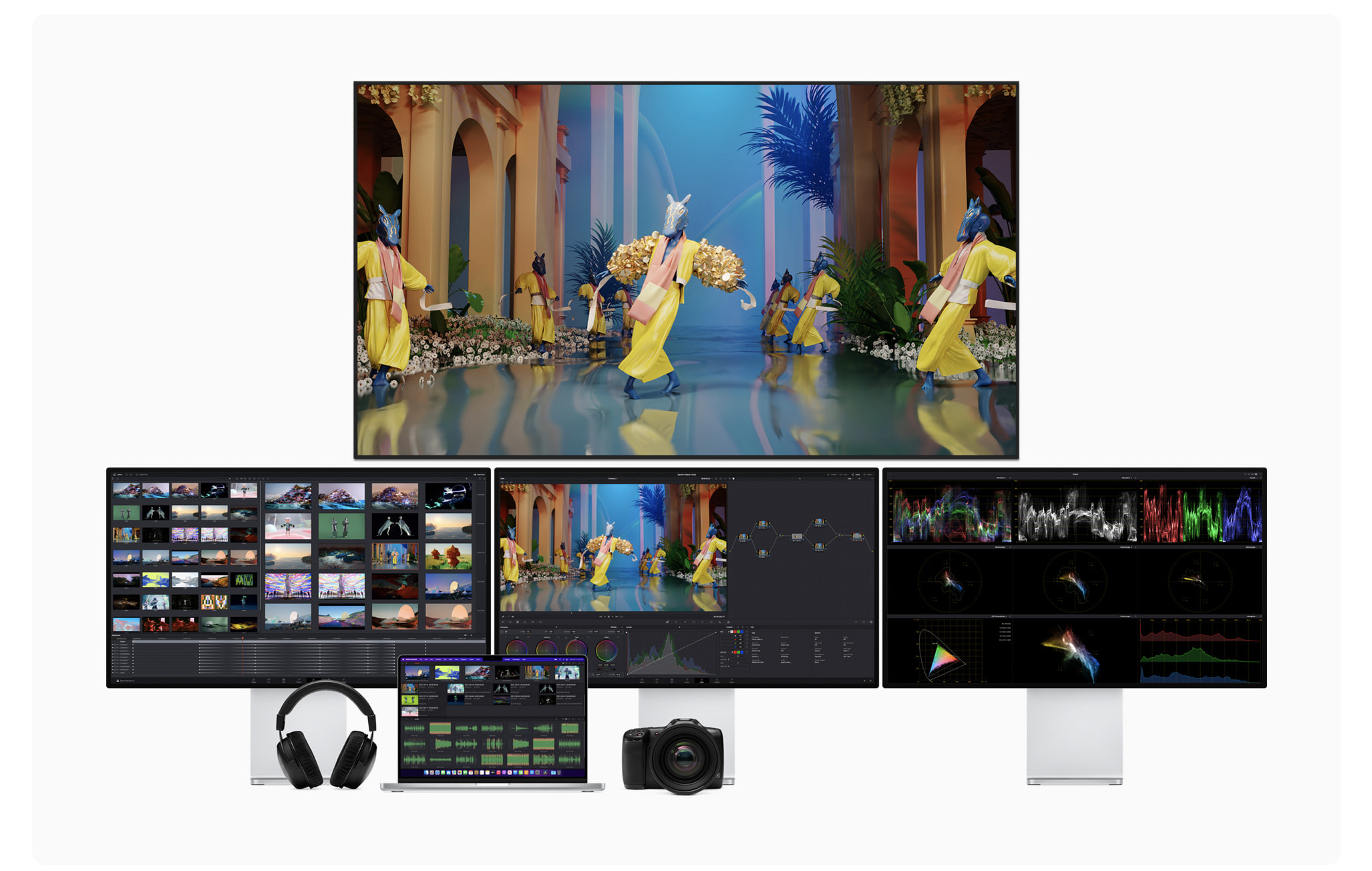
M1 Pro and M1 Max include an Apple-designed media engine that accelerates video processing while maximising battery life. M1 Pro also includes dedicated acceleration for the ProRes professional video codec, allowing playback of multiple streams of high-quality 4K and 8K ProRes video while using very little power. M1 Max goes even further, delivering up to 2x faster video encoding than M1 Pro, and features two ProRes accelerators. With M1 Max, the new MacBook Pro can transcode ProRes video in Compressor up to a remarkable 10x faster compared with the previous-generation 16-inch MacBook Pro.
Advanced Technologies for a Complete Pro System
Both M1 Pro and M1 Max are loaded with advanced custom technologies that help push pro workflows to the next level:
- A 16-core Neural Engine for on-device machine learning acceleration and improved camera performance.
- A new display engine drives multiple external displays.
- Additional integrated Thunderbolt 4 controllers provide even more I/O bandwidth.
- Apple’s custom image signal processor, along with the Neural Engine, uses computational video to enhance image quality for sharper video and more natural-looking skin tones on the built-in camera.
- Best-in-class security, including Apple’s latest Secure Enclave, hardware-verified secure boot, and runtime anti-exploitation technologies.
A Huge Step in the Transition to Apple Silicon
The Mac is now one year into its two-year transition to Apple silicon, and M1 Pro and M1 Max represent another huge step forward. These are the most powerful and capable chips Apple has ever created, and together with M1, they form a family of chips that lead the industry in performance, custom technologies, and power efficiency.
macOS and Apps Unleash the Capabilities of M1 Pro and M1 Max
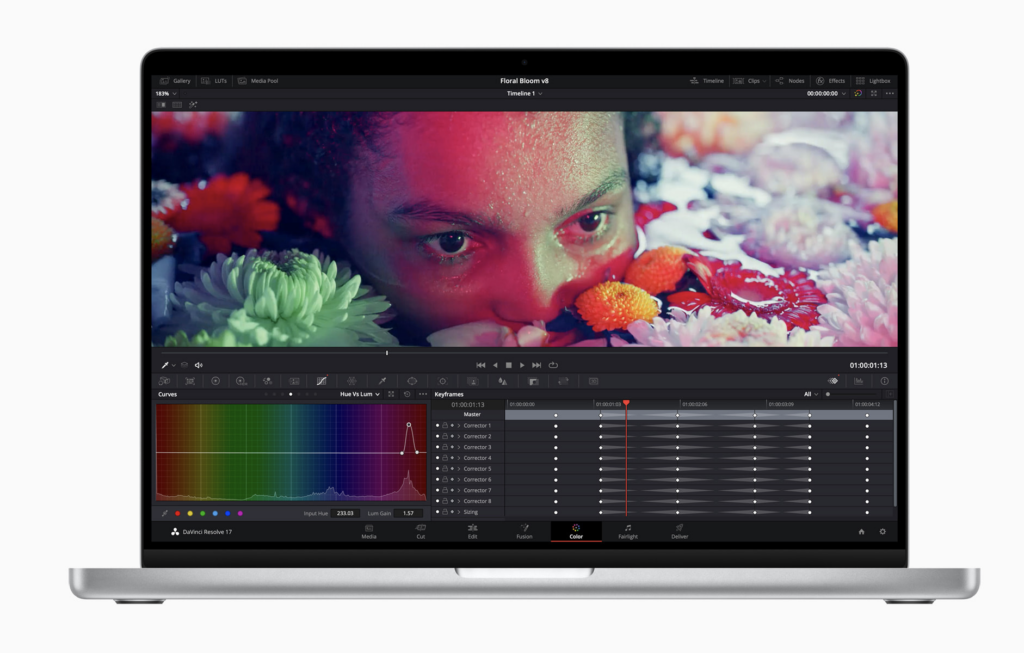
macOS Monterey is engineered to unleash the power of M1 Pro and M1 Max, delivering breakthrough performance, phenomenal pro capabilities, and incredible battery life. By designing Monterey for Apple silicon, the Mac wakes instantly from sleep, and the entire system is fast and incredibly responsive. Developer technologies like Metal let apps take full advantage of the new chips, and optimisations in Core ML utilise the powerful Neural Engine so machine learning models can run even faster. Pro app workload data is used to help optimise how macOS assigns multi-threaded tasks to the CPU cores for maximum performance, and advanced power management features intelligently allocate tasks between the performance and efficiency cores for both incredible speed and battery life.
The combination of macOS with M1, M1 Pro, or M1 Max also delivers industry-leading security protections, including hardware-verified secure boot, runtime anti-exploitation technologies, and fast, in-line encryption for files. All of Apple’s Mac apps are optimised for — and run natively on — Apple silicon, and there are over 10,000 Universal apps and plug-ins available. Existing Mac apps that have not yet been updated to Universal will run seamlessly with Apple’s Rosetta 2 technology, and users can also run iPhone and iPad apps directly on the Mac, opening a huge new universe of possibilities.
Please read…
TheAppWhisperer has always had a dual mission: to promote the most talented mobile artists of the day and to support ambitious, inquisitive viewers the world over. As the years pass TheAppWhisperer has gained readers and viewers and found new venues for that exchange. All this work thrives with the support of our community.
Please consider making a donation to TheAppWhisperer as this New Year commences because your support helps protect our independence and it means we can keep delivering the promotion of mobile artists that’s open for everyone around the world. Every contribution, however big or small, is so valuable for our future.

Joanne Carter
Joanne Carter is a British photographer, photography journalist, editor and curator and the founder and editorial director of TheAppWhisperer.com, an independent international photography publication established in 2009.Her journalism, criticism and commentary have appeared in The Times, The Sunday Times, The Guardian, Financial Times, BBC, Vogue Italia, LensCulture, Popular Photography, Android Magazine, NikonPro, DPReview, Which Digital Camera and Which Camera. She has lectured internationally on photography and mobile art, served as a juror for international photography awards, and exhibited her own photographic work across the UK, Europe, South Korea and the United States.Alongside her editorial work, Joanne's photographic and postgraduate research explores death, grief, memory, representation and social inequality through contemporary photography, participatory practice and visual research methods, with the longer-term aim of developing this work through doctoral research.Through TheAppWhisperer, she continues to publish independent photography journalism spanning contemporary photographic practice, mobile imaging, photographic apps, computational photography and emerging imaging technologies.Joanne is available for editorial commissions, photography projects, judging, curatorial work, speaking engagements, consultancy and selected collaborations.