
‘Impossible’ Tutorial – Emulsion Lifts
We’re delighted to be working closer with The Impossible Project team as we continue to branch out and expand our reach with all things related to mobile photography. Analog post-processing of mobile images is becoming more and more popular and we’re going to make sure our readers are fully briefed on this very exciting development.
The Impossible Project is in many ways leading the way, but there is also a growing community of mobile artists and photographers experimenting with other analog post processing techniques in an attempt to make their mobile images stand out even more, in galleries, magazines and the like and we have viewed some outstanding images and techniques.
A good deal of my formal photographic training (many years ago) was spent in a huge college darkroom and it is an area that I’ve always enjoyed, I think you will too. I also had a very close working relationship with Polaroid built up through my years as Technical Editor for various UK photography print magazines/titles.
Today we are publishing a wonderfully creative tutuorial demonstrating how to realize emulsion lifts, a classic technique in which film is peeled apart and the clear front panel is dipped in warm water to free the emulsion layer from the plastic. These free-floating emulsions can then be placed on various papers or other materials.
Republished with kind permission of the Impossible team.
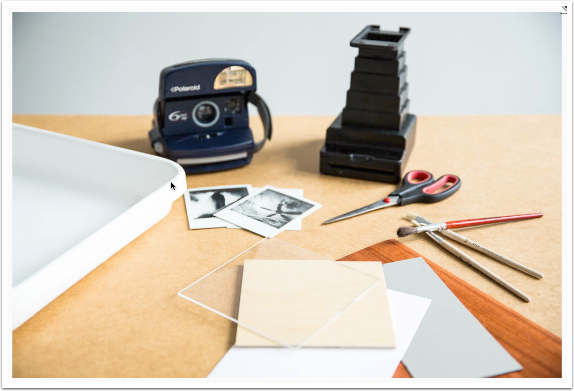
What you need
1 instant photo
1 or many soft brushes
1 pair of scissors
1 carrier surface (paper, wood, plastic, glass…)
1 bowl filled with hot water
How to do it
Step 1. Using scissors, cut the frame off your image. You will need to cut the very edges of your picture to remove the whole frame.
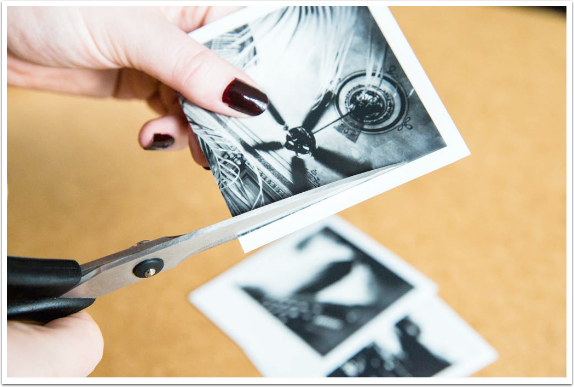
Step 2. Only keep the square photo
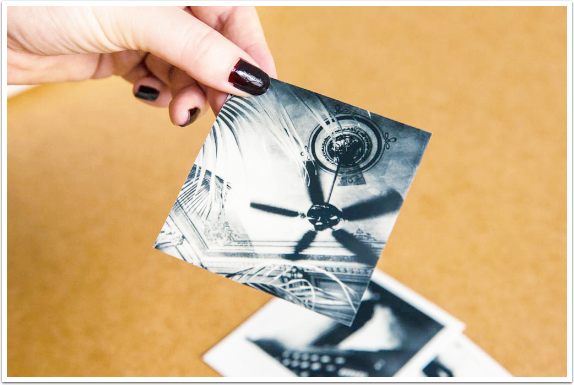
Step 3.
Plunge the image into the bowl of hot water and let it soak for
aprox. 1 minute.
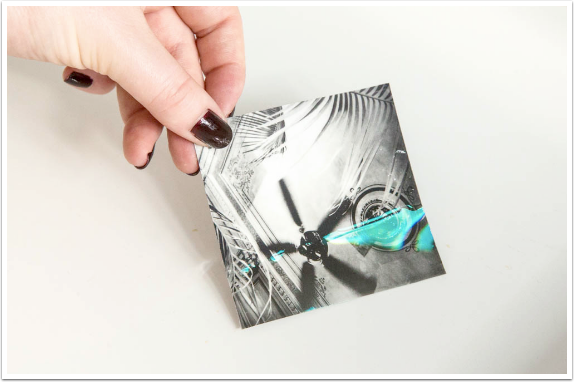
Step 4. Start in one corner of the image and peel the positive from the negative part. The two parts should peel easily. If they don’t, plunge the image into the water for 30 seconds and try again.
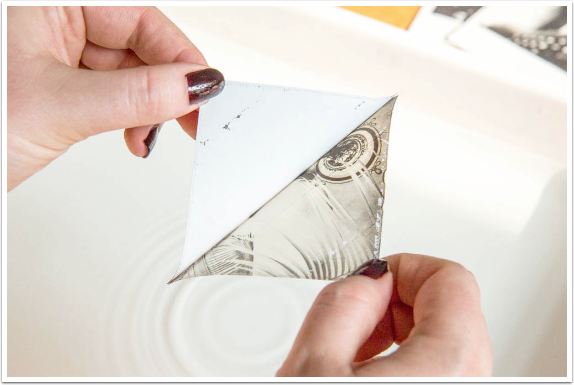
Step 5. Remove the white negative part and keep the transparent positive part.
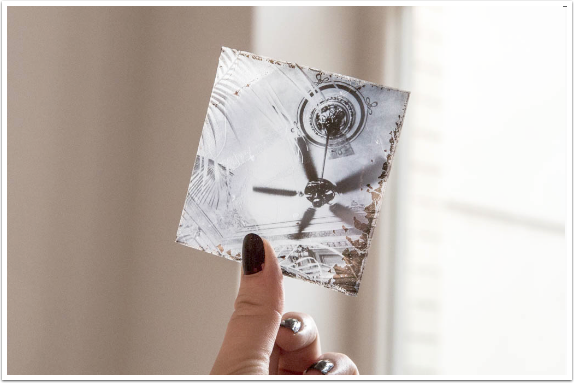
Step 6. To clean the remaining chemistry on the positive part, softly clean it in the water using a brush.
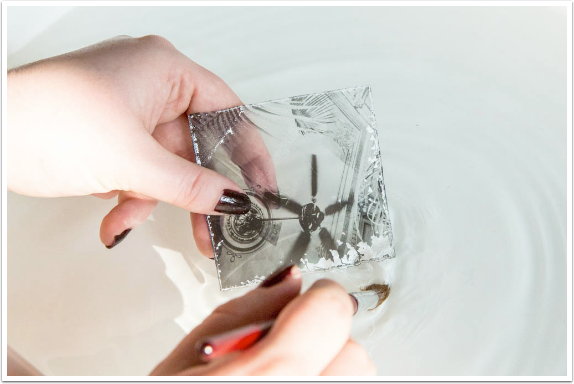
Step 7. Plunge the image into the water again for 1 or 2 minutes. Using a soft brush, remove the emulsion from the transparent foil.
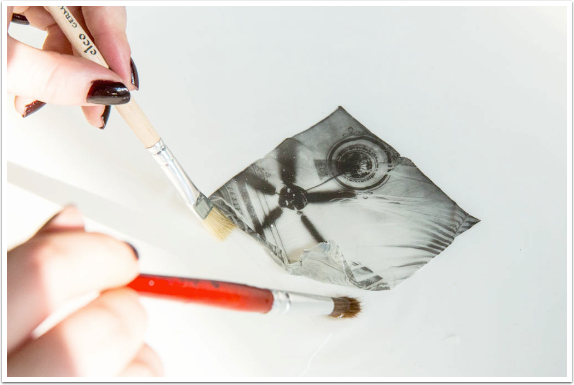
Step 8. Remove the plastic sheet and keep the emulsion in water.
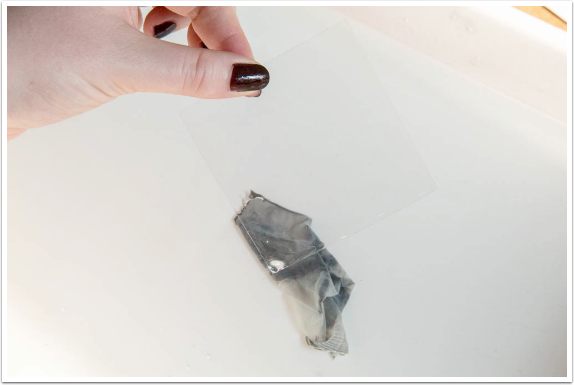
The emulsion is now free from the plastic. You can touch it and hold the image in your hand !
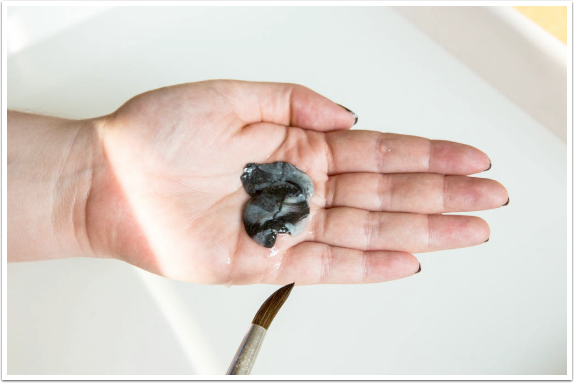
Notice that one side of the image is milky. Turn the image around so you don’t see this milky side.
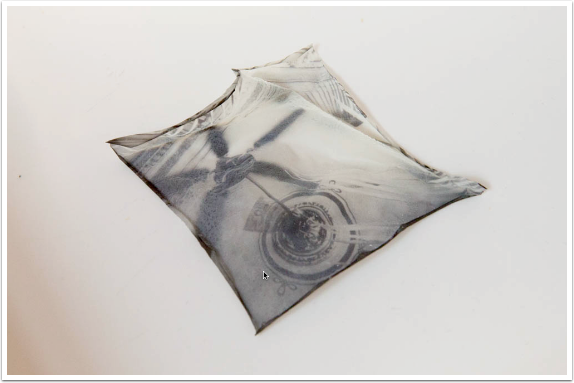
Using a brush, bring your photo back to life in water.
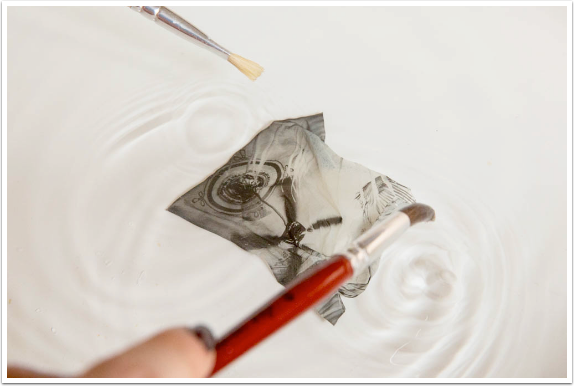
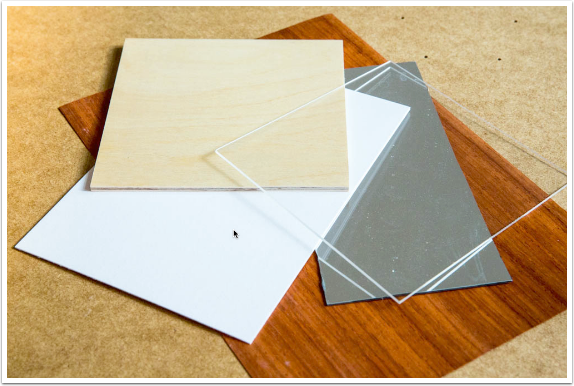
Pick a carrier surface. It can be wood, plastic, glass, paper or even a mirror!
Carefully slide the carrier surface under the emulsion.
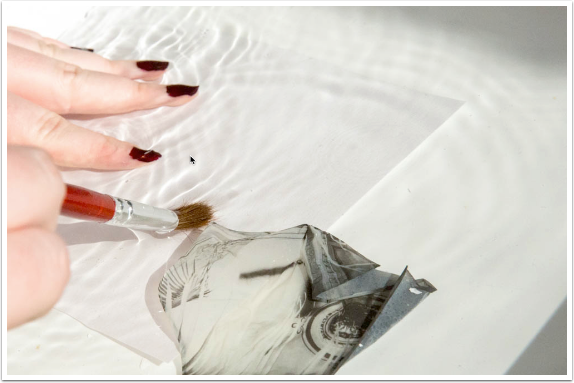
Using a brush or your fingers, position the emulsion on the carrier surface.
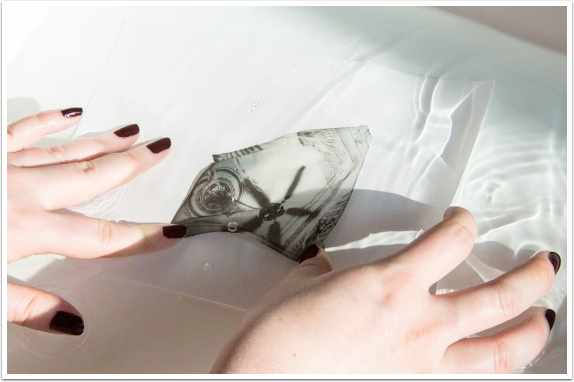
Remove the image from water. You can still work on the emulsion as long as it is in the water, so you can hold one side of the image, plunge the other side in water and start again until you are satisfied with the result.
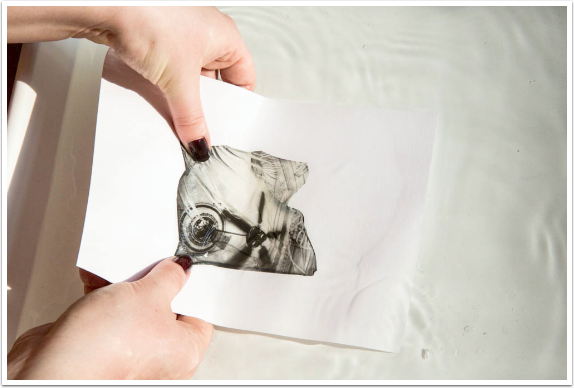
If the carrier surface and the emulsion are still wet, you can work on the emulsion, create or remove wrinkles and new shapes with a brush or your fingers
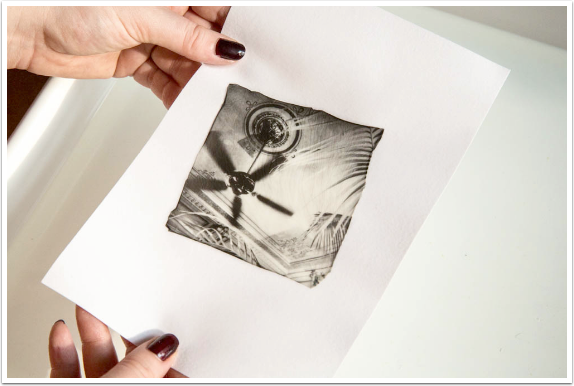
Let the emulsion lift dry for approximately 24 hours. The emulsion is now stuck on the surface!
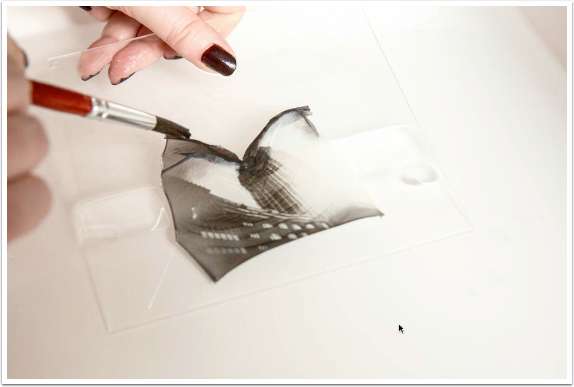
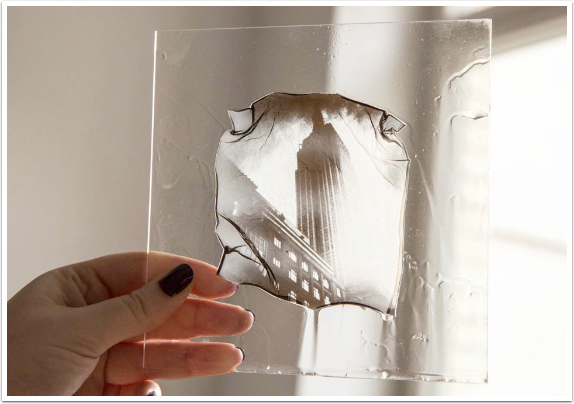
You can also do emulsion lifts on glass.
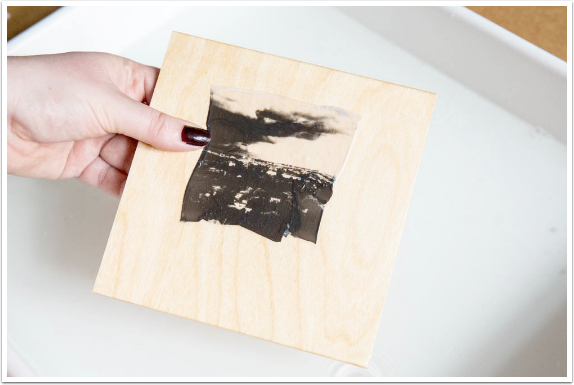
The carrier surface can also be wood, plastic, glass, paper or even a mirror

Joanne Carter
Joanne Carter is a British photographer, photography journalist, editor and curator and the founder and editorial director of TheAppWhisperer.com, an independent international photography publication established in 2009.Her journalism, criticism and commentary have appeared in The Times, The Sunday Times, The Guardian, Financial Times, BBC, Vogue Italia, LensCulture, Popular Photography, Android Magazine, NikonPro, DPReview, Which Digital Camera and Which Camera. She has lectured internationally on photography and mobile art, served as a juror for international photography awards, and exhibited her own photographic work across the UK, Europe, South Korea and the United States.Alongside her editorial work, Joanne's photographic and postgraduate research explores death, grief, memory, representation and social inequality through contemporary photography, participatory practice and visual research methods, with the longer-term aim of developing this work through doctoral research.Through TheAppWhisperer, she continues to publish independent photography journalism spanning contemporary photographic practice, mobile imaging, photographic apps, computational photography and emerging imaging technologies.Joanne is available for editorial commissions, photography projects, judging, curatorial work, speaking engagements, consultancy and selected collaborations.
4 Comments
Carlos
Interesting technique…be careful not to rip it.
diana jeon
I would love to have one of these. I did some work in grad school printing my own digital negatives using Dan Burkholder’s methods and then, working with another person, we profiled the printer with the OHP transparency films for our negatives. Grad students had access to a setup for transfer of the images to the polaroid and then we would do our transfers. It was great fun! I love the hands one as well as the digital aspects of art. I hope that one day I will be able to afford one of these set ups. Thanks for the new walk down some old memories.
Rene Hales
What Impossible film is used to take the picture? Is it available? Are there film options?
Susan Detroy
Similar to polaroid lifts I did in the 90’s Transferring photo ink and emulsions from one surface to another is a long time passion.