Best Photography Residencies 2026: 8 Artist Retreats to Apply For
Best Photography Residencies and Artist Retreats for Photographers in 2026
One thing I have learnt since beginning my career as a photojournalist in 1997 is that sometimes the most valuable thing a photographer can receive is not money, nor publication, nor even recognition. It is time. Time away from expectation. Time away from the relentless pressure to produce, upload and perform. Time away from trends, algorithms and the increasingly accelerated cycle of contemporary image-making. Time to think, to experiment, to fail and to return to an idea without feeling the need to explain it before it has fully formed.
That, for me, is where residencies become important.
Over the years I have written extensively about photography grants, awards and open calls, and all of these opportunities serve an important purpose. Funding can make work possible, competitions can bring visibility and publication can widen a conversation. But residencies do something quite different. They alter the very conditions under which work is made, and those conditions matter more than many realise.
Some of the most compelling photographers I have interviewed over the years have spoken not simply about technical breakthroughs or moments of public success but about spaces where their work fundamentally changed. Often those spaces were residencies. Places where time moved differently, where thought was uninterrupted, and where the work could deepen without being forced into completion too quickly.
A residency can be practical. It may provide a studio, accommodation, equipment, a darkroom or a stipend. But its deeper value often lies in what it removes. It removes distraction. It removes the noise of ordinary life. It removes the pressure of immediate output. In doing so, it often restores something many photographers lose without noticing: concentration.
In 2026, I think that matters more than ever. Photography has become increasingly accelerated. AI has transformed workflows, platforms reward speed over depth, and image culture feels noisier and more saturated than at any other point in my career. In that environment, stepping away can feel almost radical. It can also be necessary.
What follows are some of the most significant photography residencies and artist retreats I think are worth serious consideration in 2026. They differ widely in structure, geography and philosophy, but each offers something important: the possibility of making deeper work.
1. Light Work Artist-in-Residence (USA)
https://www.lightwork.org/artist-in-residence/
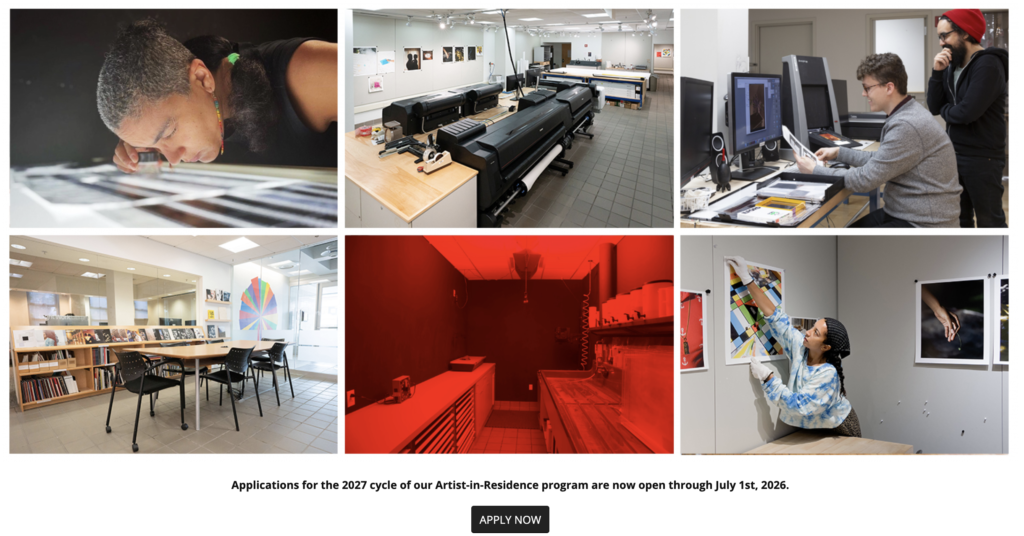
Light Work remains one of the most respected photography residencies in the world, and with good reason. Based in Syracuse, New York, it has built an extraordinary reputation over decades for supporting photographers at crucial moments in their careers. Artists receive a month-long residency with accommodation, access to darkrooms, digital facilities and a stipend, but what has always set Light Work apart in my view is the seriousness of its intent.
This is not simply a retreat designed to provide space; it is a place built around the belief that photography deserves concentrated time and sustained attention. Its publishing arm, Contact Sheet, adds another important dimension. The possibility of leaving not only with a stronger body of work but with publication support makes it especially valuable. Many photographers who have passed through Light Work speak of it as transformative, not merely productive, and that distinction says everything.
2. Wysing Arts Centre Residency (UK)
https://www.wysingartscentre.org/
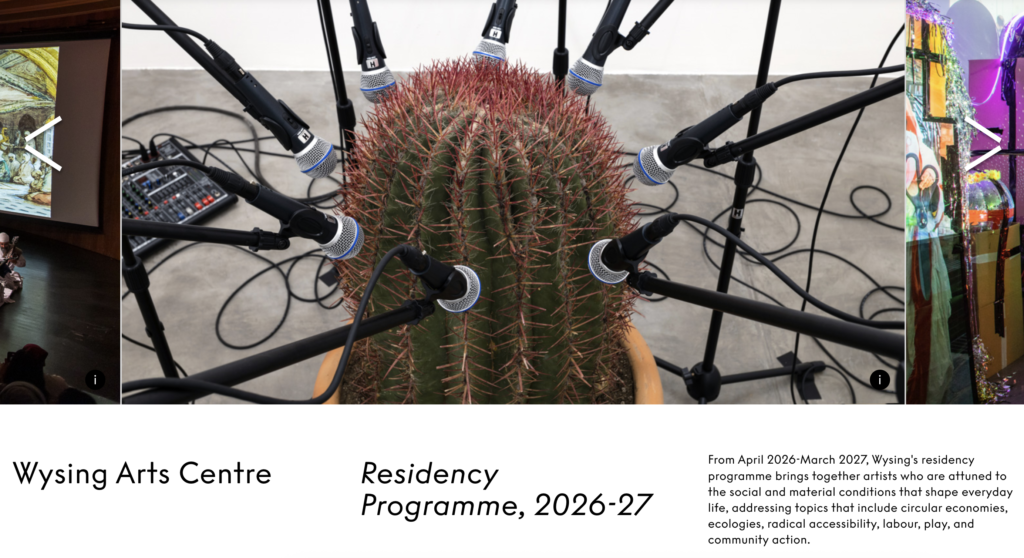
Wysing has always interested me because it occupies a more fluid position within the residency landscape. It does not ask photography to remain within fixed boundaries. Instead, it welcomes expansion, experimentation and uncertainty.
Located in Cambridgeshire, Wysing supports artists across disciplines, making it especially appealing to photographers whose work intersects with installation, performance, archive, text or moving image. Contemporary photography increasingly exists in those intersections, and Wysing understands that. It is less concerned with refinement and more invested in development.
What makes this important is that not all residencies should simply help you make more work. Some should challenge the very shape of your practice. Wysing is one of those places.
3. Banff Centre Visual Arts Residency (Canada)
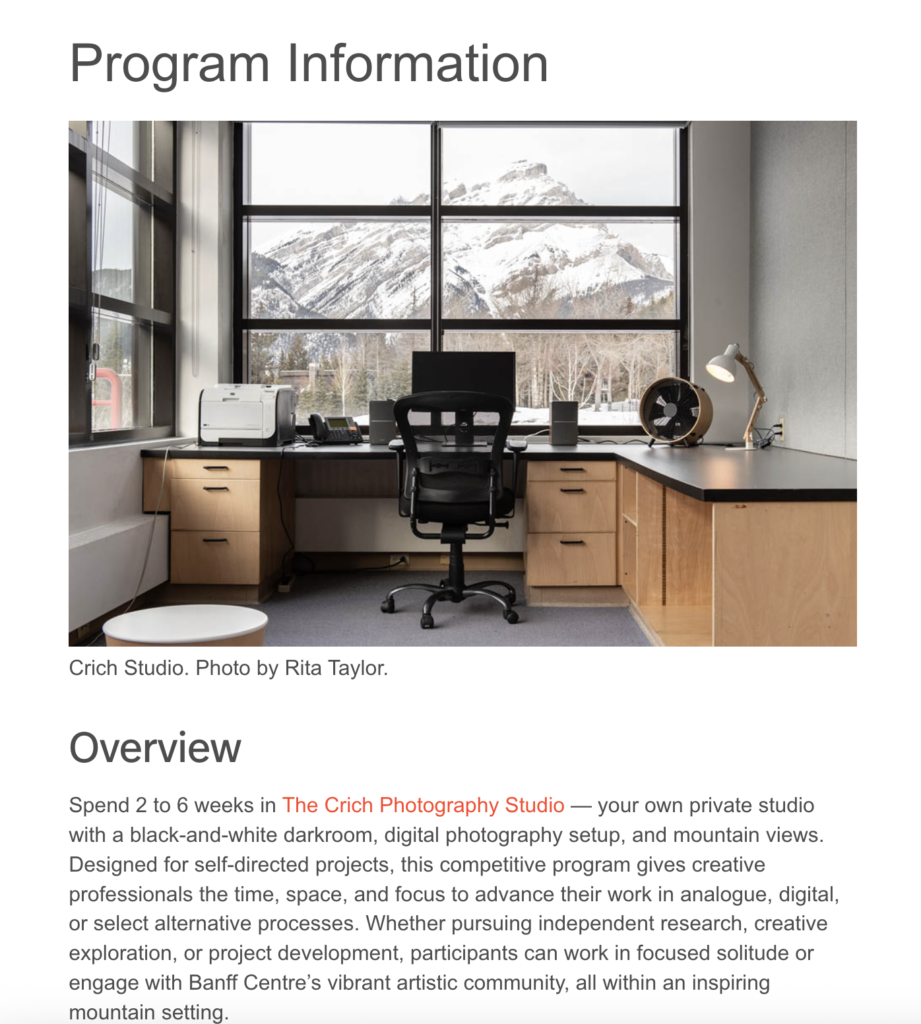
“At the time of writing, applications for the current cycle have closed, but Banff has confirmed its next residency programme will be announced in Summer 2026, making it worth watching closely.”
Banff carries a certain mythology in the arts, and not without reason. Set in the Canadian Rockies, the landscape itself becomes part of the experience. Place always affects work. Sometimes subtly, sometimes profoundly.
Banff’s visual arts residencies offer photographers the chance to work alongside an international community of artists while being physically removed from the routines of ordinary life. That distance can be creatively clarifying. There is something about scale—mountains, weather, vastness—that has the power to reorder thought.
For photographers working around landscape, memory, environmental concerns or absence, Banff offers a particularly rich context. It is one of those rare residencies where location becomes an active collaborator.
4. La Becque Residency (Switzerland)
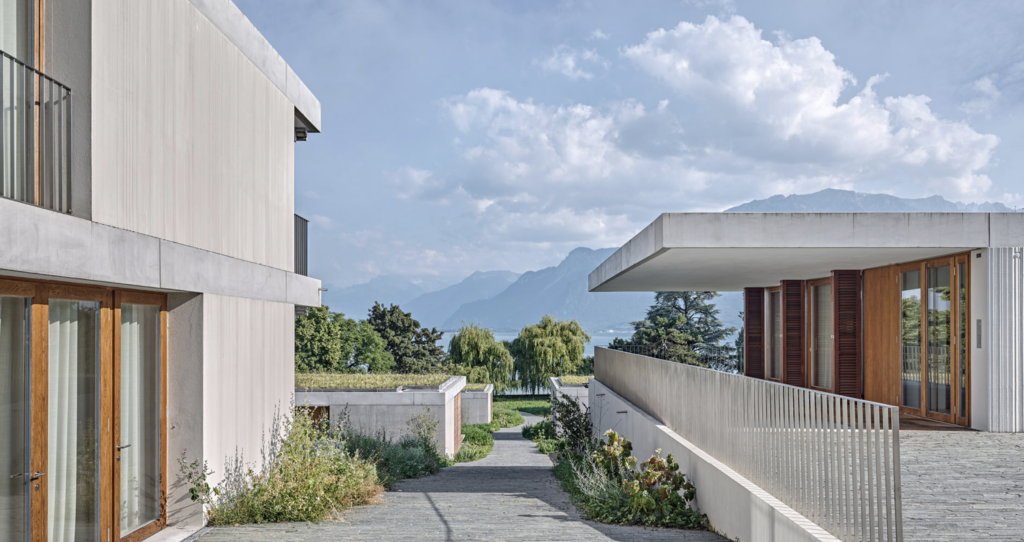
La Becque has become one of Europe’s most compelling contemporary residencies, particularly for artists whose work engages with urgent social and ecological concerns. That focus makes it especially relevant now.
Photography has always been tied to witnessing, and many photographers are increasingly working through themes of climate collapse, migration, land use and collective memory. La Becque offers not only time and space, but an intellectual framework for this kind of work.
What I appreciate about residencies like this is that they understand art not simply as production, but as a form of critical engagement. This is not only about making photographs. It is about thinking through what photographs do and what they ask of us.
5. Headlands Center for the Arts (USA)
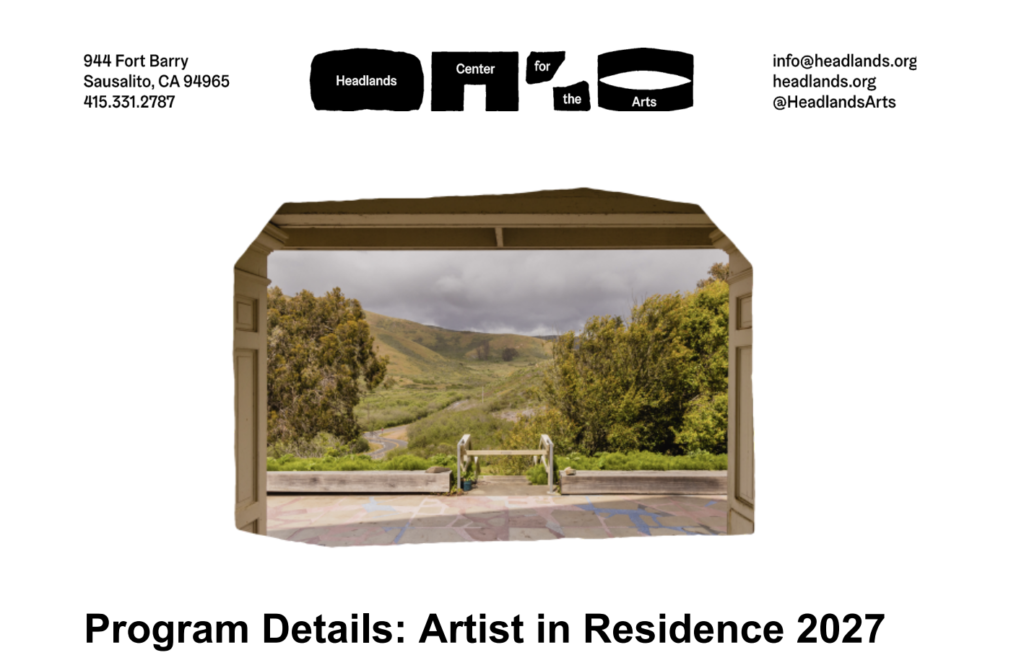
At the time of writing, applications for Headlands’ 2027 Artist in Residence programme have now closed. I have kept it in this list because it remains one of the most respected interdisciplinary residencies in the United States and is well worth watching when the next application cycle opens. For photographers interested in combining serious studio time with critical dialogue and an extraordinary landscape setting, it continues to be one of the strongest opportunities available.
Headlands offers something that many residencies struggle to balance: solitude and community. Located near San Francisco, it gives artists studio space and time but also places them within an active network of peers, curators and thinkers.
That balance matters. Some projects need silence, but others need friction. They need conversation. They need another artist to point at something you have been circling for months but have not yet understood yourself.
Headlands creates those moments. Its value lies not only in the work you make but also in the exchanges that shape it.
6. Skowhegan School of Painting & Sculpture (USA)
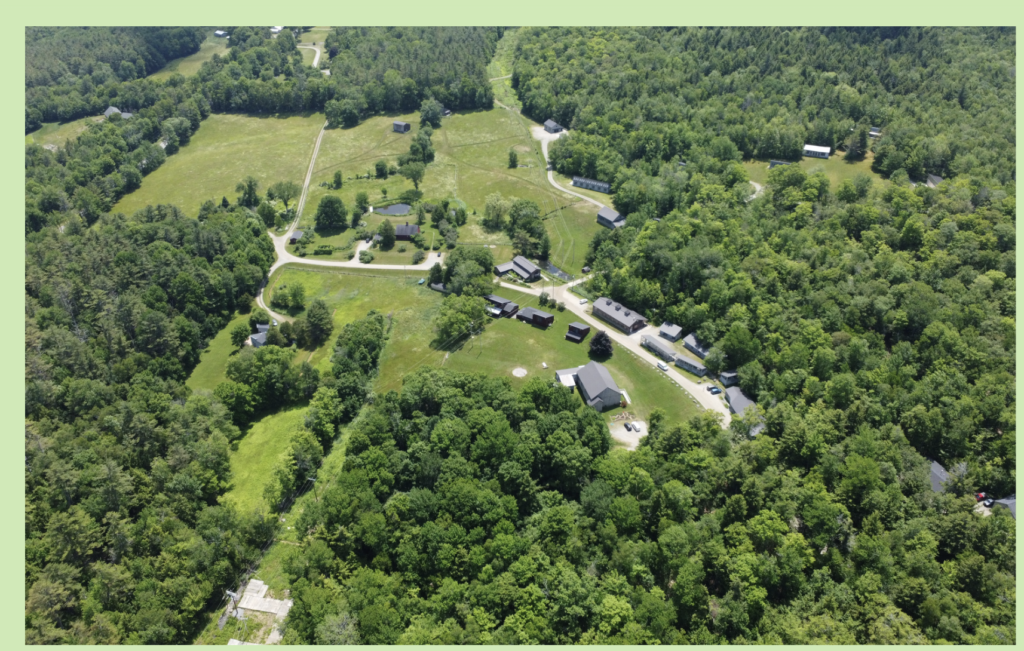
At the time of writing, applications for Skowhegan’s 2026 summer programme have closed, with the next application cycle opening on 1 September 2026 for the 2027 residency. While not photography-specific, Skowhegan remains one of the most influential artist residencies in the United States and continues to attract photographers whose practices extend into installation, archive, sculpture and expanded forms of image-making.
Skowhegan may not be photography-specific, but that is part of its importance. It remains one of the most prestigious artist residencies in the world, and photographers whose practices move beyond the frame increasingly find a natural home there.
Photography today frequently intersects with sculpture, found materials, archive, installation and text. Skowhegan recognises this. It is less interested in medium than in ideas.
For photographers whose work is expanding into other forms, this can be a profoundly fertile environment. It asks you to think beyond image-making and into practice as a wider field.
7. Cove Park (Scotland)
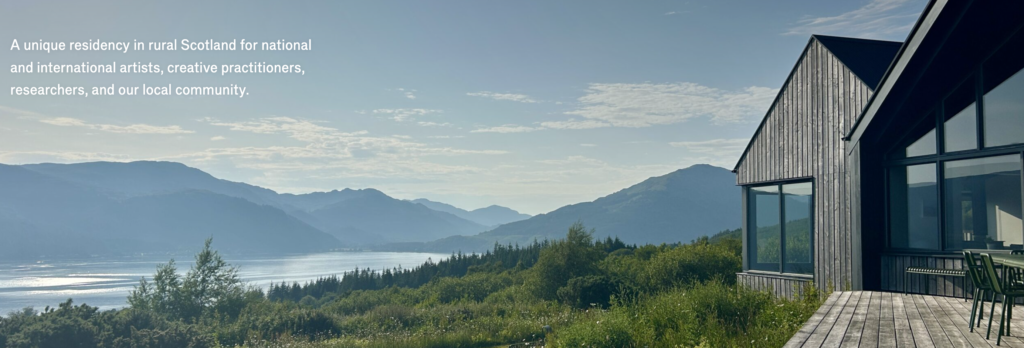
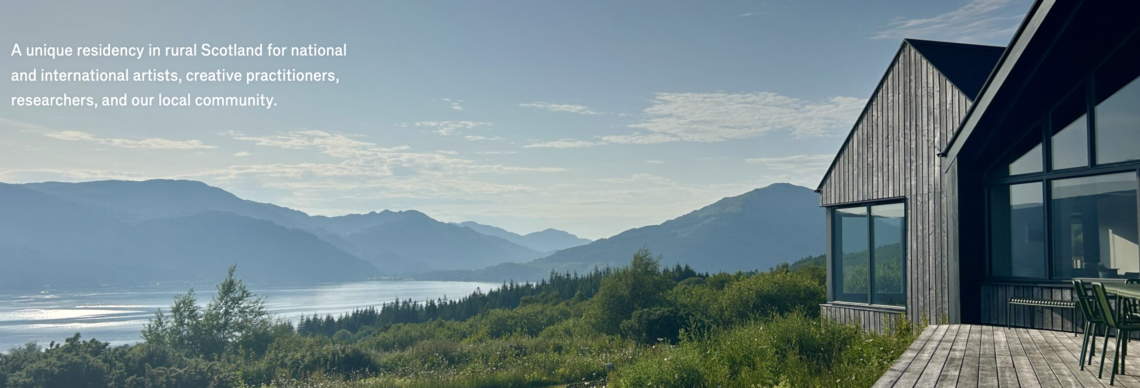
There is something about Scotland — its weather, its silence, its landscape — that has always felt conducive to slower thinking. Cove Park, on the west coast, embodies that fully.
Its residencies support artists across disciplines, but for photographers working through memory, grief, loss or ecological themes, it offers something particularly rare: emotional space.
That matters to me personally. Much of my own academic and photographic work has circled around death, mourning and remembrance. Work like that cannot be hurried. It needs time and it needs a certain kind of quiet. Cove Park understands that.
Not all important photographic work begins with certainty. Some of it begins with simply being given enough room to sit with what is unresolved.
8. MacDowell Fellowship (USA)
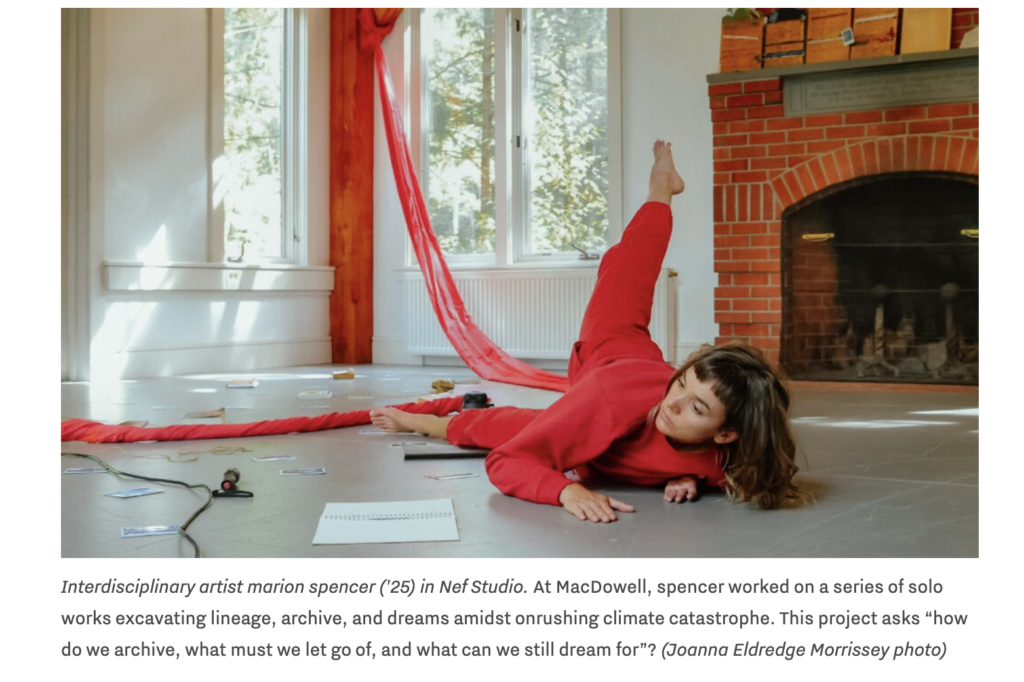
MacDowell remains one of the oldest and most prestigious artist residencies in the world, and its reputation has endured for good reason. What it offers above all else is seriousness.
Private studios, daily routine and minimal interruption may sound simple, but they are increasingly rare. For many artists, that structure becomes invaluable.
I think we often underestimate the importance of uninterrupted thought in photographic practice. Before there is making, editing or sequencing, there is thinking. That stage is fragile and often easily lost to the demands of daily life.
MacDowell protects that stage and, in doing so, protects the work before it fully exists.
Why Residencies Matter More Than Ever
What strikes me most in 2026 is how difficult slowness has become. Photography once demanded it. Film enforced it. Waiting enforced it. Distance enforced it. Now almost everything pushes against it.
Immediate feedback, immediate distribution and immediate comparison have changed not only how we make photographs, but how we measure them. That can be useful, but it can also be destructive.
Residencies interrupt that cycle. They offer temporary resistance to acceleration, and sometimes resistance is exactly what a photographic practice needs.
Not every photographer needs a residency, but many would benefit from one more than they realise. Often what changes the work is not inspiration. It is space.
Final Thoughts
The best residency is not necessarily the most prestigious. It is the one that meets your practice where it is now. Some photographers need challenges; others need quiet. Some need critical dialogue; others need solitude.
The important thing is honesty. Ask yourself what your work genuinely needs. Not what would look impressive on a CV, but what would allow the work to move forward.
That question alone can shape an application and sometimes an entire body of work.
If there is one thing I have learned since 1997, it is this: photography is rarely only about seeing. Often it is about staying with something long enough for it to reveal itself.
You May Be Interested In
If you’re looking for more opportunities to develop or fund your photographic practice, you may also find these useful:
- Best Photography Grants and Bursaries in the UK (2026)
- Best Photography Grants and Funding Opportunities in the USA (2026)
- Best Photography Competitions and Awards to Enter in 2026
- How to Write an Artist Statement for Photography Applications
Support TheAppWhisperer
If you’ve found this article useful and would like to support independent photography journalism, please consider making a small donation to TheAppWhisperer.
Since 2009, TheAppWhisperer has published thousands of interviews, reviews, opportunities and essays dedicated to photography and mobile art, remaining free to read for everyone. Every contribution helps support the time, research and editorial work that goes into producing and preserving this archive.
Your support helps keep thoughtful photography writing alive.

Joanne Carter
Joanne Carter is a British photographer, photography journalist, editor and curator and the founder and editorial director of TheAppWhisperer.com, an independent international photography publication established in 2009.Her journalism, criticism and commentary have appeared in The Times, The Sunday Times, The Guardian, Financial Times, BBC, Vogue Italia, LensCulture, Popular Photography, Android Magazine, NikonPro, DPReview, Which Digital Camera and Which Camera. She has lectured internationally on photography and mobile art, served as a juror for international photography awards, and exhibited her own photographic work across the UK, Europe, South Korea and the United States.Alongside her editorial work, Joanne's photographic and postgraduate research explores death, grief, memory, representation and social inequality through contemporary photography, participatory practice and visual research methods, with the longer-term aim of developing this work through doctoral research.Through TheAppWhisperer, she continues to publish independent photography journalism spanning contemporary photographic practice, mobile imaging, photographic apps, computational photography and emerging imaging technologies.Joanne is available for editorial commissions, photography projects, judging, curatorial work, speaking engagements, consultancy and selected collaborations.