From My Bookshelves: 10 Photography Books That Continue to Influence My Practice
Looking back through almost two decades of writing for TheAppWhisperer, reviewing photobooks, interviewing photographers and studying photography myself, I recently realised I had reached a rather practical problem: I had run out of room for my photobook collection. The solution was the installation of yet another set of bookcases, a reminder not only of how many photography books I have accumulated over the years, but also of how frequently I return to them.
As I was unpacking and reorganising the shelves, I found myself revisiting old favourites and rediscovering books that had influenced my thinking at different stages of my photographic journey. The titles included here represent only a small selection from a much larger collection. Many more deserve their own discussion, and I will write about them in future articles.
What struck me most was that the books which have stayed with me are not necessarily the most famous. Rather, they are the books I return to repeatedly because they continue to reveal something new each time I open them. Some have shaped my understanding of memory, family, grief, absence and spectatorship, while others have challenged the way I think about photographic practice itself.
This is not a list of the “best” photography books ever published. It is simply a selection of books that have genuinely influenced how I think about images.
Camera Lucida – Roland Barthes
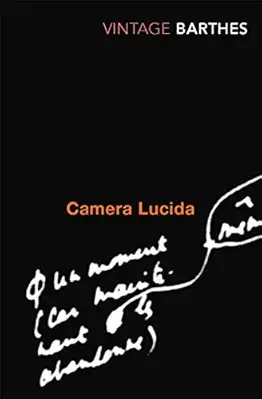
There are books you admire and books that quietly change the way you see. For me, Camera Lucida belongs firmly in the latter category.
I first encountered Barthes during my studies and found myself returning to him repeatedly while researching grief, memory and spectatorship. It is not always an easy book to read, and I certainly didn’t understand all of it the first time around. Yet its central ideas have stayed with me.
Barthes’ notion of the punctum – that unexpected detail which pierces the viewer emotionally – continues to influence how I think about photographs. His writing reminds us that photographs are never simply records of what happened. They are emotional objects that connect us to absence, memory and loss.
On Photography – Susan Sontag
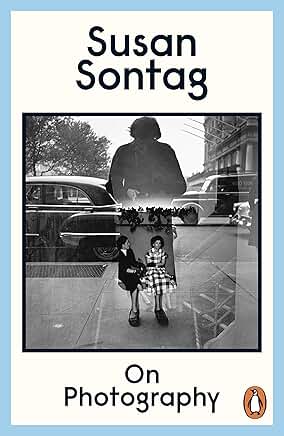
I suspect every photographer reaches a point where they encounter Susan Sontag.
What I appreciate most about On Photography is that it asks uncomfortable questions. Sontag challenges the assumptions we often make about photographs, questioning their relationship to truth, power, consumption and memory.
I don’t agree with everything she writes, but that is part of the reason I keep returning to the book. It remains one of the most thought-provoking works ever written about photography.
Pictures From Home – Larry Sultan
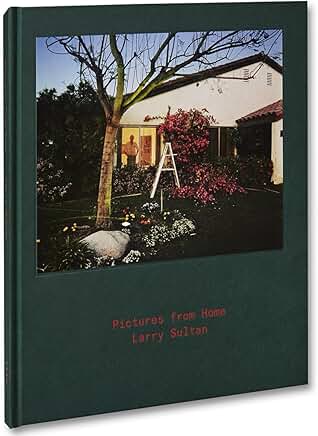
If I had to choose one photobook that continues to resonate with me personally, Pictures From Home would be very close to the top of the list.
Long before I began exploring themes of memory and family narratives in my own academic work, Larry Sultan was examining the complexities of family relationships through photography. The photographs operate somewhere between documentation and performance, revealing the tensions that often exist beneath familiar domestic surfaces.
Every time I revisit this book, I discover another layer.
Death and Other Belongings – Will Green
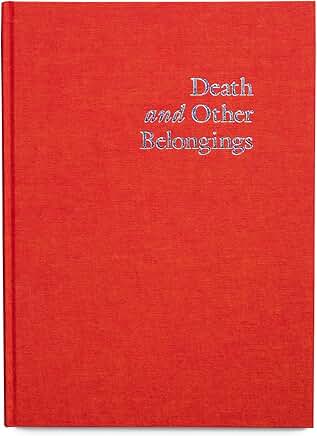
Few contemporary photobooks have affected me as deeply as this one.
Will Green’s exploration of grief, loss and material traces speaks directly to many of the themes that have occupied my own thinking in recent years. The book examines what remains after death and how objects become vessels for memory.
It is quiet, thoughtful and emotionally powerful without ever becoming sentimental. For me, it demonstrates photography’s unique ability to make absence visible.
The Afterimage of Looking – Lee Miller
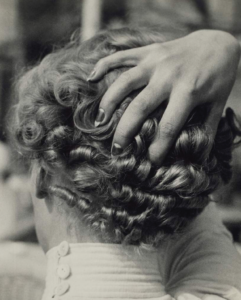
I have long been fascinated by photographers whose lives become intertwined with the histories they document, and Lee Miller remains one of the most compelling figures in photographic history.
This book encouraged me to look beyond the familiar narratives surrounding Miller and to engage more deeply with her experiences as both an artist and a witness. Her photographs continue to raise important questions about trauma, memory and photographic responsibility.
In many ways, Miller’s work feels increasingly relevant today.
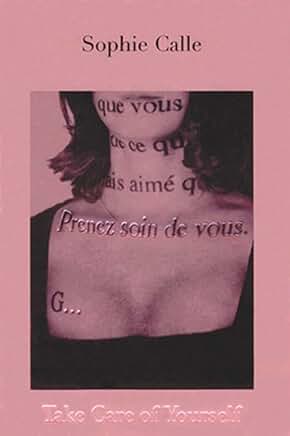
Take Care of Yourself – Sophie Calle
Few artists blur the boundaries between photography, performance, autobiography and conceptual art as effectively as Sophie Calle.
Take Care of Yourself remains one of the most inventive and emotionally intelligent projects I have encountered. Built around a personal email and the responses of over one hundred women, it transforms a private experience into a collective act of interpretation.
Every time I return to this work, I am reminded of the many different ways photography can function beyond traditional image-making.
A Pound of Pictures – Alec Soth
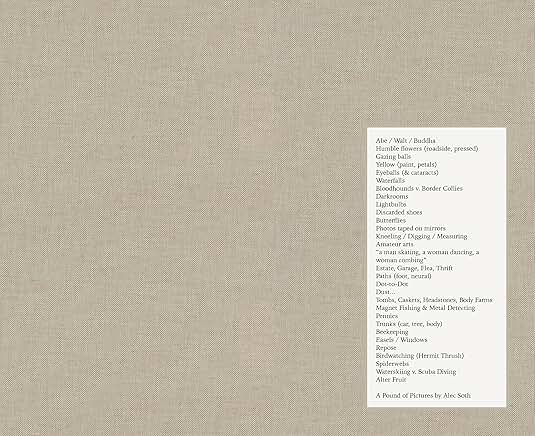
What I admire most about Alec Soth is his willingness to embrace uncertainty.
A Pound of Pictures feels less like a conventional photobook and more like a meditation on photography itself. It explores collecting, seeing, wandering and the endless human desire to preserve fragments of experience.
There is a generosity to Soth’s work that I find incredibly appealing. He reminds us that photography is often at its most interesting when it remains open to possibility.
The Grind – Stephen Madden
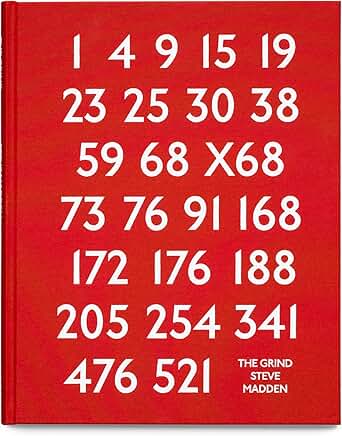
Stephen Madden’s work stayed with me because of its honesty.
There is something refreshingly direct about the way he approaches labour, routine and the rhythms of everyday life. The photographs reveal a deep commitment to observation without ever slipping into romanticisation.
Books like this remind me that extraordinary photographs are often found within ordinary experiences.
Francesca Woodman
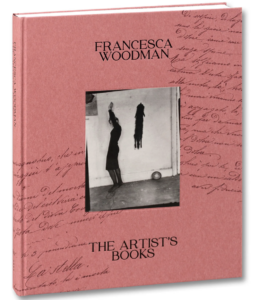
I could easily have chosen several Francesca Woodman books for this list.
Woodman’s photographs accompanied much of my academic study and continue to fascinate me. Her work explores identity, presence, absence and the body in ways that remain difficult to categorise and impossible to forget.
Despite the relatively small body of work she left behind, her influence continues to be felt across contemporary photography. Each revisit reveals something I had not noticed before.
Art Work – Sally Mann
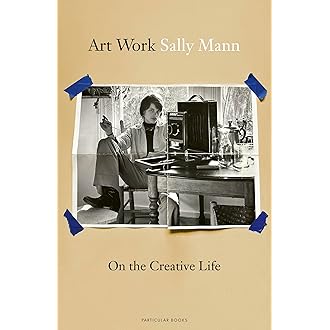
There are photography books that teach us how to look, and there are books that teach us how to live with the uncertainties of a creative life. Sally Mann’s Artwork: On the Creative Life belongs firmly in the latter category.
What I appreciate most about this book is its honesty. Mann writes openly about doubt, failure, persistence, obsession and the realities of sustaining a creative practice over decades. Rather than presenting artistic success as a neat progression, she acknowledges the messiness and uncertainty that often accompany creative work.
As someone who has spent years writing about photographers and developing my own practice, I found much of what she says deeply relatable. Her reflections extend beyond photography and speak to anyone engaged in creative work. It is one of those rare books that feels less like instruction and more like a conversation with a trusted mentor.
I have returned to it several times and suspect I will continue to do so for many years to come.
Final Thoughts
The older I get, the less interested I become in books that promise easy answers. The books I value most are the ones that leave questions lingering long after I have finished reading them. They challenge assumptions, complicate narratives and encourage me to think more carefully about photographs and the role they play in our lives.
Through nearly twenty years of interviews, reviews and conversations with photographers, I have come to realise that the most rewarding discussions rarely begin with cameras, lenses or software. They begin with ideas. They begin with memory, identity, ethics, family, grief, love, loss and the countless ways photographs help us navigate those experiences.
These are the books that have helped shape my understanding of photography. Some I revisit every year. Others I return to when I need a reminder of why photography continues to matter.
If you have not read any of them, perhaps start with one. Then, like any good photograph, allow it the time and space to reveal itself slowly.
Please support us
TheAppWhisperer has always had a dual mission: to promote the most talented mobile artists of the day and to support ambitious, interested viewers worldwide. As the years have passed, TheAppWhisperer has gained readers and viewers and found new venues for that exchange.
All this work thrives with the support of our community. Your support helps protect our independence, and we can keep delivering open, global promotion of mobile artists. Every contribution, however big or small, is valuable for our future.

Joanne Carter
Joanne Carter is a British photography journalist, editor, curator, and the founder of *TheAppWhisperer.com*, one of the world’s leading platforms dedicated to mobile photography and art. Since its launch in 2009, TheAppWhisperer has become an international hub for artists of all levels to discover, learn, exhibit, and engage with contemporary photographic practice.Built on principles of inclusivity, accessibility, and artistic excellence, Joanne has spent almost two decades championing mobile photography as a serious artistic medium. Through interviews, critical essays, exhibitions, competitions, and education, she has helped shape and document the evolution of mobile art on a global scale.Her work has taken her internationally, lecturing on photography and mobile art at institutions and events including the Museum of Art in Seoul, South Korea, alongside appearances in the UK and Europe. She has served as a juror for international photography and mobile art awards across Portugal, Canada, the United States, South Korea, Italy, and the UK.Joanne is also the founder of *TheAppWhispererPrintSales.com*, one of the first online galleries dedicated exclusively to collectible mobile art, connecting artists with collectors across Europe, the United States, and Asia.Before founding TheAppWhisperer, Joanne worked extensively in print journalism and photographic publishing, including roles at a paparazzi photo agency and as deputy editor of a leading photography magazine. Her freelance journalism, criticism, and commentary have been published widely in both the UK and the US, with bylines in *The Times*, *The Sunday Times*, *The Guardian*, *Popular Photography*, *NikonPro*, *DPReview*, *Which?*, *Vogue Italia*, *LensCulture*, the *BBC*, and more recently, the *Financial Times*, where her published letters on photography continue to contribute to wider conversations around the medium.Alongside her editorial and curatorial work, Joanne’s own photographic practice has been exhibited internationally across the UK, Europe, South Korea, and the United States. Her work increasingly explores themes of grief, loss, death, memory, and the body.Her current research interests centre on grief, death, and poverty, with forthcoming postgraduate study leading towards doctoral research in these areas.Joanne is currently developing new long-form writing and photographic projects and is available for commissions, editorial projects, speaking engagements, and collaborations.Contact: joannetheappwhisperer@gmail.com)