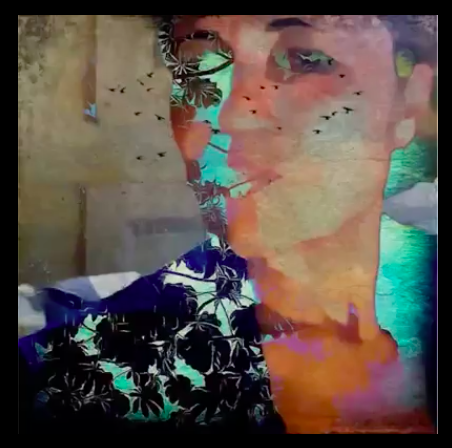
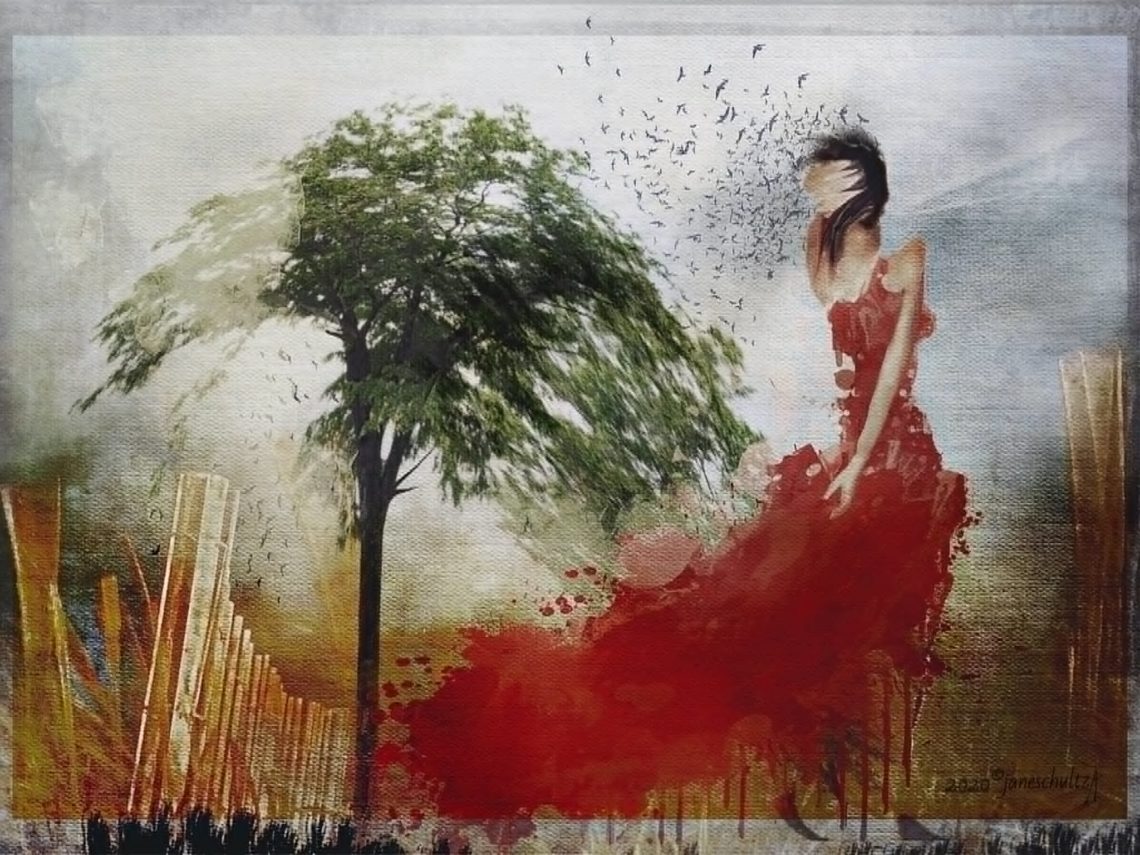
“The Imperfect Human Hand May Become the Most Radical Artistic Gesture of All” — Jane Schultz on AI and Photography
Over the years, through TheAppWhisperer, I have had the privilege of not only publishing the work of some of the world’s most influential mobile artists but also forming genuine friendships with many of them. Jane Schultz is one of those artists. I first met Jane and her husband, Dave, in London some years ago, and what struck me immediately was her depth of thought, her warmth, and her unwavering commitment to authentic creative practice. Jane has long been one of the most respected voices within the mobile art community, creating work that is emotionally rich, layered and deeply personal.
Jane is also one of the artists I represent through TheAppWhisperer Print Sales, something that reflects my long-held belief in both the significance and collectability of her work. Over the years, I have watched her practice evolve with remarkable consistency, always rooted in emotion, process and a fierce sense of artistic integrity. Her work continues to resonate with collectors drawn to psychologically rich imagery that asks us to slow down and look again.
In this latest conversation for my ongoing AI and Photography interview series, Jane speaks candidly about the profound changes artificial intelligence has brought — not only to image-making itself, but to the communities and platforms that once sustained mobile art. Her answers feel especially important because they come from someone who has witnessed this movement from its earliest days and understands not only what has been gained, but perhaps more importantly, what has been lost.
What Jane articulates so clearly here is that this is not simply a conversation about technology. It is a conversation about authorship, process, integrity, and whether art can retain its humanity in an increasingly automated world.
In this candid interview, Jane reflects on the shifting terrain of mobile art and photography in the age of AI, offering an unflinching view of what is being gained — and what may already have been lost.
Interview with Jane Schultz
JC – How has AI affected your creative workflow, if at all?
JS – AI didn’t directly affect my workflow because I never embraced generative AI as a creative tool. What I did notice was how quickly it started showing up around me in the mobile art world. At first, it seemed like a tool to turn a picture into a supernatural version of a famous artist’s style or to create a selfie showing what you’d look like in 20 years. Over the years, AI has become integrated into our workflow without our realising it, and, in this sense, it has made some of our processes easier and more precise. Apple Photos and other commonly used tools for mobile artists, such as TouchRetouch, have incorporated it. At some point, AI became something much bigger, with images generated from a prompt alone, and that profoundly impacted our community.
What troubled me most was how online imagery could be taken, mined, and reused so easily and how something made instantly could start to feel like it was replacing work created by hand and with process. Fortunately, some very talented artists began to merge and immerse their creative process with generative AI, using it as one of many tools in a much broader creative process rather than as an outcome.
JC – Do you see AI as a collaborator, tool, or something else?
JS – I don’t see AI as a collaborator. To me, a collaborator brings presence, pushback, and a real point of view. They bring back-and-forth and a challenge to creation. Its role in mobile art and photography feels less like a partnership and more like a force redefining the boundaries of creativity and the medium itself.
JC – Has AI changed how you think about authenticity in photography?
JS – This has deeply affected how I think about authenticity. For one thing, many people have passed off generative imagery as their own creations without acknowledging the use of AI. Others have started making work that feels disconnected from the voice they once had. More and more, the work seems to lose its soul, the emotion that flowed from the artist through it.
For me, authenticity is rooted in emotion and in process — the creative flow, the outpouring of oneself, the unwinding into a process that results in an outcome. Once significant use of generative AI enters that process, authorship feels weakened, and sometimes non-existent.
JC – Should artists disclose AI use?
JS – In an environment where the origins and authorship of images are increasingly ambiguous, disclosing the use of generative AI, which plays a fundamental part in the creation or alteration of an image, is imperative. It is about transparency and authenticity. It helps viewers understand what they are engaging with and helps maintain trust between the person using AI and their audience.
It further prevents the person using AI from claiming that work is their own when it is not.
JC – How has AI affected the wider mobile art community?
JS – AI exists within a broader cultural shift. Mobile art is no longer an emerging form — it has matured, and many of its pioneers have moved on, whether due to changing priorities or a sense that these spaces no longer support the kind of work they value. Engagement across platforms declined, and fewer emerging artists were stepping in to sustain the community and carry things forward.
Generative AI became the new “candy” for some while helping to drive others away. At the same time, I see AI as part of a larger transformation in which global events and cultural fragmentation have affected creative energy and accelerated the shift away from slower, process-driven work.
JC – Has AI changed how you curate and publish work?
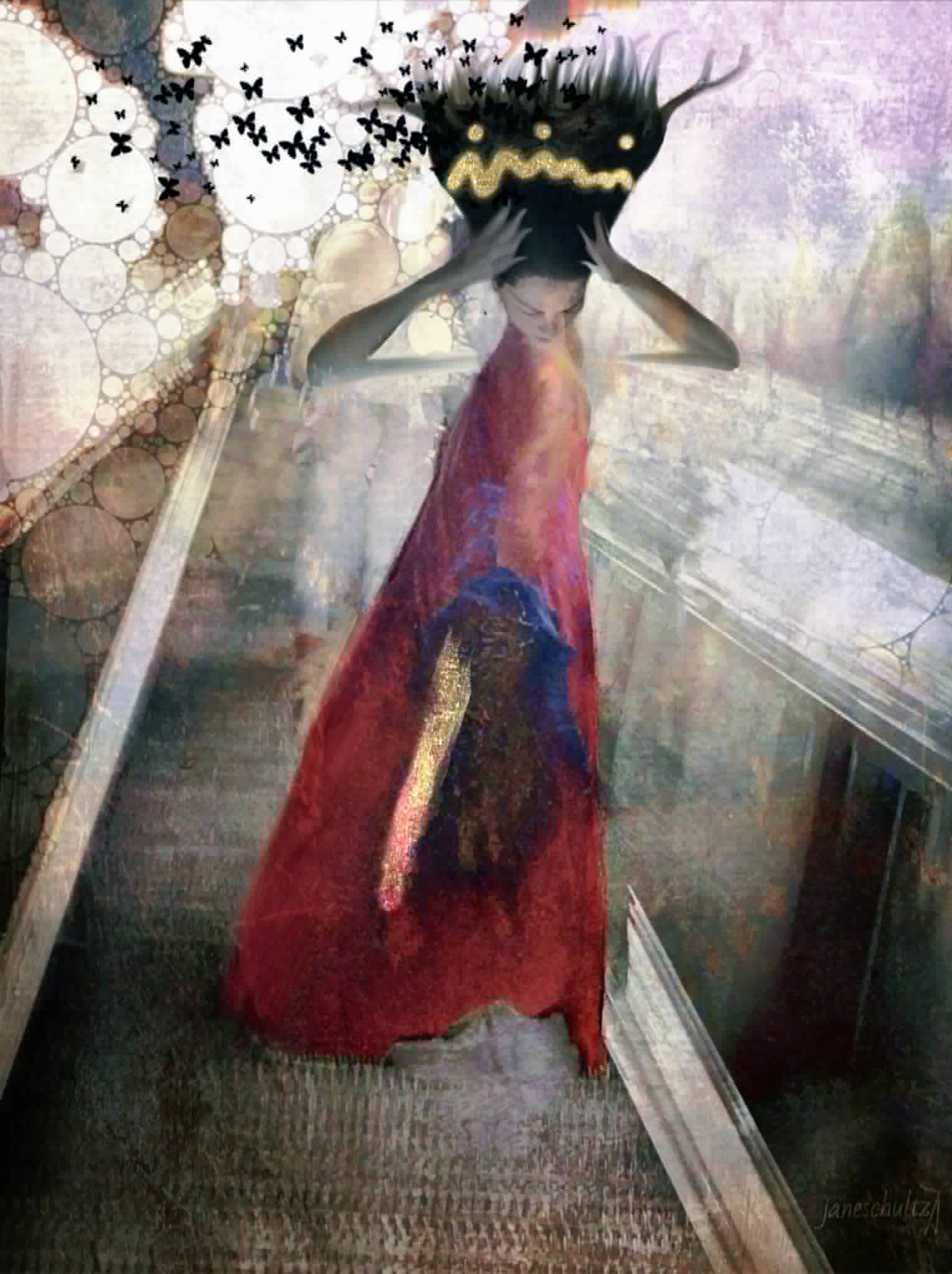
JS – My own way of creating and curating has changed significantly — largely because of generative AI and because of what’s happened to the platforms for digital image publication and curation (Instagram, Facebook, etc.). For the many reasons described in this interview, AI pushed me further away from mobile art and back toward non-digital hand-created work, and I essentially stopped submitting work for mobile or photographic awards.
Separate from the creative process, AI has had a significant impact on the platforms. These platforms control what we see through their algorithms, and they don’t favour still images. Their focus on monetisation has left us without the shared space for sustained collaboration and communication that they once provided.
JC – Who owns AI-generated work?
JS – If a person simply enters a prompt and generates an AI work, I don’t view that as either authorship or ownership. If that person integrates enough original content, such as submitting original photos, editing or otherwise modifying the AI work, the portions they themselves added might be theirs, but not the AI-generated work, regardless of how complex the prompt.
Another issue that must be addressed is AI’s mining and transformation of copyrighted work without permission or credit. I cannot condone taking someone else’s work without permission, even when an artificial interface is placed as an intermediary.
Postscript from Jane Schultz
After sending her interview, Jane added an important observation that feels especially timely. She noted that both the European Union and New York are now moving towards requiring AI-generated imagery, at least in film and advertising, to be clearly identified, with California proposing similar legislation. Jane suggests that if these regulations gain momentum, they may help establish broader standards for transparency across the creative industries.
It is, as she puts it, “a start” and perhaps an important sign that questions of authorship, disclosure and accountability are beginning to move from artistic debate into legal frameworks.
JC – Who is responsible for transparency and compensation?
JS – I think the responsibility falls on both the person creating the work and the platforms that share it. There has to be transparency, consent, and acknowledgement. AI-generated imagery can lead to massive fraud and social destruction when viewed from its darkest perspective.
And yes, I do think there should be a serious conversation about compensation for the original creators. A royalty-like system, similar to how music rights holders are paid, makes sense to me in principle.
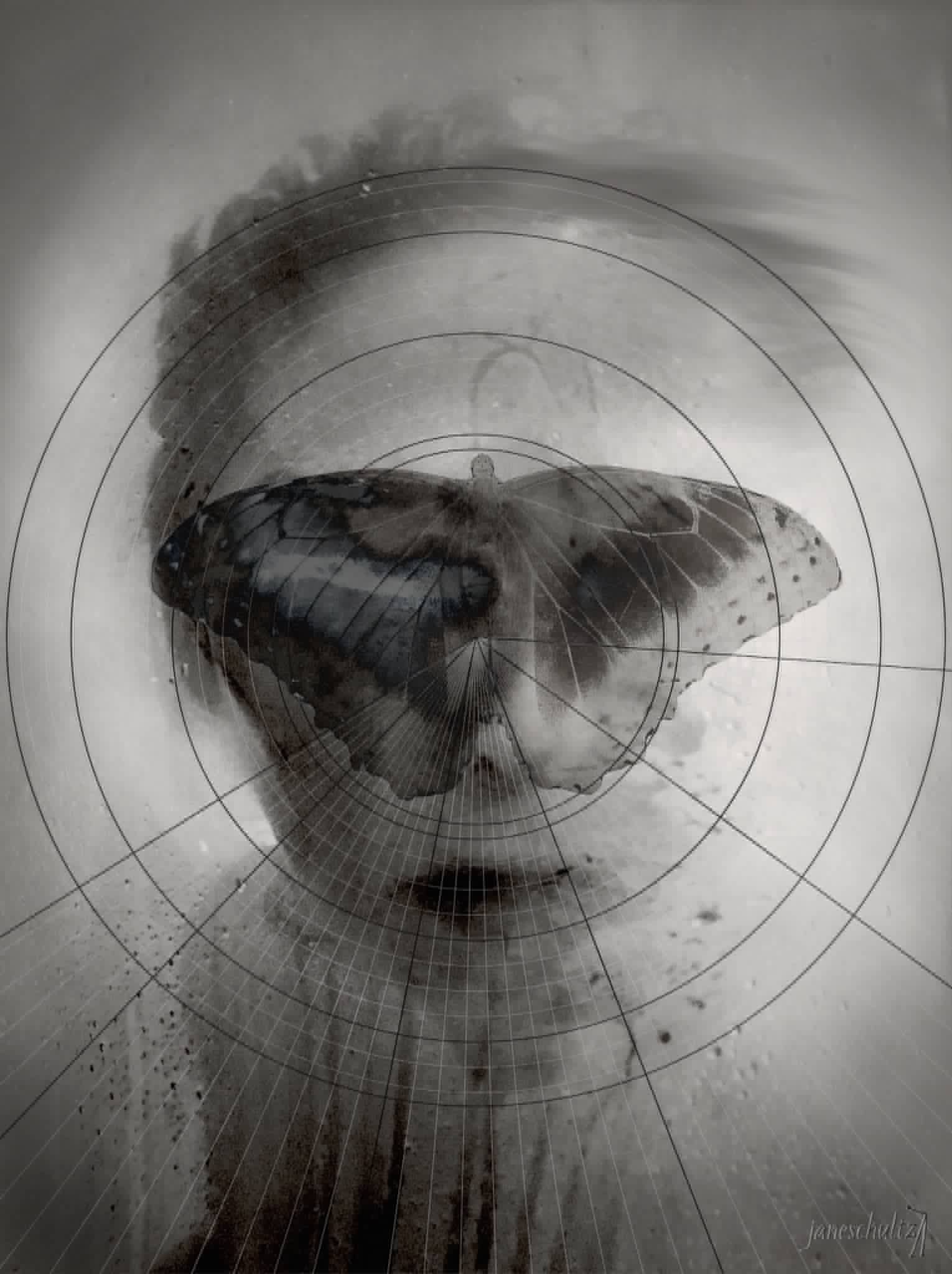
JC – Where do we go from here?
JS – AI is everywhere now and is no longer avoidable. While we need to accept this reality, we can establish boundaries as to what we believe is acceptable within our own space.
What worries me most is losing art as a creative, emotive, process-driven form. It’s just so easy now to make an image quickly, and that can strip away the value, creativity and humanity of actually making art.
Still, I do see some hope at the grassroots level. The mobile art community was built on creativity, process, authenticity, and mutual respect. There seems to be a renewed desire for that which is human, slower, imperfect, and fully present.
My Reflections on Jane Schultz’s Views on AI and Photography
Reading Jane’s responses, I was struck by how much of this conversation sits beyond the image itself. So often, when we talk about AI, we focus on outputs what is made, how quickly, and how convincingly. But Jane brings us back to something far more fundamental: process. That matters.
For many of us who came up through the mobile art movement, the process was never secondary. It was where the work lived. The experimentation, the mistakes, the hours spent refining an image this was where emotion entered the frame.
What also resonates deeply is her observation about the collapse of community. I have seen this too. The feature hubs, the meaningful exchanges, and the slower pace of artistic dialogue that once defined mobile art have been steadily eroded not just by AI-generated imagery but also by platform algorithms that now prioritise speed, spectacle, and monetisation over substance.
Jane also raises an important point about disclosure, and one that feels increasingly urgent. As legislation begins to emerge in parts of Europe and the United States requiring AI-generated media to be clearly identified, we may be entering a new phase where transparency becomes less optional and more essential.
And yet, there is something hopeful in what Jane says. The suggestion that younger generations may be turning back towards slower, more tactile and human-centred forms of making feels significant. Perhaps the pendulum is already beginning to swing.
If AI has forced us to ask harder questions about originality, ownership and truth, perhaps it may also remind us why human-made art matters so much in the first place.
For those who would like to spend more time with Jane’s work beyond this interview, a curated selection of her limited edition prints is available through TheAppWhisperer Print Sales. They are, without question, worth your attention.
Jane Schultz is represented exclusively by TheAppWhisperer Gallery: https://theappwhispererprintsales.com/collections/jane-schultz
Artist Website: https://www.janeschultzart.com
Email: janeschultzart@gmail.com
Instagram: @after.1st.illumination
Instagram: @before.1st.light
Instagram: @the.sky.above.the.rain
Read More from the AI and Photography Series
This interview forms part of my ongoing AI and Photography series at TheAppWhisperer, where I invite artists, photographers and image-makers to reflect on how artificial intelligence is reshaping creativity, authorship, truth and visual culture.
Read the other conversations in this series:
• Rita Colantonio — “The Integrity of the Fine Artist Must Be Preserved”
https://theappwhisperer.com/2026/05/the-integrity-of-the-fine-artist-must-be-preserved-rita-colantonio-on-ai-and-photography/
• Dan Marcolina — Between Photography and AI: A Conversation with Dan Marcolina
https://theappwhisperer.com/2026/06/between-photography-and-ai-a-conversation-with-dan-marcolina/
• Michelle Sank — Michelle Sank on AI, Photography, Truth and Authenticity
[Michelle Sank]
Together, these interviews form an evolving archive of artistic thought at a moment when photography is being fundamentally redefined. As this series grows, so too does the urgency of the questions it asks.
Please support us
TheAppWhisperer has always had a dual mission: to promote the most talented mobile artists of the day and to support ambitious, interested viewers worldwide. As the years have passed, TheAppWhisperer has gained readers and viewers and found new venues for that exchange.
All this work thrives with the support of our community. Your support helps protect our independence, and we can keep delivering open, global promotion of mobile artists. Every contribution, however big or small, is valuable for our future.

Joanne Carter
Joanne Carter is a British photographer, photography journalist, editor and curator and the founder and editorial director of TheAppWhisperer.com, an independent international photography publication established in 2009.Her journalism, criticism and commentary have appeared in The Times, The Sunday Times, The Guardian, Financial Times, BBC, Vogue Italia, LensCulture, Popular Photography, Android Magazine, NikonPro, DPReview, Which Digital Camera and Which Camera. She has lectured internationally on photography and mobile art, served as a juror for international photography awards, and exhibited her own photographic work across the UK, Europe, South Korea and the United States.Alongside her editorial work, Joanne's photographic and postgraduate research explores death, grief, memory, representation and social inequality through contemporary photography, participatory practice and visual research methods, with the longer-term aim of developing this work through doctoral research.Through TheAppWhisperer, she continues to publish independent photography journalism spanning contemporary photographic practice, mobile imaging, photographic apps, computational photography and emerging imaging technologies.Joanne is available for editorial commissions, photography projects, judging, curatorial work, speaking engagements, consultancy and selected collaborations.


You May Also Like
Mobile Photography and Art Interview – Hope In Adversity Interview with Clint Cline from Florida, United States
Mobile Photography – TrueView Interview ‘Why do I Create Mobile Photography/Art?” with Alexis Rotella from Maryland, US