“The Integrity of the Fine Artist Must Be Preserved” — Rita Colantonio on AI and Photography
Over the past few years, much of my writing and photographic research has increasingly centred on questions of memory, grief, spectatorship, and photographic truth. I have become deeply interested in how photographs shape emotional understanding, how images linger in the mind, influence perception, and quietly alter how we remember experiences long after the moment itself has passed. Photography has never simply been about documentation; it is tied to absence, intimacy, trauma and belief. We do not merely look at photographs; we inhabit them emotionally.
At the same time, through my work at TheAppWhisperer, I have spent almost two decades observing and documenting the evolution of mobile photography and digital art from its earliest experimental beginnings into a globally recognised artistic movement. I have watched smartphone photography move from heavily criticised beginnings into one of the most important contemporary photographic movements of our time. Yet artificial intelligence represents something different again. AI does not simply alter photographic tools; it challenges the relationship between image and reality itself.
What fascinates me most is the growing tension between creativity and authenticity. Computational photography has already become embedded into almost every image we make on smartphones, often invisibly. But generative AI introduces far more difficult questions. If photographs no longer require lived experience, observation or emotional presence, then what exactly are we looking at? And perhaps more importantly, what happens to memory, trust and spectatorship when images can no longer be assumed to have originated in reality at all?
As part of this ongoing discussion, I invited artists working within mobile and digital practices to reflect honestly on AI and its impact on creativity. In this interview, digital artist Rita Colantonio offers a thoughtful and deeply personal response to those concerns. Rather than rejecting technology outright, she draws an important distinction between tools that assist artistic vision and systems that begin to replace it. Her reflections on integrity, authorship and emotional truth reveal many of the anxieties now sitting at the centre of contemporary photographic culture.
Interview between Joanne Carter and Rita Colantonio
JC – When did AI first begin influencing your creative workflow, either directly or indirectly?
RC – I would say that AI has always had a very discrete place in my artwork. Beginning as a photographer and using tools in Photoshop, and later in Procreate and other apps, I now realise that AI was embedded in all my editing. Both in camera and in apps. Not consciously thinking of it at the time, but I enjoyed the creative freedom it offered me. That being said, all my ideas and processes were my own. The “tools” enabled me to facilitate them.
JC – Do you see AI as a creative collaborator, a technical tool, or something more disruptive to photographic practice?
RC – I see AI as a technical tool. I have very strict ideas about preserving my own vision in my work. It can get dicey, though. I love surrealism, and of course, I am influenced by the art that I see. So, is my vision really my own? If what I create comes from my own interpretation of what I see, that is much different from allowing a computer algorithm to decide for me.
JC – Has AI changed the way you think about authenticity within photography and mobile art?
RC – Yes, definitely. I think my previous answers have addressed that. The human mind processes ideas that are inspired by experience and is entangled in emotion. As an artist, we face the challenge of channelling those ideas in a very personal way. There needs to be an uninterrupted flow of ideas to the artwork. It occurs in the “zone”, not in a computer.
JC – Many smartphones now apply heavy computational processing automatically. Do you feel photographers still fully control the image-making process?
RC – I have an issue with that. Nothing should be “automatic”. There are many opportunities to edit work to your liking, and we strive to capture the feeling of what we witness. Sometimes it may not be in our photograph, but at least we have the option to enhance our image to our liking with editing tools.
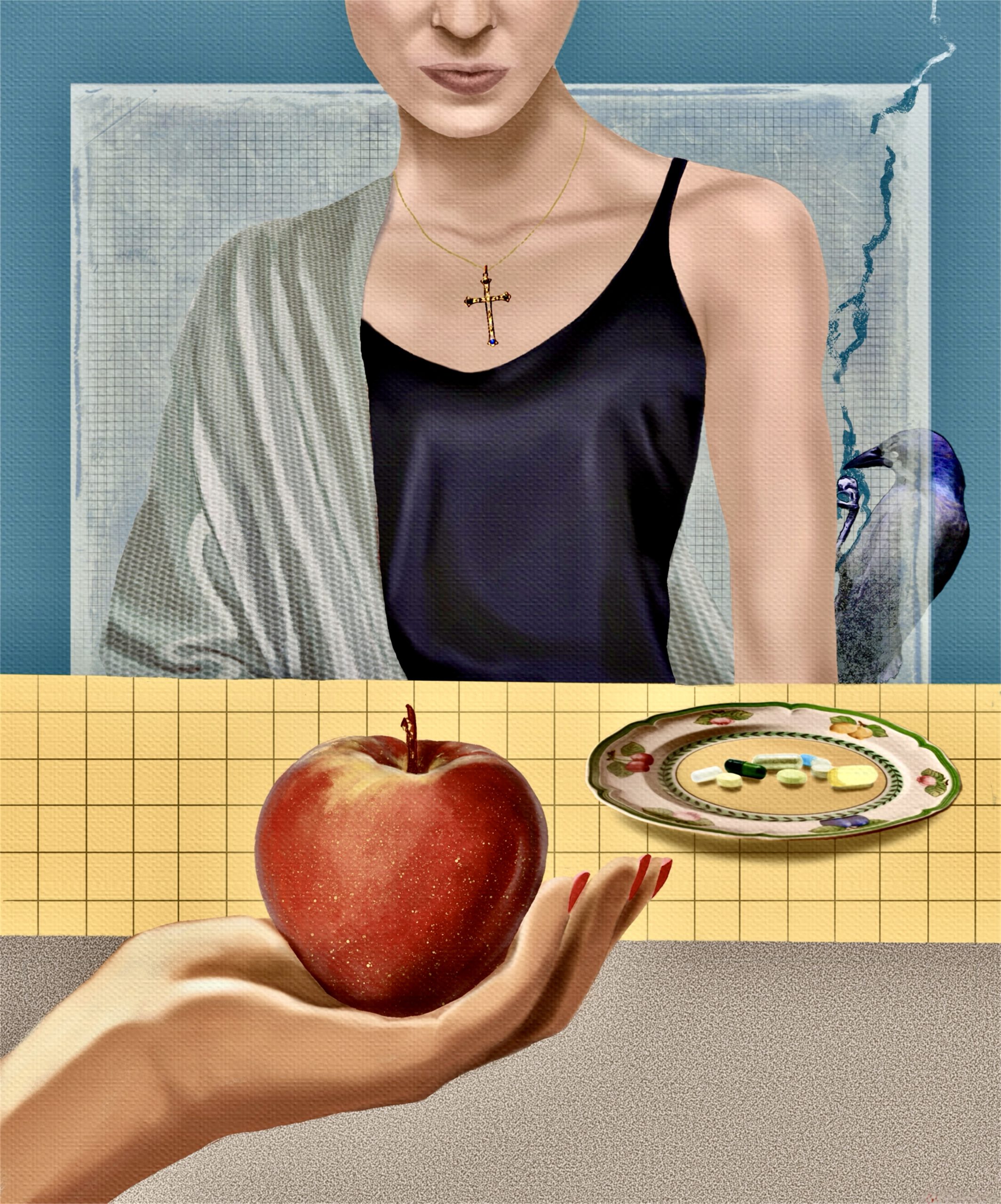
JC – Have you ever felt conflicted about using AI-assisted editing tools within your own work?
RC – Not if I fully understand the tool’s effects and it helps me achieve my ultimate vision.
JC – Do you think audiences should always be informed when AI has been used within an artwork or photographic image?
RC – Yes, but only if the AI used has introduced something not in the original photograph or, as in constructed digital art, the elements introduced were not the original conception of the artist.
JC – Are you concerned that AI-generated imagery may overwhelm or devalue slower, more personal photographic practices?
RC – Absolutely! I feel strongly about this. But in my opinion, AI has its place. I think it is helpful and appropriate for commercial uses. I am impressed and fascinated by what I see in film and other commercial products. In fine art, however, generated AI has no place.
JC – How do you think AI is affecting ideas surrounding memory, truth and documentation within photography?
RC – That is very concerning. We are increasingly confronted with depictions of reality, with what is real and what is not. We see images we assume are real, and they remain in our memory, colouring our perceptions and judgments. The technology involved is stunning, making this even more threatening!
JC – In your opinion, can AI-generated images carry the same emotional weight as photographs connected to lived human experience?
RC – That’s a tough question. AI art can certainly be provoking emotionally. Some AI art is very realistic. But in the end, the artist’s impetus to use AI to serve their intention would be the determining factor. We are all captive to the power of images, no matter where they originate.
JC – Have developments in AI changed the way you archive, edit or curate your own images?
RC – Yes, I am constantly aware of this. I do not use generative AI. I cannot sign my work if AI elements are involved. But I have used photographs I obtained online to add to my work. I think that is different.
JC – Do you believe younger photographers entering the field now will define creativity differently from previous generations?
RC – Yes. It cannot be helped. AI images have become part of their culture. From video games to iPhone apps to film, they are besieged by images, both real and unreal. They don’t care to know the difference.
JC – Has AI influenced the way you think about authorship and ownership within digital art?
RC – Yes. Digital art is like any art form. It requires integrity. It requires a personal intention by the artist. It requires a creative flow only from the artist. The introduction of generative AI dilutes the artist’s genuine intention.
JC – What ethical responsibilities do artists and platforms have when publishing AI-generated imagery?
RC – AI is here to stay. Whether an artist uses it is a personal choice. I think it will evolve into a distinct art genre. Part technology, part art. So, do we need to distinguish it as fine-art-appropriate? That is the concern. Museums and galleries that promote fine art will need to tackle this dilemma. They will need to inform viewers about what they are viewing. In general, all art publicly promoted as fine art should be acknowledged as AI if that is the case. I think the artist’s reputation as a fine artist is at risk.
JC – Are there aspects of human experience that you believe AI will never convincingly replicate visually?
RC – Yes, but not many. Particularly, the portrait is at risk. Lighting, expression, atmosphere, and colour (including b/w) cannot always be portrayed adequately. The emotional quality of an image is hard to come by. The story is not always told.
JC – Looking ahead five years, what excites or worries you most about the future relationship between AI and mobile photography?
RC – The increased use of iPhone apps, especially those integrated into casual photography, will have an impact. The authenticity of what is “real” will be questionable. On the other hand, the creative use of AI and the expertise gained from working with it will create an explosion of imagery. I am excited to see this. But always, the integrity of the fine artist must be preserved. AI definitely has its place. We just need to decide where that is.
My thoughts…
What I find particularly compelling about Rita Colantonio’s responses is how they echo many of the concerns I have encountered over the years of writing about mobile photography and digital art. Repeatedly, her answers return to the idea of integrity, not purity in a nostalgic sense, but the preservation of emotional intention within the creative process.
This feels increasingly important at a moment when photography itself is becoming unstable. For much of its history, photography carried an assumed relationship to reality, even when manipulated or staged. But AI-generated imagery profoundly complicates that relationship. Images now circulate detached from lived experience, yet they continue to shape memory, emotion and perception with extraordinary power. As Rita notes, we are increasingly surrounded by images whose origins are increasingly difficult to verify yet remain psychologically persuasive.
Her distinction between assistive AI and generative AI is also significant. Many artists already work with computational systems embedded within smartphone cameras and editing software, often without consciously recognising them as artificial intelligence. Yet Rita argues there remains an essential difference between using tools to realise a vision and surrendering authorship to algorithmic generation. That tension may ultimately define the future of photographic practice.
What also emerges from this interview is the possibility that AI-generated imagery will evolve into a distinct artistic category, neither traditional photography nor entirely separates from it. If that happens, transparency will become essential. Viewers, galleries, and publishers may increasingly need to understand not only what they are looking at but also how it was made.
As someone whose own work frequently explores memory, grief, and spectatorship through photography, I find these questions inseparable from wider cultural concerns about truth and emotional authenticity.
Photographs have always shaped how we remember the world and ourselves. The challenge now is whether photography can continue to retain emotional credibility in a visual culture where reality itself is becoming increasingly uncertain.
Rita Colantonio’s reflections do not offer easy answers, and perhaps that is precisely why they matter.
Contact Details for Rita Colantonio
Please support us
TheAppWhisperer has always had a dual mission: to promote the most talented mobile artists of the day and to support ambitious, inquisitive viewers the world over. As the years pass TheAppWhisperer has gained readers and viewers and found new venues for that exchange.
All this work thrives with the support of our community.
Please consider donating to TheAppWhisperer as this New Year commences because your support helps protect our independence, and we can keep delivering the promotion of mobile artists that’s open for everyone around the world. Every contribution, however big or small, is so valuable for our future.

Joanne Carter
Joanne Carter is a British photography journalist, editor, curator, and the founder of *TheAppWhisperer.com*, one of the world’s leading platforms dedicated to mobile photography and art. Since its launch in 2009, TheAppWhisperer has become an international hub for artists of all levels to discover, learn, exhibit, and engage with contemporary photographic practice.Built on principles of inclusivity, accessibility, and artistic excellence, Joanne has spent almost two decades championing mobile photography as a serious artistic medium. Through interviews, critical essays, exhibitions, competitions, and education, she has helped shape and document the evolution of mobile art on a global scale.Her work has taken her internationally, lecturing on photography and mobile art at institutions and events including the Museum of Art in Seoul, South Korea, alongside appearances in the UK and Europe. She has served as a juror for international photography and mobile art awards across Portugal, Canada, the United States, South Korea, Italy, and the UK.Joanne is also the founder of *TheAppWhispererPrintSales.com*, one of the first online galleries dedicated exclusively to collectible mobile art, connecting artists with collectors across Europe, the United States, and Asia.Before founding TheAppWhisperer, Joanne worked extensively in print journalism and photographic publishing, including roles at a paparazzi photo agency and as deputy editor of a leading photography magazine. Her freelance journalism, criticism, and commentary have been published widely in both the UK and the US, with bylines in *The Times*, *The Sunday Times*, *The Guardian*, *Popular Photography*, *NikonPro*, *DPReview*, *Which?*, *Vogue Italia*, *LensCulture*, the *BBC*, and more recently, the *Financial Times*, where her published letters on photography continue to contribute to wider conversations around the medium.Alongside her editorial and curatorial work, Joanne’s own photographic practice has been exhibited internationally across the UK, Europe, South Korea, and the United States. Her work increasingly explores themes of grief, loss, death, memory, and the body.Her current research interests centre on grief, death, and poverty, with forthcoming postgraduate study leading towards doctoral research in these areas.Joanne is currently developing new long-form writing and photographic projects and is available for commissions, editorial projects, speaking engagements, and collaborations.Contact: joannetheappwhisperer@gmail.com)