Between Photography and AI: A Conversation with Dan Marcolina
Dan Marcolina is a photographer, designer, author and visual storyteller whose work spans more than four decades of technological change in image-making. Beginning with traditional lens-based photography, his creative journey has evolved through digital imaging, Photoshop, mobile photography, augmented reality and, more recently, generative AI.
An early advocate of digital creativity, Marcolina co-founded with his wife Denise, one of Philadelphia’s first all-digital design studios and has spent much of his career exploring how emerging technologies can expand visual expression while remaining grounded in photographic observation. He is the author of several books on mobile photography, including iPhone Obsessed, one of the first iPhoneography books published, and has lectured internationally on photography, design, and digital innovation.
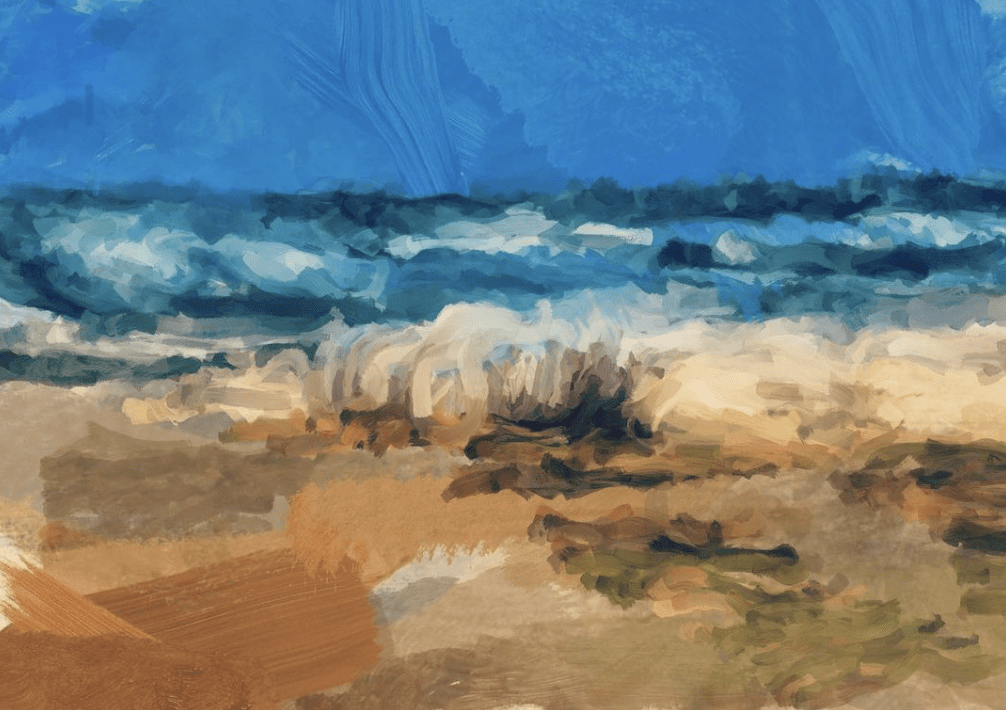
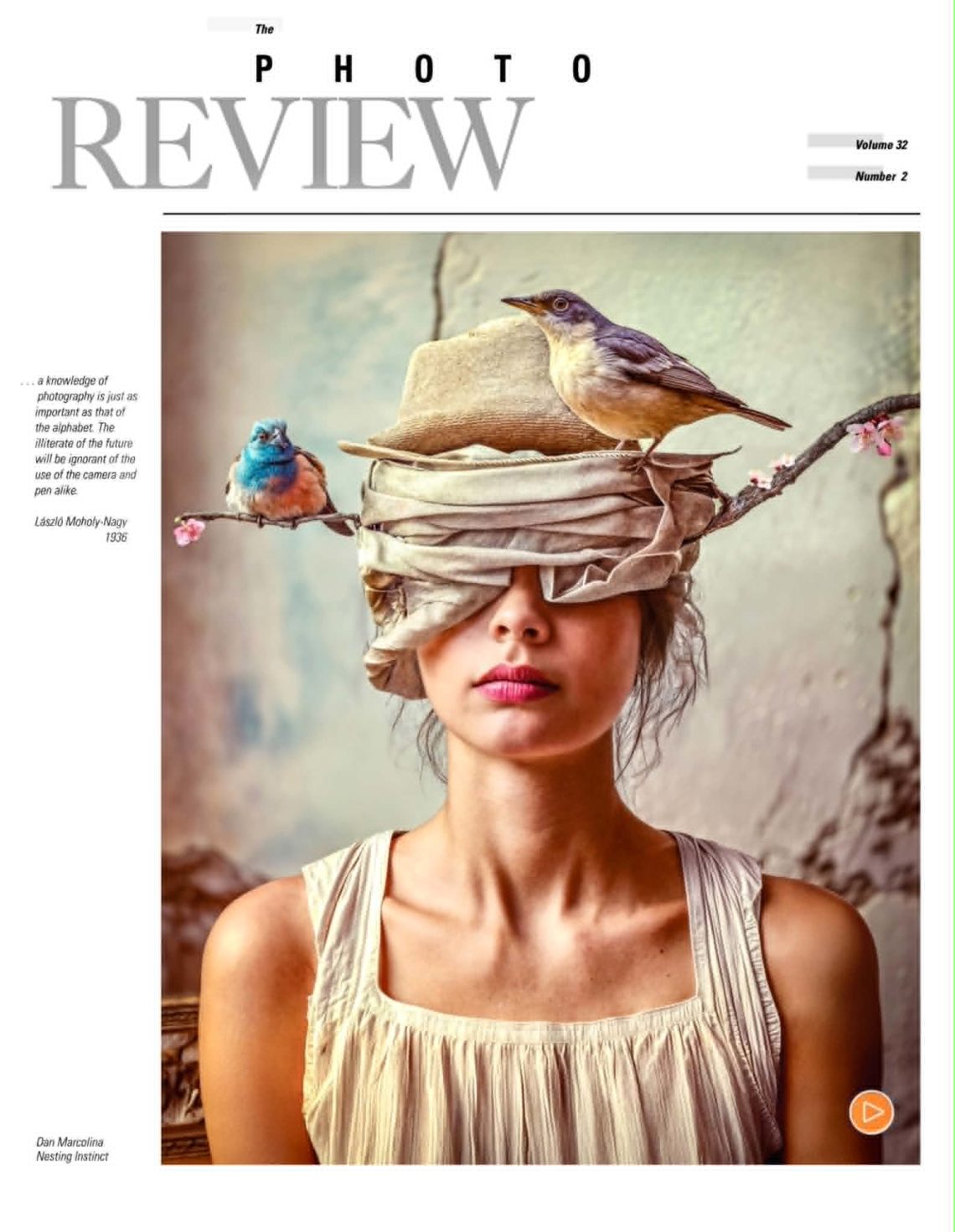
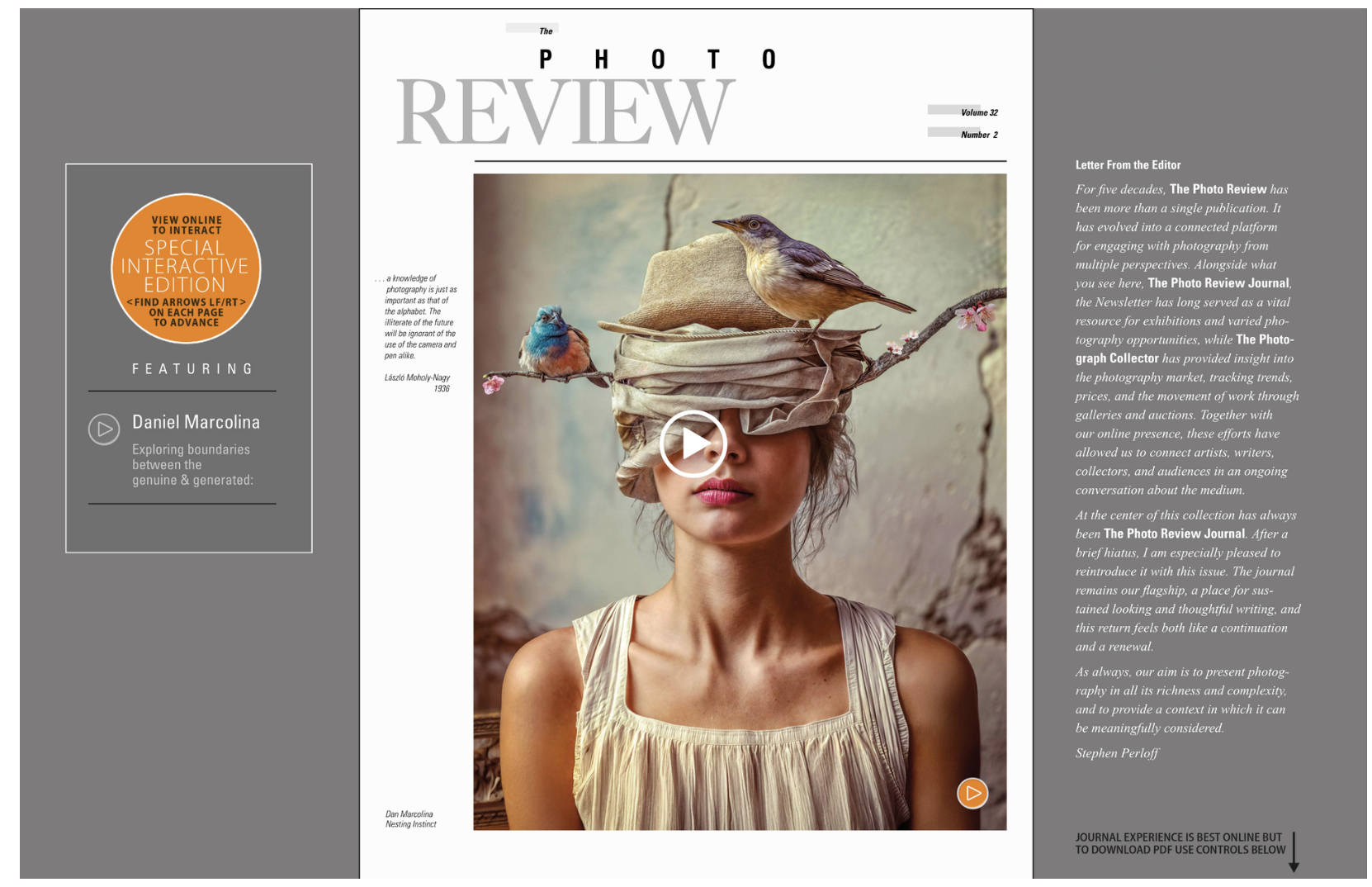
Today, his work combines original photography with AI, animation and augmented reality to create images that move between documentation, memory and imagination. Rather than viewing technology as a replacement for photography, Marcolina sees it as a continuation of a lifelong exploration into how images can communicate emotional, symbolic and experiential truths. His current practice often incorporates his own photographs, textures and mobile imagery as source material for generative work, maintaining a strong connection between authorship, craft and personal vision.
His work has been exhibited internationally and featured by organisations including Adobe, Apple, National Geographic and The Discovery Channel.
AI has become one of the most divisive topics in contemporary photography. Yet beyond the headlines and social media debates lies a more nuanced conversation about creativity, memory, truth and the role of the artist. Few photographers are better placed to discuss these questions than Dan Marcolina. A long-time advocate of experimentation, Dan has embraced new technologies throughout his career, from digital imaging and mobile photography to augmented reality and, more recently, generative AI. I was interested to learn how these tools have influenced his thinking and whether AI represents a continuation of photography’s evolution or something fundamentally different.
Contact details for Dan include:
JC: When did AI first begin influencing your creative workflow, either directly or indirectly?
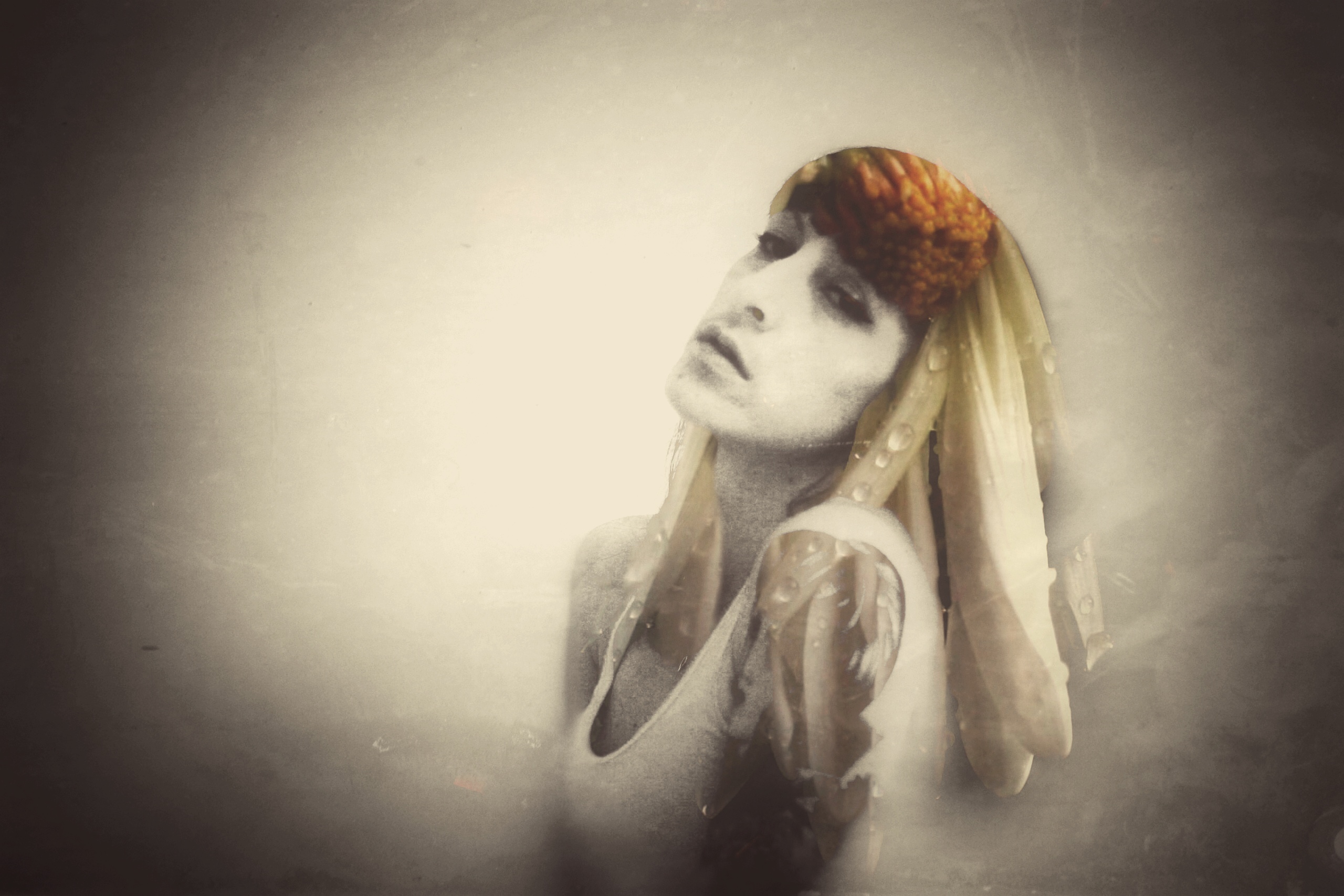
DM: My love of lens-based photography took an important turn in 1989 when I discovered Photoshop. Until then, photography was primarily about capturing a moment. Photoshop opened the door to something else for me — the ability to layer, texture and transform photographs in ways that could reveal more interpretive, symbolic or even metaphysical qualities hidden within the image.
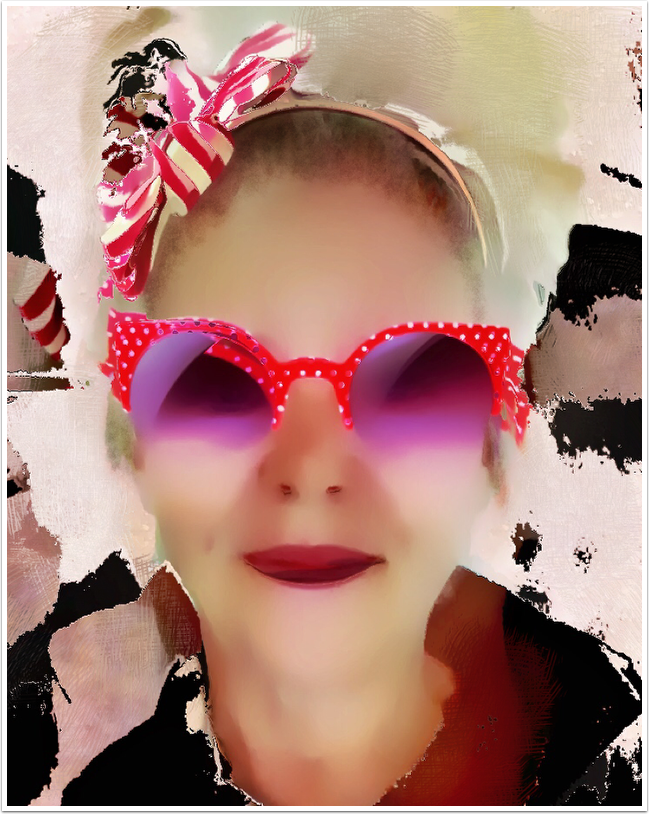
That passion accelerated during the early days of iPhone photography. I became fascinated by how mobile apps could reinterpret a photograph emotionally and symbolically rather than simply document what was in front of the camera. I spent years experimenting with app workflows, textures, blurs and layered effects, always searching for ways to push an image beyond description and toward meaning.
Then in the summer of 2022, my son introduced me to Midjourney. Almost immediately, I realised this wasn’t a completely new direction for me. It felt like the next chapter in a journey I had already been on for decades. Generative AI gave me the freedom to reimagine, remix, and extend my photographs in ways I had always tried to achieve manually.
So for me, AI did not arrive as a disruption so much as a continuation. Photography taught me discovery. Photoshop taught me construction. Mobile photography taught me spontaneity and experimentation. AI now brings those instincts together in a remarkably fluid way. It has expanded my creative possibilities, but it still feels connected to the same curiosity that first drew me to photography.
JC: Do you see AI as a creative collaborator, a technical tool, or something more disruptive to photographic practice?
DM: Probably all three.
It’s an incredible tool, but it’s also changing photography’s relationship to truth and authorship. At times it feels less like “making” an image and more like uncovering possibilities hidden inside the material.
A lot of my process involves guiding AI with my own photographs, altered mobile images, textures, scratches, blurs and layered visual fragments. Those pieces carry a certain visual DNA into the result, so the work still feels tied to my own experience and sensibility.
I also think artists are right to raise ethical concerns. Some of those concerns are very real and overdue.
JC: Has AI changed the way you think about authenticity within photography and mobile art?
DM: Yes, although maybe not in the way people expect.
I’ve never believed photography was completely objective. Framing, timing, editing and processing have always shaped meaning. What matters most to me now is intention and honesty.
I still try to ground my work in observation and my own imagery. Even when AI becomes part of the process, I want the work to remain emotionally connected to lived experience.
I also try to use these tools thoughtfully and, whenever possible, lean toward platforms moving toward more ethical licensing and artist-aware practices.
JC: Many smartphones now apply heavy computational processing automatically. Do you feel photographers still fully control the image-making process?
DM: Not entirely.
Phones are constantly interpreting images for us now — balancing exposure, sharpening, smoothing and reconstructing detail behind the scenes.
But photography has always involved technology shaping perception. Different films, lenses and darkroom techniques did that too.
What feels different now is how invisible and standardised the process has become. I think maintaining an individual visual voice is becoming more important than ever.
JC: Have you ever felt conflicted about using AI-assisted editing tools within your own work?
DM: Definitely.
I think anyone working thoughtfully with AI should feel some tension around authorship, training data, originality and environmental impact. Those concerns matter and shouldn’t be dismissed.
At the same time, experimentation and image construction have always been part of my creative life. I’m interested in using AI as an extension of a personal visual language, not as a shortcut around creativity.
I also avoid imitating living artists. Instead, I prefer to build from my own photographs, textures, and visual experiments. Much of my process relies on image prompting, using altered iPhone photographs, layered textures, and earlier artworks to guide the AI. Those source images already contain years of personal visual exploration, so the resulting work remains connected to my own photographic language and visual DNA.
Part of what appeals to me about that approach is that it relies less on style mining and more on my own source material. It feels more respectful creatively, more aligned with how I have always worked, and allows me to maintain a stronger sense of authorship throughout the process.
The AI-generated image is also rarely the finished work. I typically bring the results back into a more traditional digital workflow, where I spend considerable time refining, compositing, colour grading, adjusting lighting, integrating photographic elements and shaping the final image through the same kinds of craft-based decisions I’ve been making since I first discovered Photoshop in 1989. The AI may help generate possibilities, but the final image still emerges through a hands-on process of editing, judgment and refinement.
I still don’t think the ethical questions surrounding AI are fully resolved, but using it this way feels closer to extending my own voice rather than borrowing someone else’s.
JC: Do you think audiences should always be informed when AI has been used within an artwork or photographic image?
DM: I think context matters.
If something is presented as documentary truth or journalism, transparency is essential. In fine art, the boundaries are more interpretive because photography has always involved some level of manipulation.
Personally, I’m comfortable being open about my process. I think openness creates a healthier conversation around these evolving tools.
JC: Are you concerned that AI-generated imagery may overwhelm or devalue slower, more personal photographic practices?
DM: At times, yes.
The sheer volume of imagery being created right now can feel overwhelming. But I also think deeply personal work will continue to stand apart.
I’ve lived through similar transitions before. When Photoshop first emerged in the late 1980s and 1990s, much of the fine art photography world viewed digital manipulation as somehow less legitimate than traditional photography. Later, many photographers dismissed mobile photography as little more than filters and gimmicks. Yet over time both mediums matured, and thoughtful artists found meaningful ways to use them.
I suspect something similar will happen with AI.
What feels especially important is not simply whether AI was used, but how it was used. There is a big difference between generating endless images with minimal involvement and using AI as part of a deeply personal process shaped by observation, judgment, experimentation and craft. The more understanding, intention and personal control an artist brings to the process, the more meaningful and distinctive the results tend to become.
For me, the value still comes from the human decisions — the photographs you begin with, the visual language you’ve developed over years, the editing choices, the refinements and the story you’re trying to tell. Those things remain difficult to automate.
Images connected to lived experience, observation and emotional specificity will still matter. In fact, I suspect they may become even more valuable as synthetic imagery becomes increasingly common.
JC: How do you think AI is affecting ideas surrounding memory, truth and documentation within photography?
DM: It’s making us question the reliability of images in ways we haven’t had to before.
But memory itself is already emotional, selective and imperfect. I’ve always been interested in photography not just as documentation, but as interpretation and atmosphere.
That interest eventually led me toward motion and augmented-reality pieces in which images evolve, revealing additional layers over time. In some ways, that feels closer to how memory actually works — shifting and layered rather than fixed.
For me, one of the more interesting aspects of AI is its ability to create images that exist somewhere between our inner and outer worlds. Photography traditionally records what was in front of the camera. AI can sometimes help visualise emotions, memories, associations and psychological states that are
difficult to photograph directly. Used thoughtfully, those images can occasionally communicate a human emotional truth more clearly or impactfully than a literal record of an event.
I’ve long believed that interpretation can sometimes reveal meaning more effectively than description. Years ago, during my mobile photography experiments, I often said that a blurred image can sometimes make an idea clearer. In a similar way, AI can sometimes help create visual metaphors that bring us closer to how something felt rather than simply how it looked.
What concerns me most is not only fabricated imagery but also the possibility that society begins to lose trust in images altogether. The challenge moving forward will be learning how to distinguish between images intended as evidence and images intended as expression.
JC: In your opinion, can AI-generated images carry the same emotional weight as photographs connected to lived human experience?
DM: Sometimes they can be emotionally powerful, absolutely.
But photographs connected to real lived moments often carry a different kind of emotional gravity for me. There’s something about an actual human encounter or fleeting moment of light that leaves a subtle trace inside the image.
I still respond deeply to that.
JC: Have developments in AI changed the way you archive, edit or curate your own images?
DM: Very much.
I now see my archive less as a static record and more as living source material. Older photographs, mobile experiments and layered textures can all evolve into something new years later.
Some of my earlier altered iPhone images have become surprisingly useful as image prompts because their scratches, blur structures and imperfections help guide AI toward results that still feel connected to my visual language.
Ironically, AI has made me value my original photographs even more.
It has also made curation and art direction far more important in my process. AI can generate countless possibilities, but choosing among them, refining them and recognising which direction best serves the idea has become a significant part of the work. In many ways, I spend more time making creative judgments now than I did before.
I also try to keep track of the lens-based images that contribute to a final piece. A single generative image may originate from six, eight or even more of my own photographs, textures and earlier visual experiments. Maintaining that connection to the source material remains important to me because it helps preserve continuity with my photographic practice.
And increasingly, the process doesn’t stop with the still image. Many of these works evolve into motion pieces or augmented reality experiences, which introduces another layer of creative decision-making. Suddenly there are choices about sequencing, pacing, animation, sound and editing. So rather than reducing the role of the artist, AI has expanded the number of creative decisions I make throughout the process.
JC: Do you believe younger photographers entering the field now will define creativity differently from previous generations?
DM: Absolutely.
Younger artists are growing up in a world where photography, motion, AI, and augmented reality already blend together naturally. The boundaries between mediums feel much less rigid now.
I think future creativity will probably be judged less by the purity of the tool and more by the originality and emotional resonance of the idea.
JC: Has AI influenced the way you think about authorship and ownership within digital art?
DM: Yes, quite a bit.
AI complicates authorship because images can emerge through layered interactions between prompts, datasets, editing and source material.
But I still believe authorship matters deeply. For me, meaningful work still comes from a sustained personal vision built over time through observation, experimentation and lived experience.
I also think *how* AI is used matters. There is a meaningful difference between generating images primarily through text prompts that reference existing styles and a process built around personal source material, visual direction and hands-on refinement. Much of my own work relies on image prompting using my photographs, altered mobile images, textures and earlier artworks. Those images carry years of accumulated visual decisions and personal history into the process.
The generative stage is also only one part of the workflow. It is followed by extensive curation, iterative guidance, compositing and more traditional digital craft. In that sense, I see myself less as someone requesting images from a machine and more as an art director, editor and image maker shaping possibilities through multiple stages of decision-making.
While AI authorship will likely remain a complex and evolving discussion, I feel more comfortable with a process rooted in my own imagery, guided by repeated creative choices and refined through hands-on craft, than one that depends primarily on word prompts and style imitation. It may not eliminate the grey areas entirely, but it keeps the work much closer to my own voice and visual history.
JC: What ethical responsibilities do artists and platforms have when publishing AI-generated imagery?
DM: I think platforms need far greater transparency around training data, permissions and attribution.
Artists also have a responsibility to think carefully about intent, misinformation and ecological impact. Just because technology allows something doesn’t automatically make it thoughtful or responsible.
I’m encouraged that more ethical alternatives are beginning to emerge. Companies like Adobe have been working hard to build systems around licensed content, Content Credentials, and greater transparency in how images are created and modified. While no solution is perfect, efforts like these are important steps toward building trust between artists, platforms and audiences.
I’m also hopeful that AI will help solve some of its own challenges. Today’s systems can be energy-intensive, but advances in model efficiency, hardware design, and cooling technologies are already reducing resource demands. AI is increasingly being used to optimise energy consumption, improve data centre efficiency and accelerate research into more sustainable computing.
Another promising development is the movement toward running increasingly capable AI models locally on personal devices rather than relying exclusively on massive cloud-based data centres. As computers continue to become more powerful, including the new generations of Apple Silicon machines, more creative AI tasks will be able to run directly on an artist’s desktop. That shift has the potential to reduce infrastructure demands while also giving creators greater privacy, control and ownership of their workflows.
There is still a long way to go, but I think the conversation is gradually shifting from simply asking what AI can do to asking how it can be developed and used responsibly. That feels like a healthy direction.
JC: Are there aspects of human experience that you believe AI will never convincingly replicate visually?
DM: AI may eventually simulate almost anything visually, but lived experience is more than appearance.
There are emotional traces connected to memory, ageing, grief, joy, vulnerability and human relationships that come from actually moving through life. AI may imitate those things beautifully, but I still think there’s a difference between simulation and experience.
For me, the power of a photograph often comes from knowing that a real person stood in a real place at a specific moment in time. A lens-based image carries actual scale, light, emotion, timing and presence. Whether it is a historic photograph, a family snapshot or a fleeting moment on a street corner, there is something deeply moving about knowing that what you are seeing actually happened. I believe that connection will always resonate profoundly with the human soul.
At the same time, I think AI’s most interesting role in art may not be replacing reality, but helping us explore aspects of experience that are difficult to photograph directly. Sometimes our inner lives, memories, dreams, fears and emotions don’t have a literal visual form. AI can occasionally help create images that feel closer to the experience of living than to its appearance. In that sense, its greatest artistic potential may be less about documenting the world and more about visualising the non-rational, emotional and intuitive parts of being human.
JC: Looking ahead five years, what excites or worries you most about the future relationship between AI and mobile photography?
DM: What excites me is accessibility and experimentation. These tools allow people to explore visual ideas in ways that once required enormous technical barriers.
I’m also excited by the blending of still images, motion, AI and augmented reality into more immersive forms of storytelling.
What worries me is homogenization — images becoming overly polished, optimised and detached from lived observation.
I’m also concerned about the ecological side of AI and the amount of energy these systems currently require. At the same time, I’m hopeful that artists pushing for more ethical and sustainable tools will help shape where this technology goes next.
There are also some fascinating possibilities emerging around the integration of mobile cameras and AI. I can imagine a future where the camera becomes much more aware of context — understanding location, time of day, weather, people, current events or even personal creative preferences. Instead of simply recording a scene, it might help to interpret the moment through an artist’s own visual language as they look through the screen. The resulting image could contain layers of meaning and association that remain editable and adjustable afterwards, much like working with a living sketch rather than a fixed photograph.
That possibility interests me because it moves beyond simply making prettier pictures. It suggests new ways of combining observation, memory, emotion and interpretation at the moment of capture.
Mostly, though, I hope the future remains human-centred — where technology expands imagination without replacing the emotional core of photography. Ultimately, the camera may become smarter, but it will still be our curiosity, empathy and personal vision that give images meaning.
Contact details for Dan include:
Reflections on Dan Marcolina’s Thoughts on AI and Photography
One thing that stood out was his repeated emphasis on using his own photographs as source material. That feels important. Much of the debate around AI centres on where images come from and who owns them. Dan’s approach appears rooted in his own archive, built over decades of photographing, editing and experimenting.
Whether people agree with AI or not, that is a very different proposition from simply typing a few words into a prompt box and accepting whatever appears.
Reading Dan’s interview also reminded me of the diversity of opinion that exists within the photographic community.
Recently, I published an interview with Rita Colantonio, who expressed a far more cautious view of AI and its place within contemporary photographic practice. While their perspectives differ in important ways, both artists share a concern for authorship, integrity and the future of creative expression.
Taken together, these conversations highlight why the discussion around AI is unlikely to be settled by simple arguments for or against the technology. The most valuable insights often emerge in the space between those positions.
Please support us
TheAppWhisperer has always had a dual mission: to promote the most talented mobile artists of the day and to support ambitious, interested viewers worldwide. As the years pass, TheAppWhisperer has gained readers and viewers and has found new venues for that exchange.
All this work thrives with the support of our community. Your support helps protect our independence, and we can keep delivering open, global promotion of mobile artists. Every contribution, however big or small, is valuable for our future.

Joanne Carter
Joanne Carter is a British photographer, photography journalist, editor and curator and the founder and editorial director of TheAppWhisperer.com, an independent international photography publication established in 2009.Her journalism, criticism and commentary have appeared in The Times, The Sunday Times, The Guardian, Financial Times, BBC, Vogue Italia, LensCulture, Popular Photography, Android Magazine, NikonPro, DPReview, Which Digital Camera and Which Camera. She has lectured internationally on photography and mobile art, served as a juror for international photography awards, and exhibited her own photographic work across the UK, Europe, South Korea and the United States.Alongside her editorial work, Joanne's photographic and postgraduate research explores death, grief, memory, representation and social inequality through contemporary photography, participatory practice and visual research methods, with the longer-term aim of developing this work through doctoral research.Through TheAppWhisperer, she continues to publish independent photography journalism spanning contemporary photographic practice, mobile imaging, photographic apps, computational photography and emerging imaging technologies.Joanne is available for editorial commissions, photography projects, judging, curatorial work, speaking engagements, consultancy and selected collaborations.