Apple AI
News,  Opinion,  Photographic Practice

What Happens When AI Starts Curating Our Memories?

What Happens When AI Starts Curating Our Memories?
 

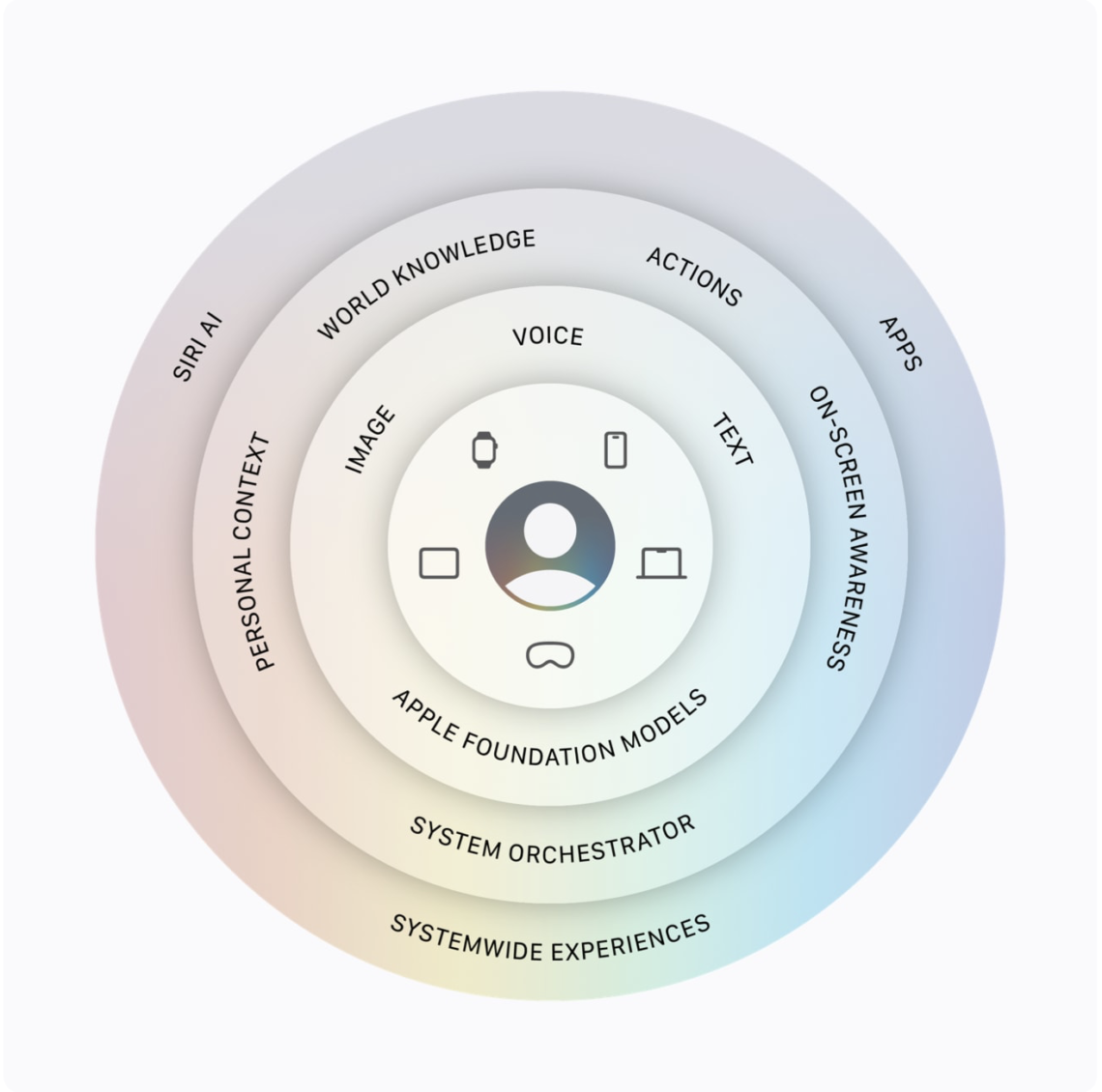
Yesterday, Apple unveiled what it describes as an entirely new generation of Siri, powered by Apple Intelligence. Far more than a voice assistant, Siri AI has been designed to understand personal context across a user’s devices, drawing information from emails, messages, photographs, notes and applications to provide more personalised and conversational responses.


Among the most significant developments are Siri’s ability to understand what is displayed on screen, retrieve information from personal archives, analyse visual content, and assist with writing, editing and everyday tasks. Apple is also introducing a dedicated Siri app, allowing users to continue conversations across devices while maintaining a searchable history.


Apple AI
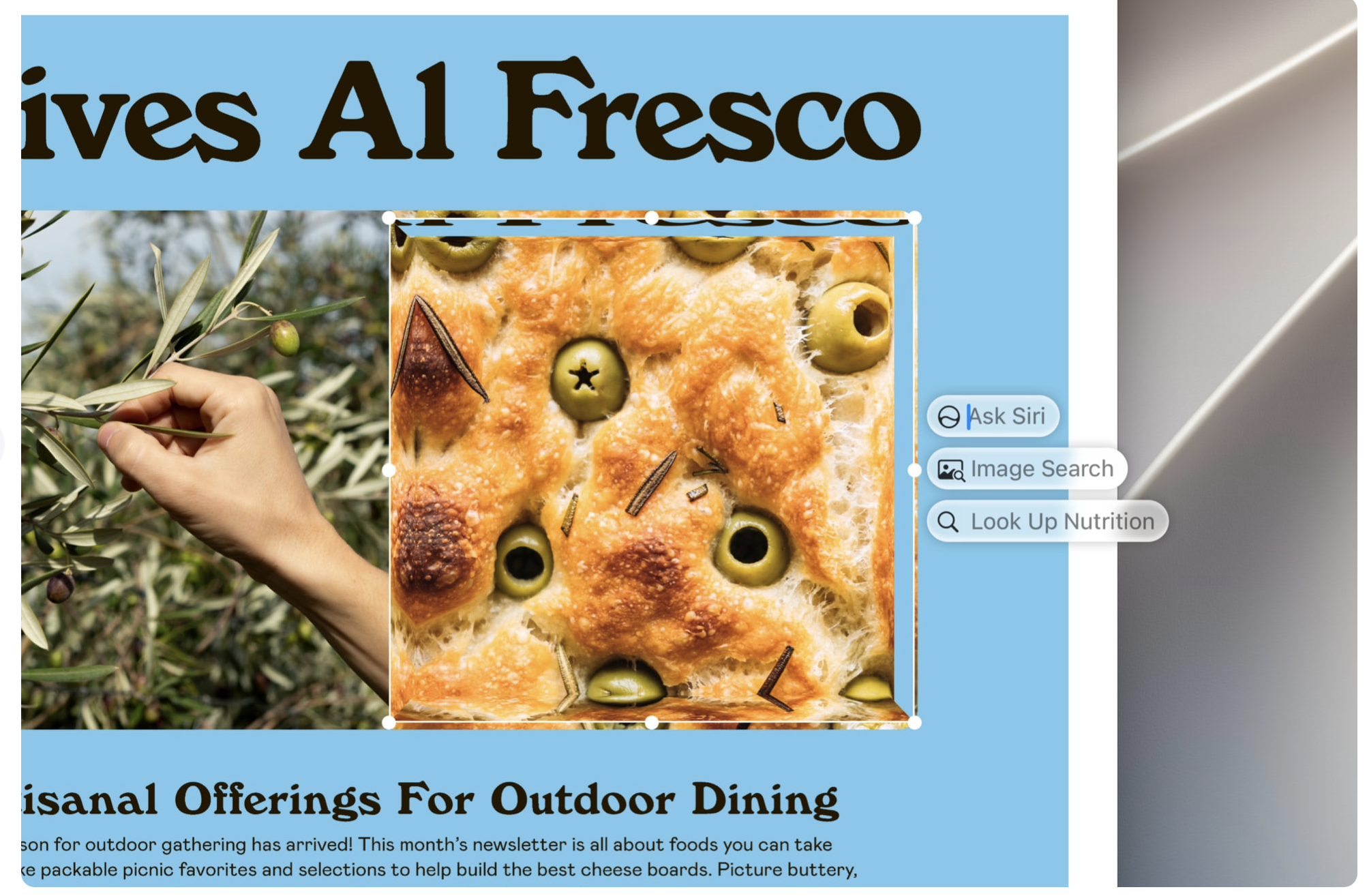
Visual Intelligence comes to Mac and iPad, so users can search visually, ask questions, and take action on their screen.

For photographers and visual storytellers, the announcement is particularly noteworthy because it signals a future in which artificial intelligence becomes increasingly integrated into how images are organised, interpreted and retrieved. Siri AI will be able to search photographs using natural language, understand visual content on screen, identify relationships between images and provide contextual information about what it sees. Combined with Apple’s expanding Visual Intelligence tools, this represents a significant shift in how users may interact with their photographic archives.


Apple has positioned privacy at the centre of the new system, emphasising on-device processing and its Private Cloud Compute architecture. Nevertheless, the announcement raises broader questions about the growing role of artificial intelligence in mediating personal memories, photographs and everyday experiences.


My Thoughts


Reading Apple’s announcement, I found myself thinking less about Siri and more about where photography, memory and personal technology are heading.
For years, our devices have helped us organise photographs, suggest edits and create automated albums. What Apple is now proposing feels like a much bigger step. Siri AI moves beyond being a voice assistant and becomes more of a digital companion, one capable of understanding personal context across emails, messages, photographs, and daily interactions.

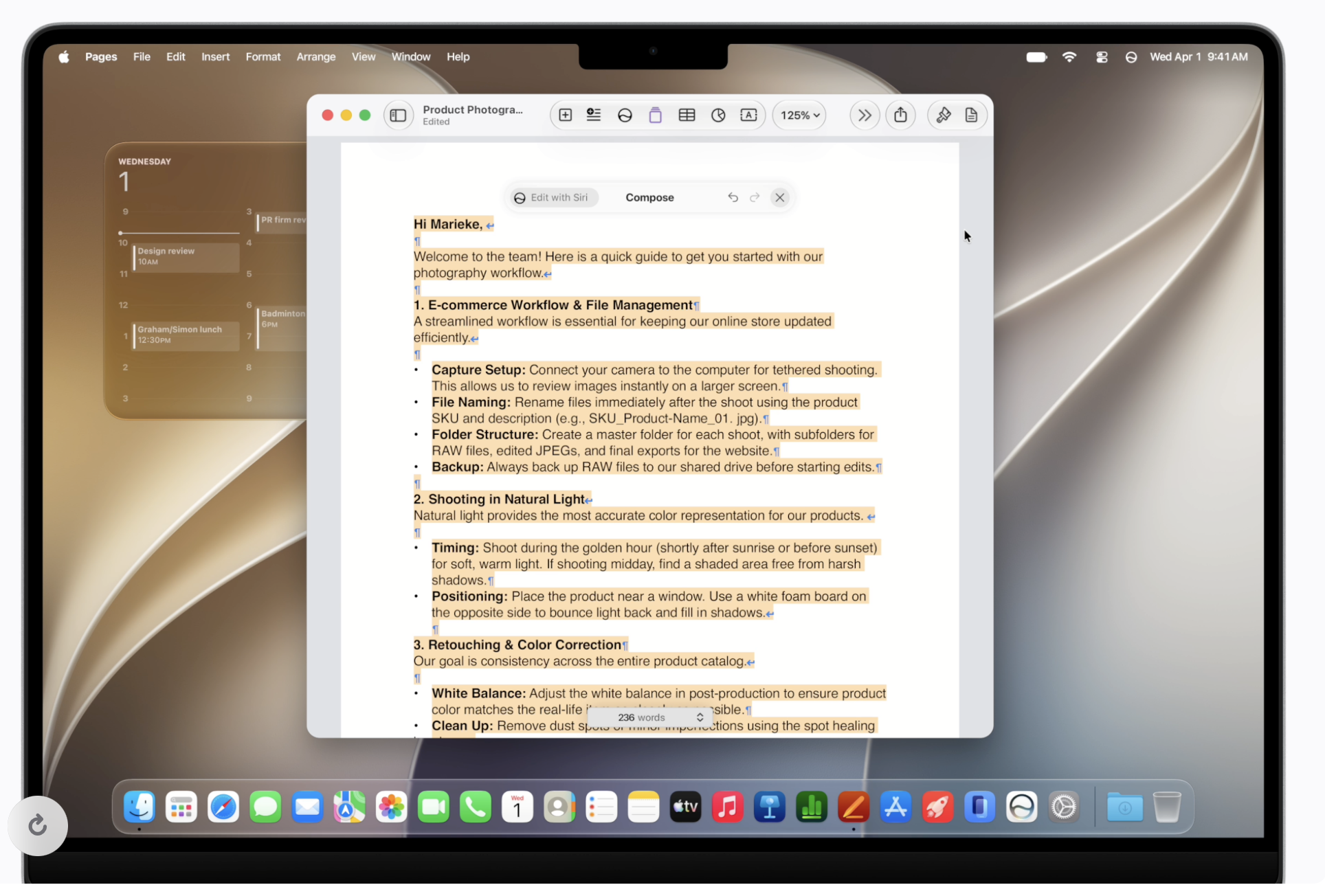
Apple AI
Users can write and edit with Siri AI virtually anywhere they type, simply by describing what they need.


From a photography perspective, the most interesting aspect is not image generation. It is the increasing ability of artificial intelligence to interpret, connect and contextualise visual information. As photographers, we have traditionally been the ones making those connections. We decide which images belong together, which memories matter and which stories deserve attention. Apple’s vision suggests a future where machines increasingly participate in that process.


I was particularly interested in the way Apple described Siri’s ability to surface old photographs, retrieve forgotten information and connect fragments of our digital lives. On one level, that sounds incredibly useful. Most of us have thousands of photographs scattered across devices, many of which are never looked at again. The prospect of naturally searching for moments, people, and experiences is undoubtedly appealing.


At the same time, I find myself wondering what happens when artificial intelligence begins deciding which memories are surfaced and which remain hidden. As someone whose academic research explored photography, memory, and the role of the spectator, I cannot help but see parallels with the questions that photographers, artists, and theorists have been asking for decades. Photographs do not simply record memory; they shape it. They influence how we remember events, people and places. If AI becomes the intermediary between us and our photographic archives, it may also begin to influence how those memories are understood.


This is perhaps where Apple’s announcement becomes most interesting. The technology itself is impressive, but the bigger story may be cultural rather than technical. Siri AI suggests a future in which artificial intelligence is not merely helping us find information but actively helping us organise, interpret and revisit our lives.


Whether that proves liberating or limiting remains to be seen. What is clear is that Apple’s vision of AI extends far beyond productivity tools and chatbots. It points towards a future where artificial intelligence becomes woven into our personal histories, our photographs and our memories.

For photographers, that may be one of the most significant developments of all.


Please support us

TheAppWhisperer has always had a dual mission: to promote the most talented mobile artists of the day and to support ambitious, interested viewers worldwide. As the years have passed, TheAppWhisperer has gained readers and viewers and found new venues for that exchange.

All this work thrives with the support of our community. Your support helps protect our independence, and we can keep delivering open, global promotion of mobile artists. Every contribution, however big or small, is valuable for our future.

Click here to help us

Joanne Carter, creator of the world’s most popular mobile photography and art website— TheAppWhisperer.com— TheAppWhisperer platform has been a pivotal cyberspace for mobile artists of all abilities to learn about, to explore, to celebrate and to share mobile artworks. Joanne’s compassion, inclusivity, and humility are hallmarks in all that she does, and is particularly evident in the platform she has built. In her words, “We all have the potential to remove ourselves from the centre of any circle and to expand a sphere of compassion outward; to include everyone interested in mobile art, ensuring every artist is within reach”, she has said. Promotion of mobile artists and the art form as a primary medium in today’s art world, has become her life’s focus. She has presented lectures bolstering mobile artists and their art from as far away as the Museum of Art in Seoul, South Korea to closer to her home in the UK at Focus on Imaging. Her experience as a jurist for mobile art competitions includes: Portugal, Canada, US, S Korea, UK and Italy. And her travels pioneering the breadth of mobile art includes key events in: Frankfurt, Naples, Amalfi Coast, Paris, Brazil, London. Pioneering the world’s first mobile art online gallery - TheAppWhispererPrintSales.com has extended her reach even further, shipping from London, UK to clients in the US, Europe and The Far East to a global group of collectors looking for exclusive art to hang in their homes and offices. The online gallery specialises in prints for discerning collectors of unique, previously unseen signed limited edition art. Her journey towards becoming The App Whisperer, includes (but is not limited to) working for a paparazzi photo agency for several years and as a deputy editor for a photo print magazine. Her own freelance photographic journalistic work is also widely acclaimed. She has been published extensively both within the UK and the US in national and international titles. These include The Times, The Sunday Times, The Guardian, Popular Photography & Imaging, dpreview, NikonPro, Which? and more recently with the BBC as a Contributor, Columnist at Vogue Italia and Contributing Editor at LensCulture. Her professional photography has also been widely exhibited throughout Europe, including Italy, Portugal and the UK. She is currently writing several books, all related to mobile art and is always open to requests for new commissions for either writing or photography projects or a combination of both. Please contact her at: joanne@theappwhisperer.com

Leave a Reply

Your email address will not be published. Required fields are marked *

This site uses Akismet to reduce spam. Learn how your comment data is processed.