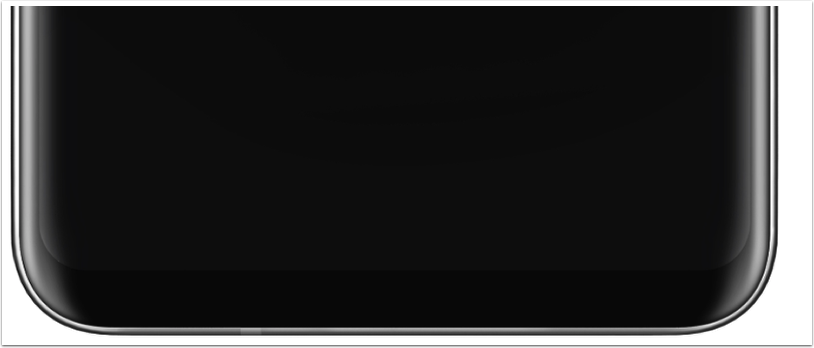
LG Announce New Flagship Smartphone with First to Feature Plastic OLED FullVision Display
According to circulating rumours, LG the Korean smartphone manufacturer, have been selected to supply the iPhone 8 with an OLED screen. What we do know is that LG have invested $7 billion into OLED production facilties. So, it’s not a huge surprise to hear of LG’s brand new flagship smartphone, announced today, will feature the world’s first smartphone device to feature a plastic OLED FullVision display.
“Expertise in OLED has long been a core competency of LG, and the technology has always been seen as a potential value-add for smartphones,” said Juno Cho, president of LG Electronics Mobile Communications Company. “With competition in the global smartphone space fiercer now than ever, we felt that this was the right time to reintroduce OLED displays in our mobile products.”
With consumers seeking bigger displays but eschewing larger phones that are uncomfortable to hold in one hand, LG’s FullVision display is a key contributor in the trend toward minimised bezels in smartphones. OLED was simply the next evolution for FullVision displays, delivering incredible quality, vividness and clarity to smartphone visuals. At six inches, the OLED FullVision display will be LG’s largest in four years while the actual body will be smaller than last year’s LG V20. As the upper and lower bezels have been reduced by 20 and 50 percent when compared to the V20, the LG logo has been moved from the bottom of the display to the back of the phone to maximize viewable screen space.
The FullVision display’s immersive and expansive visual experience is enhanced on the 4.15 million pixels of the QHD+ (1440 x 2880) OLED screen. Superb image quality is achieved via emissive OLED technology which reproduces perfect black and colours with greater accuracy across a wider color spectrum. By implementing optimal image algorithms gleaned from years of OLED research and development, visuals on this OLED display deliver 148 percent of the sRGB1 color space for digital images and 109 percent of the DCI-P32 color space for digital cinema. Another intrinsic advantage of OLED technology is operational response time, which is tens of times faster than LCD. This accelerated response time effectively eliminates afterimages, an important consideration for action movies and VR. And with support for HDR10, watching compatible movies and videos on this display offers a whole new eye-opening experience.
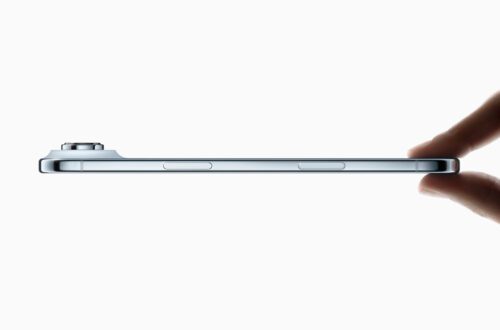
And because the screen in the upcoming smartphone will be based on plastic OLED technology – also known as P-OLED – the edges can be curved to allow for a more ergonomic design and a better feel in the hand. P-OLED is created by placing pixels on a plastic substrate which is much stronger than a glass base. What’s more, the display is protected by Corning Gorilla Glass 5 that incorporates shatter-resistant technology. Most importantly, using advanced encapsulation and pixel-scanning technology, the burn-in problem that has affected OLED technology in the past has been all but eliminated in the P-OLED technology in LG’s upcoming device. Encapsulation significantly reduces oxidation of the pixels and LG’s pixel-scanning technology allows for less energy to be applied to each pixel, also saving battery power.
While you’re here…
….we have a small favour to ask. More people than ever are reading TheAppWhisperer.com and we could not be more excited about that. We bring you ad-free journalism every day, so you don’t have to close windows and be distracted with advertisements. We specialise in mobile photography and mobile art and we value all of our readers, writers, contributors and viewers but we do have costs and we do need to ask for your help. We at TheAppWhisperer spend many hours each day, each week and each month to bring you this high quality level of journalism. We do it because we are passionate about it and because we want others to be as passionate too.
If everyone who reads our website, who likes it, helps to support it, our future would be so much more secure. Please help us by offering a contribution or supporting us with a monthly donation of your choosing. Please will you help us?
[seamless-donations]

Joanne Carter
Joanne Carter is a British photographer, photography journalist, editor and curator and the founder and editorial director of TheAppWhisperer.com, an independent international photography publication established in 2009.Her journalism, criticism and commentary have appeared in The Times, The Sunday Times, The Guardian, Financial Times, BBC, Vogue Italia, LensCulture, Popular Photography, Android Magazine, NikonPro, DPReview, Which Digital Camera and Which Camera. She has lectured internationally on photography and mobile art, served as a juror for international photography awards, and exhibited her own photographic work across the UK, Europe, South Korea and the United States.Alongside her editorial work, Joanne's photographic and postgraduate research explores death, grief, memory, representation and social inequality through contemporary photography, participatory practice and visual research methods, with the longer-term aim of developing this work through doctoral research.Through TheAppWhisperer, she continues to publish independent photography journalism spanning contemporary photographic practice, mobile imaging, photographic apps, computational photography and emerging imaging technologies.Joanne is available for editorial commissions, photography projects, judging, curatorial work, speaking engagements, consultancy and selected collaborations.