Apple announces powerful software updates designed for people with disabilities
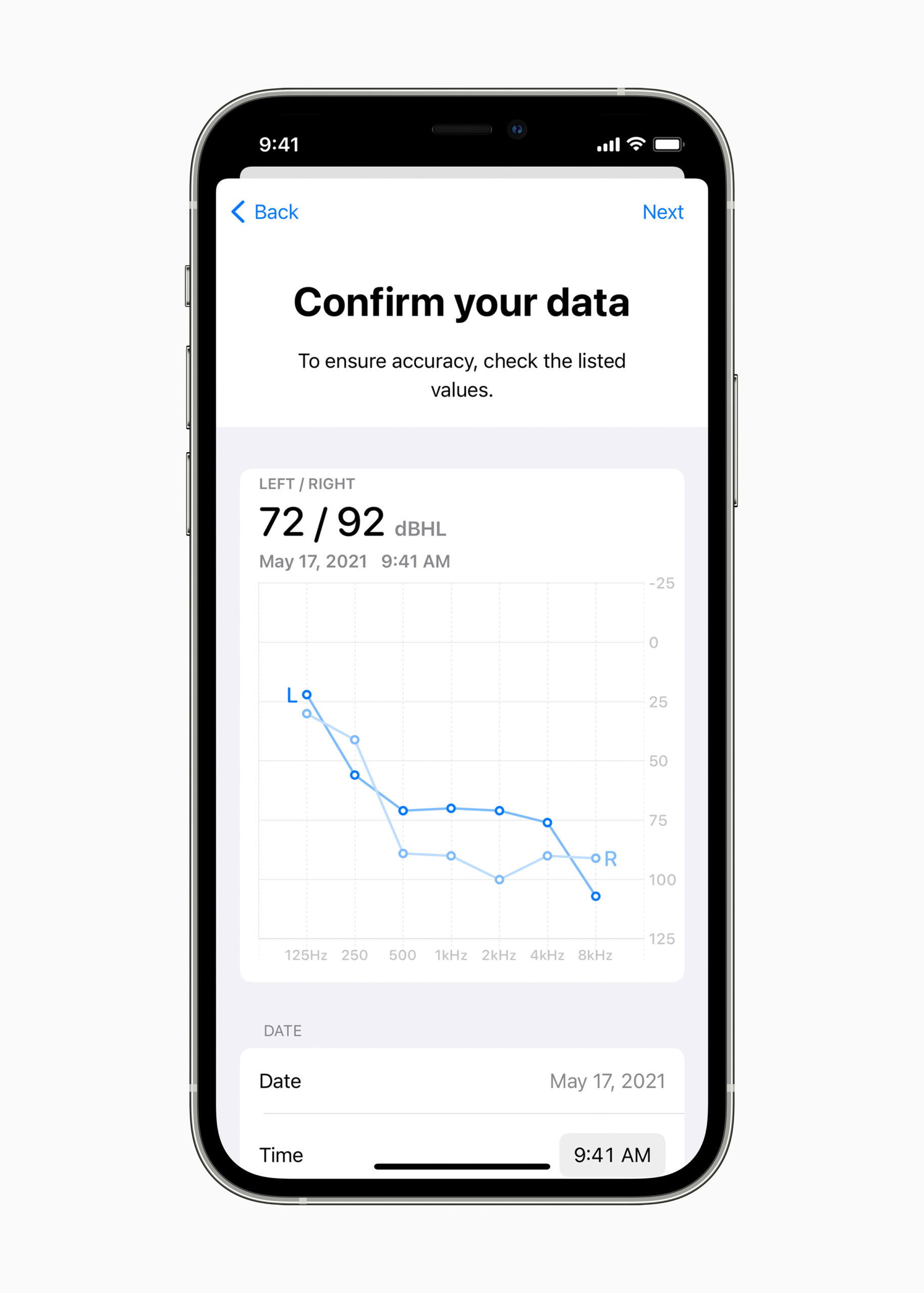
This is truly wonderful news! Apple has announced powerful software updates designed for people with disabilities. They’re all wonderful and I will detail their features below but one particularly interests me. It is the Made for iPhone Hearing Aids and Audiogram Support features. Many of you will be aware that I cannot hear, so to manage, I wear hearing aids but the ones I wear are not ‘Made for iPhone Hearing Aids’ so I cannot benefit from this significant update but for people who can afford to have this style of hearing aid, just being able to upload your audiogram chart directly to adjust the sensitivity of your hearing aid, is an absolute massive step forward. I urge anyone, who wears hearing aids, if they can afford to upgrade to the ‘Made for iPhone Hearing Aids’ then they will see a huge benefit in their hearing ability. If anyone reading this, does do this, please email me about your experience, I would love to learn first hand how they help you.
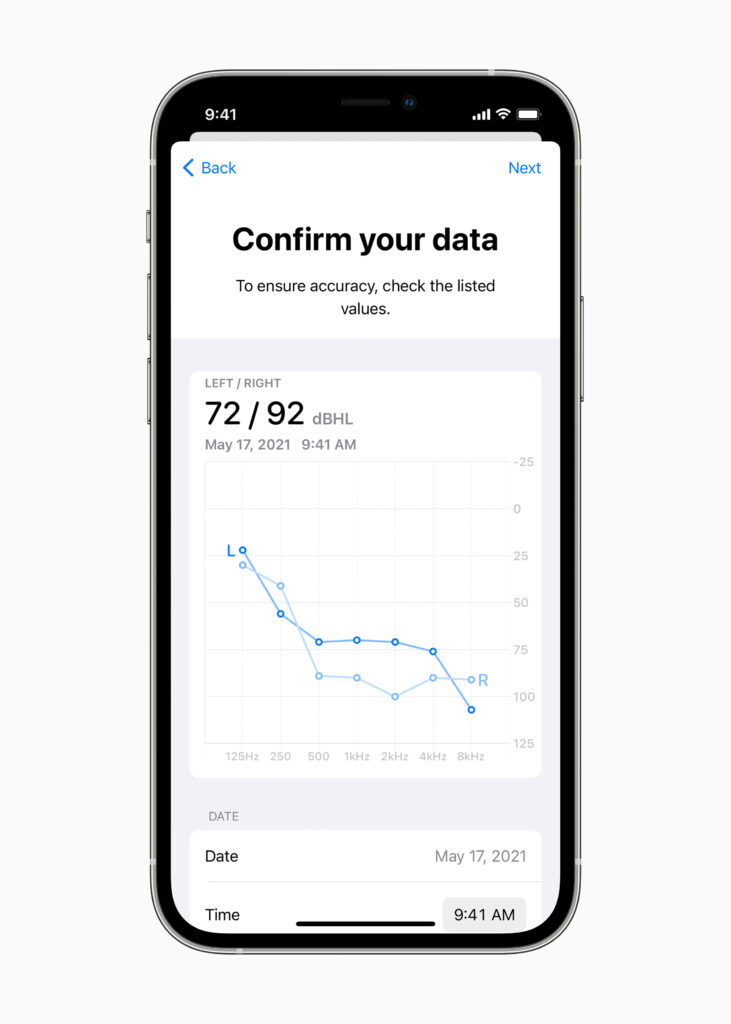
The significant update to the MFi hearing devices program includes support for new bi-directional hearing aids. The microphones in these new hearing aids enable those who are deaf or hard of hearing to have hands-free phone and FaceTime conversations (this would be amazing!). The next-generation models from MFi partners will be available later this year.
Background Sounds
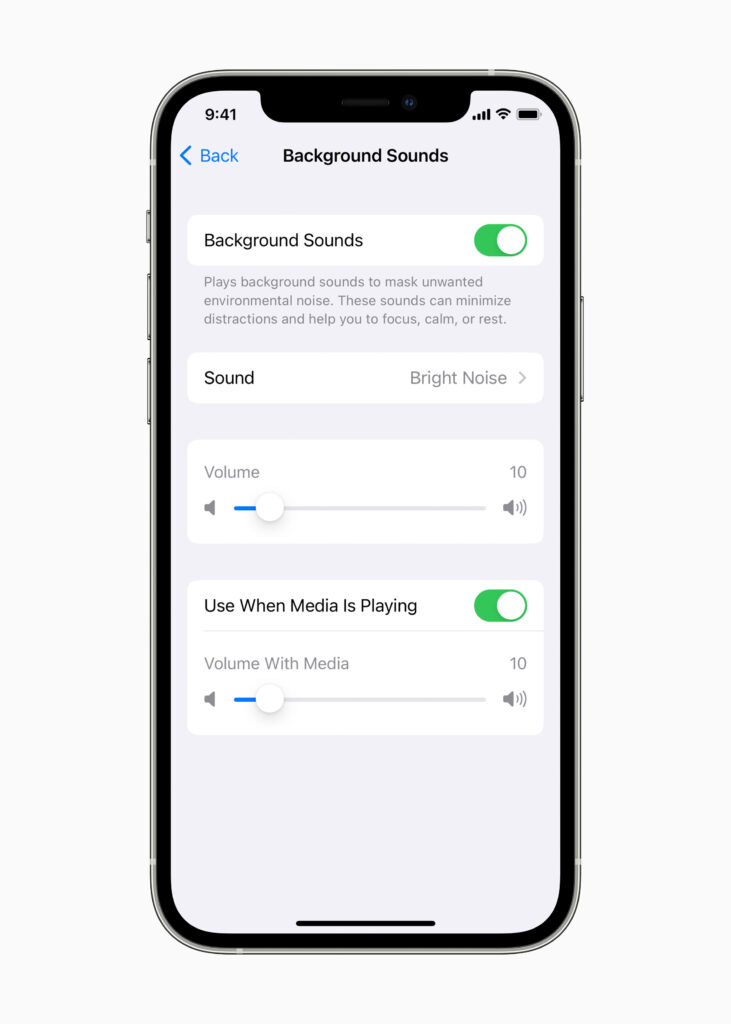
Everyday sounds can be distracting, discomforting, or overwhelming, and in support of neurodiversity, Apple is introducing new background sounds to help minimise distractions and help users focus, stay calm, or rest. Balanced, bright, or dark noise, as well as ocean, rain, or stream sounds continuously play in the background to mask unwanted environmental or external noise, and the sounds mix into or duck under other audio and system sounds.
Additional features coming later this year include:
- Sound Actions for Switch Control replaces physical buttons and switches with mouth sounds — such as a click, pop, or “ee” sound — for users who are non-speaking and have limited mobility.
- Display and Text Size settings can be customised in each app for users with colourblindness or other vision challenges to make the screen easier to see. Users will be able to customise these settings on an app-by-app basis for all supported apps.
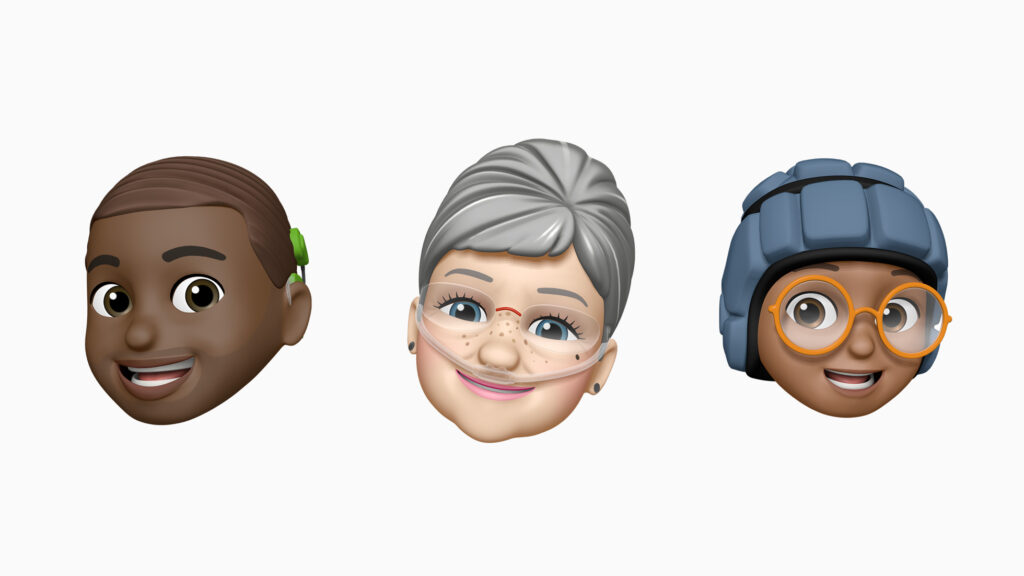
- New Memoji customisations better represent users with oxygen tubes, cochlear implants, and a soft helmet for headwear.
Later this year, with software updates across all of Apple’s operating systems, people with limb differences will be able to navigate Apple Watch using AssistiveTouch; iPad will support third-party eye-tracking hardware for easier control; and for blind and low vision communities, Apple’s industry-leading VoiceOver screen reader will get even smarter using on-device intelligence to explore objects within images. In support of neurodiversity, Apple is introducing new background sounds to help minimise distractions, and for those who are deaf or hard of hearing, Made for iPhone (MFi) will soon support new bi-directional hearing aids.
Apple is also launching a new service today, 20 May, 2021, called SignTime. This enables customers to communicate with AppleCare and Retail Customer Care by using American Sign Language (ASL) in the US, British Sign Language (BSL) in the UK, or French Sign Language (LSF) in France, right in their web browsers. Customers visiting Apple Store locations can also use SignTime to remotely access a sign language interpreter without booking ahead of time. SignTime will initially launch in the US, UK, and France, with plans to expand to additional countries in the future.
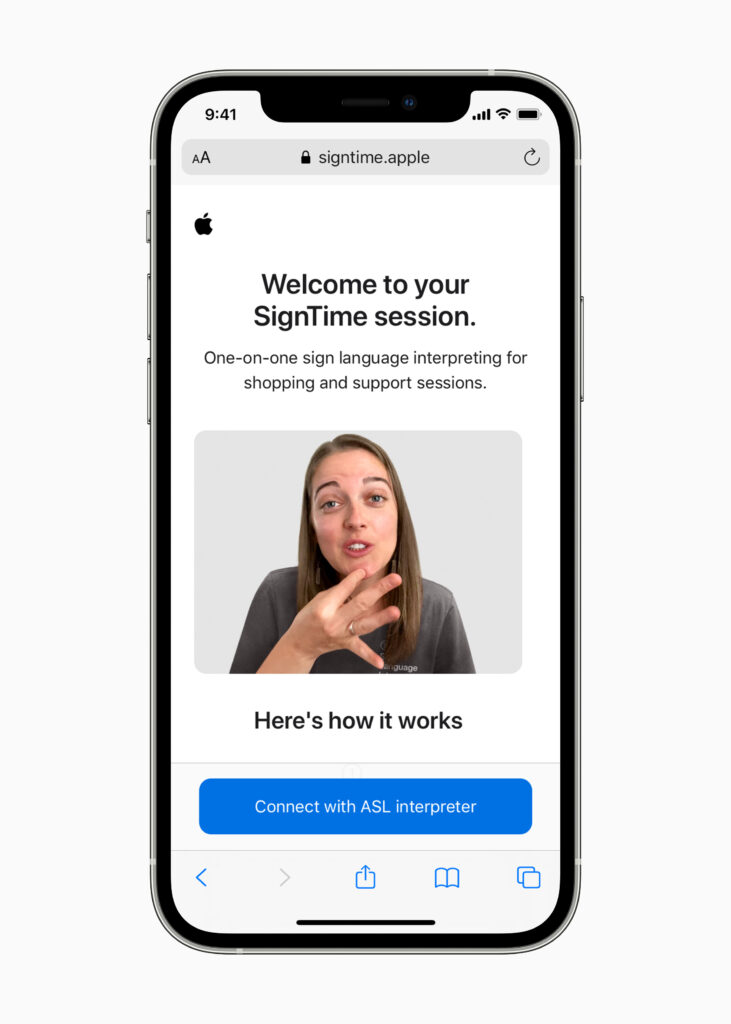
“At Apple, we’ve long felt that the world’s best technology should respond to everyone’s needs, and our teams work relentlessly to build accessibility into everything we make,” said Sarah Herrlinger, Apple’s senior director of Global Accessibility Policy and Initiatives. “With these new features, we’re pushing the boundaries of innovation with next-generation technologies that bring the fun and function of Apple technology to even more people — and we can’t wait to share them with our users.”
AssistiveTouch for Apple Watch
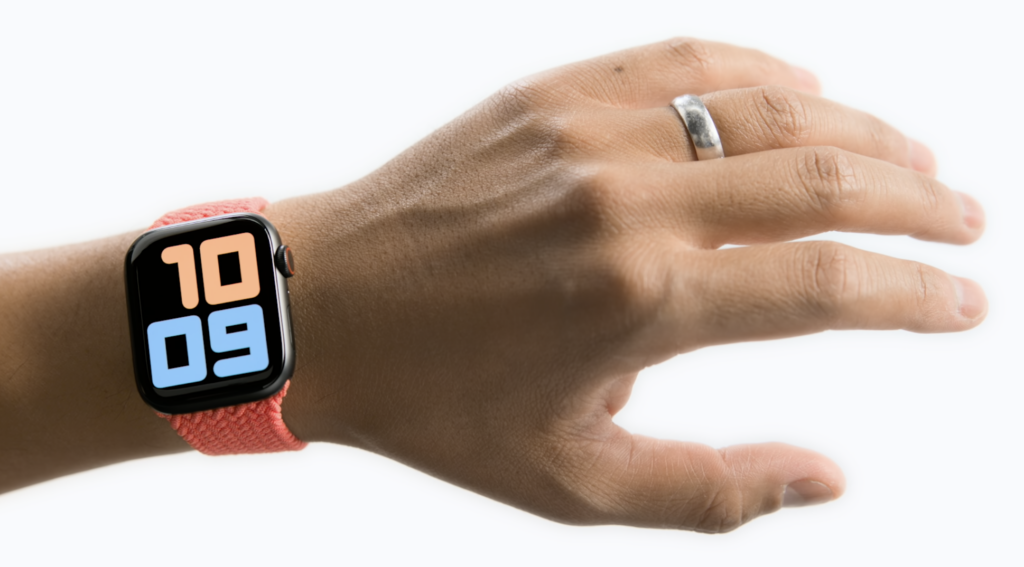
To support users with limited mobility, Apple is introducing a revolutionary new accessibility feature for Apple Watch. AssistiveTouch for watchOS allows users with upper body limb differences to enjoy the benefits of Apple Watch without ever having to touch the display or controls. Using built-in motion sensors like the gyroscope and accelerometer, along with the optical heart rate sensor and on-device machine learning, Apple Watch can detect subtle differences in muscle movement and tendon activity, which lets users navigate a cursor on the display through a series of hand gestures, like a pinch or a clench. AssistiveTouch on Apple Watch enables customers who have limb differences to more easily answer incoming calls, control an onscreen motion pointer, and access Notification Center, Control Center, and more.
Eye-Tracking Support for iPad
iPadOS will support third-party eye-tracking devices, making it possible for people to control iPad using just their eyes. Later this year, compatible MFi devices will track where a person is looking onscreen and the pointer will move to follow the person’s gaze, while extended eye contact performs an action, like a tap.
Explore Images with VoiceOver
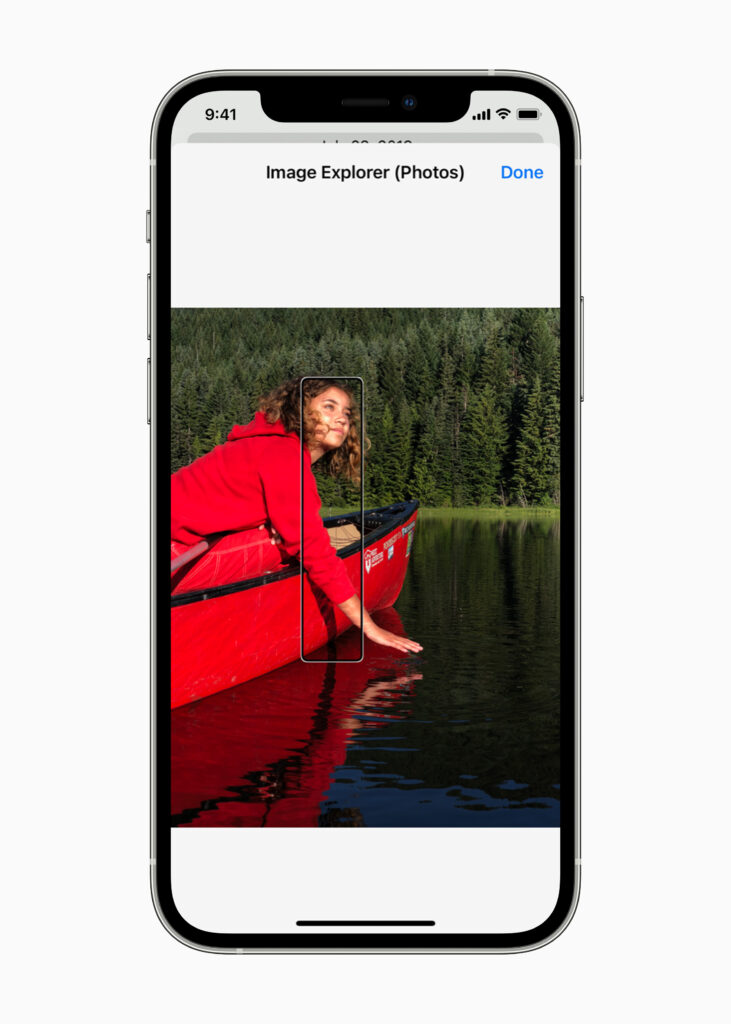
Apple is introducing new features for VoiceOver, an industry‑leading screen reader for blind and low vision communities. Building on recent updates that brought Image Descriptions to VoiceOver, users can now explore even more details about the people, text, table data, and other objects within images. Users can navigate a photo of a receipt like a table: by row and column, complete with table headers. VoiceOver can also describe a person’s position along with other objects within images — so people can relive memories in detail, and with Markup, users can add their own image descriptions to personalise family photos.
In celebration of Global Accessibility Awareness Day, Apple is also launching new features, sessions, curated collections, and more:
- This week in Apple Fitness+, trainer and award-winning adaptive athlete Amir Ekbatani talks about Apple’s commitment to making Fitness+ as accessible and inclusive as possible. Fitness+ features workouts inviting to all, from trainers using sign language in each workout to say “Welcome” or “Great job!,” to “Time to Walk” episodes changing to “Time to Walk or Push” for wheelchair workouts on Apple Watch, and all videos include closed captioning. Fitness+ also includes a trainer demonstrating modifications in each workout, so users at all levels can join in.
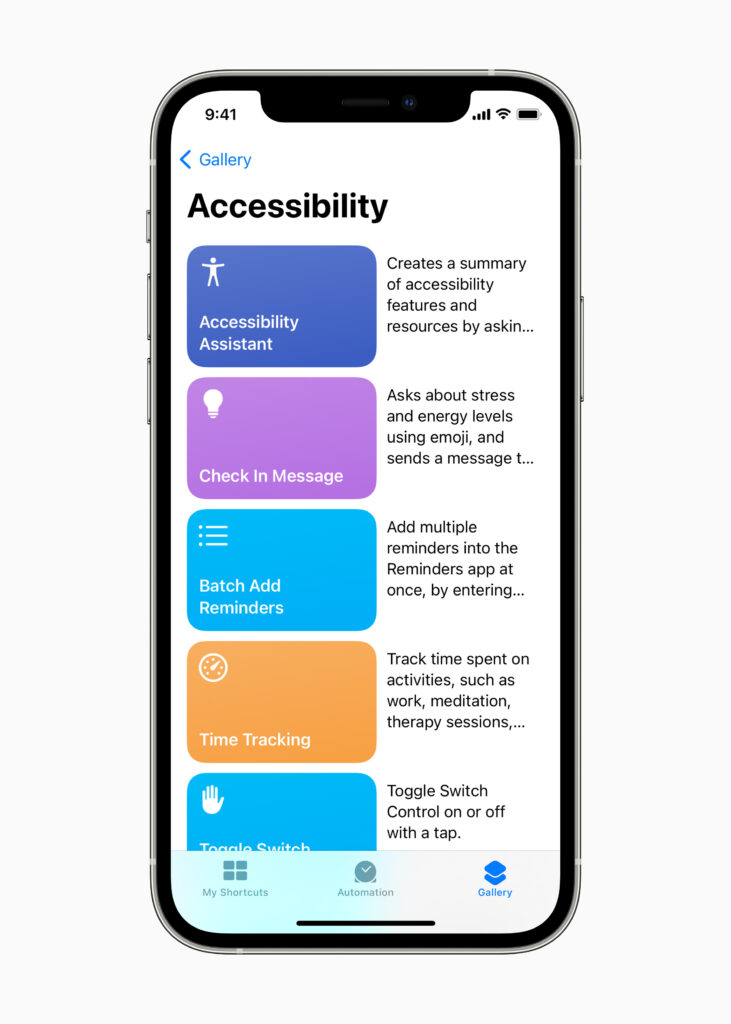
- The Shortcuts for Accessibility Gallery provides useful Siri Shortcuts for tracking medications and supporting daily routines, and a new Accessibility Assistant Shortcut helps people discover Apple’s built-in features and resources for personalising them.
- Today at Apple is offering live, virtual sessions in ASL and BSL throughout the day on May 20 that teach the basics of iPhone and iPad for people with disabilities. In some regions, Today at Apple will offer increased availability of Accessibility sessions in stores, through May 30.
- In the App Store, customers can read stories about Lucy Edwards, an influencer on TikTok who is blind and shares her favourite accessible apps; App of the Day FiLMiC Pro, which is among the most accessible video apps for blind and low vision filmmakers; and more in the new Express Yourself Your Way collection.
- The Apple TV app will spotlight its Barrier-Breaking Characters collection which celebrates authentic disability representation onscreen and behind the camera. It features guest curation from creators and artists like the cast of “Best Summer Ever,” who share their favourite movies and shows in an editorial experience designed by American Pop-Op and Urban Folk artist Tennessee Loveless, known for his vibrant illustrations and colourful storytelling told through the lens of his colourblindness.
- Apple Books adds reading recommendations from author and disability rights activist Judith Heumann, along with other themed collections.
- Apple Maps features new guides from Gallaudet University, the world’s premier university for Deaf, hard of hearing, and Deafblind students, that help connect users to businesses and organisations that value, embrace, and prioritise the Deaf community and signed languages.
Please help…
TheAppWhisperer has always had a dual mission: to promote the most talented mobile artists of the day and to support ambitious, inquisitive viewers the world over. As the years passTheAppWhisperer has gained readers and viewers and found new venues for that exchange. All this work thrives with the support of our community.
Please consider making a donation to TheAppWhisperer as this New Year commences because your support helps protect our independence and it means we can keep delivering the promotion of mobile artists that’s open for everyone around the world. Every contribution, however big or small, is so valuable for our future.

Joanne Carter
Joanne Carter is a British photographer, photography journalist, editor and curator and the founder and editorial director of TheAppWhisperer.com, an independent international photography publication established in 2009.Her journalism, criticism and commentary have appeared in The Times, The Sunday Times, The Guardian, Financial Times, BBC, Vogue Italia, LensCulture, Popular Photography, Android Magazine, NikonPro, DPReview, Which Digital Camera and Which Camera. She has lectured internationally on photography and mobile art, served as a juror for international photography awards, and exhibited her own photographic work across the UK, Europe, South Korea and the United States.Alongside her editorial work, Joanne's photographic and postgraduate research explores death, grief, memory, representation and social inequality through contemporary photography, participatory practice and visual research methods, with the longer-term aim of developing this work through doctoral research.Through TheAppWhisperer, she continues to publish independent photography journalism spanning contemporary photographic practice, mobile imaging, photographic apps, computational photography and emerging imaging technologies.Joanne is available for editorial commissions, photography projects, judging, curatorial work, speaking engagements, consultancy and selected collaborations.