Book Review: Lachlan Goudie’s The Secrets of Painting
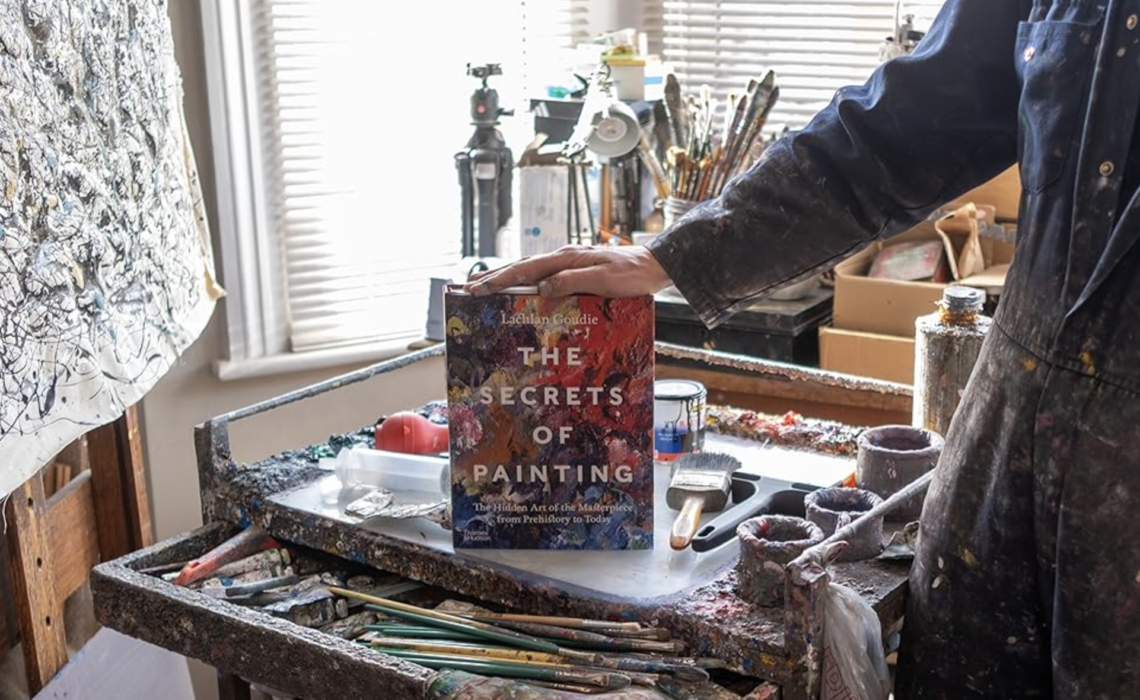
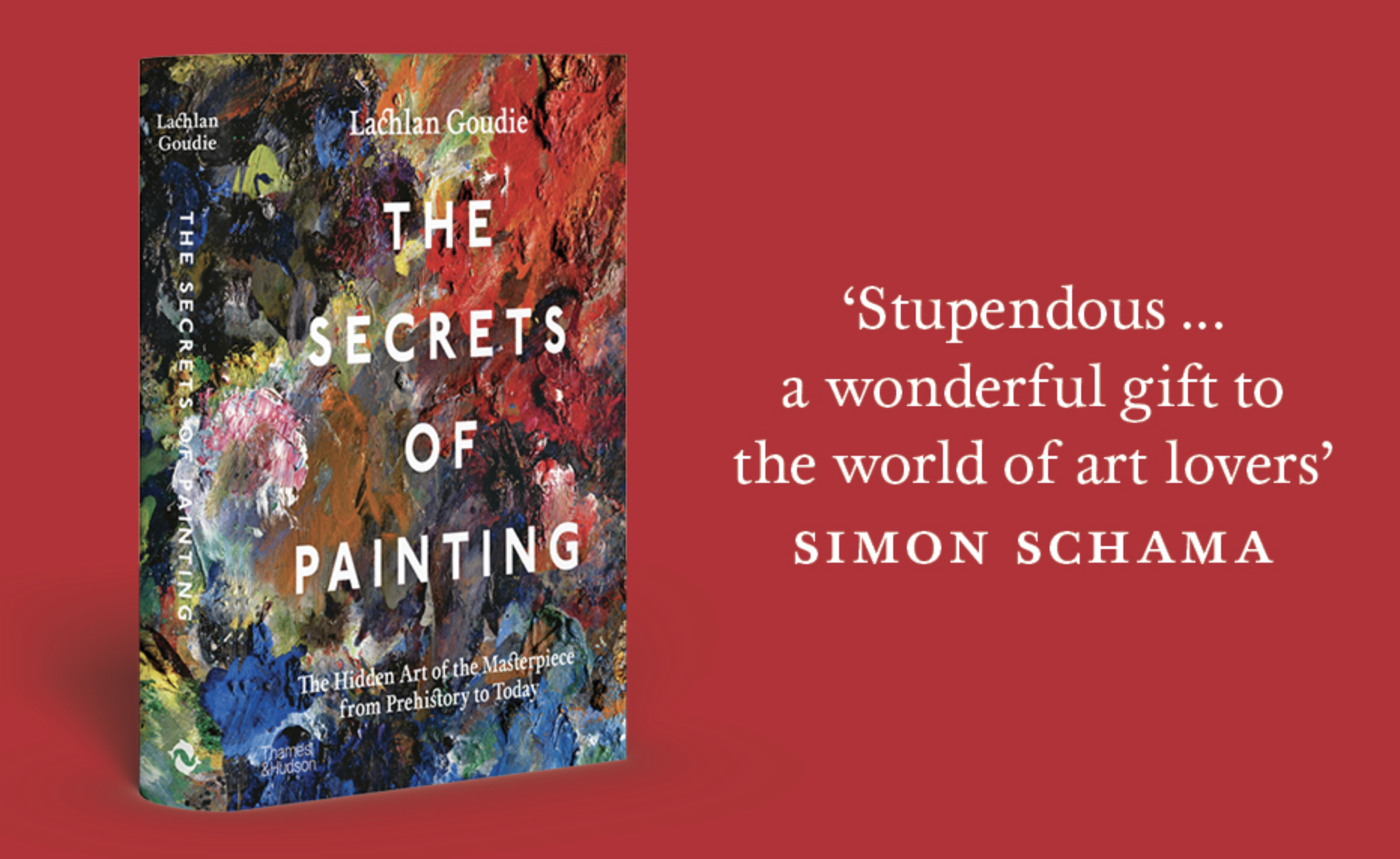
The Secrets of Painting
The Hidden Art of the Masterpiece from Prehistory to Today
By Lachlan Goudie
Publication: 2 April 2026
384pp, 220 illustrations, 24.6 x 18.6 cm, £38.00 hardback
This is a serious pleasure to read. The Secrets of Painting by Lachlan Goudie doesn’t make things difficult, and it doesn’t dilute what it knows. It holds a line between the two, and that’s precisely why it works. From the outset, it draws you in without forcing anything. You keep reading, and more importantly, you keep looking.
Lachlan Goudie writes with a clarity that is harder to achieve than complexity. There’s no sense of knowledge being withheld, nor any attempt to overwhelm. Instead, he opens things up. The tone is controlled but not dry; it is engaged but never overplayed. You’re brought into the process rather than kept at a distance.
He keeps returning to the fact that paintings are made. It sounds obvious, but it isn’t how we usually talk about art. Most writing goes straight to meaning or context. Here, you’re held at the surface a bit longer — how the paint sits, what’s been changed, what hasn’t quite worked. Those things aren’t secondary. They’re the point.
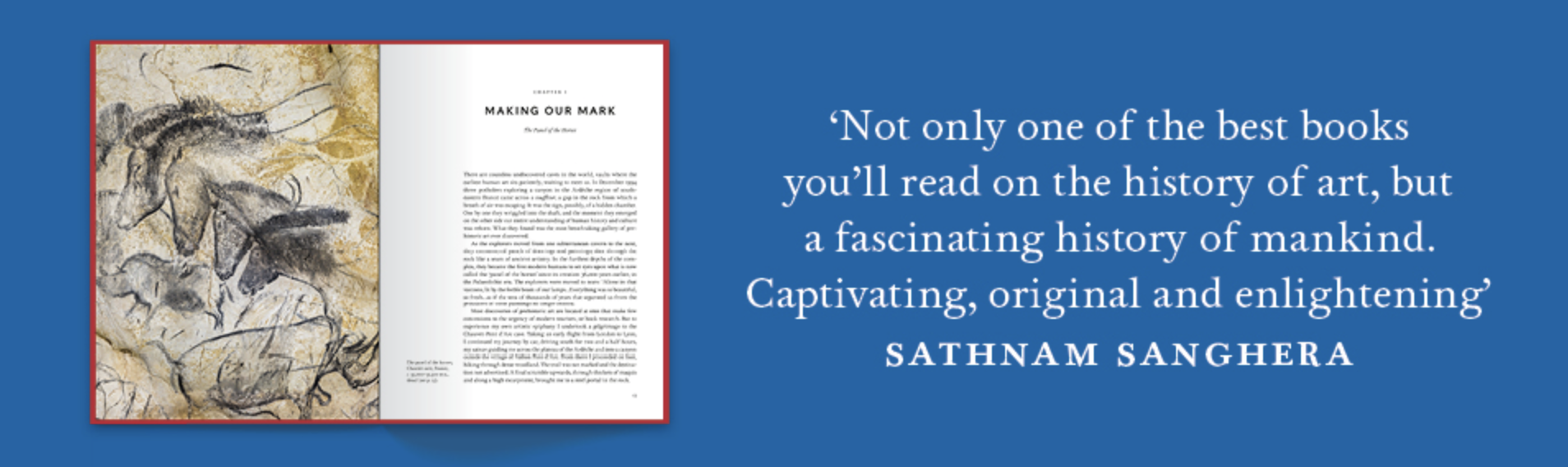
There’s a section on cave painting that sets the tone early on. It avoids reverence altogether. Instead, it reduces the act to its conditions: limited light, unstable surfaces, and physical constraints. You begin to think less about what the images represent and more about how they were made to hold at all. That shift is immediate, and once it happens, it doesn’t reverse.
When he gets to oil painting, he strips away the idea that it’s somehow elevated. It’s slow, often frustrating. Paint shifts, surfaces change, and things don’t quite do what you want. You spend a lot of time correcting or working around it. He doesn’t tidy that up, which is why it works. It doesn’t feel theoretical. There’s a sense he’s been through it — the trial and error — and that shows in the way he writes.
One of the most precise passages is his discussion of Turner’s The Blue Rigi. Here, the method is clear. Goudie doesn’t step back to summarise. He moves through the painting itself. Colour, surface, and the distribution of detail — or its refusal — are all brought into focus.
What sharpens the reading is the context he builds around it. The early nineteenth-century world of the Royal Academy comes into view, with its fixed expectations. Painting was judged by its finish. Detail, precision, and control — these defined quality. It was a system, and it was rigid.
It was a tight hierarchy. History painting — religious scenes, classical subjects — sat firmly at the top. Landscapes were already pushed to the side, and watercolours even more so, often treated as minor or not quite serious. The phrase “lady amateur” appears, which lands awkwardly now, but makes it clear how narrow those ideas of seriousness really were.
Later, in Chapter 19, Painting with Pixels, the same attention to material extends into a different space. Here, Goudie turns to David Hockney and his early digital work. Beginning in 2009, Hockney used the Brushes app on the iPhone, drawing directly on the screen with his finger.
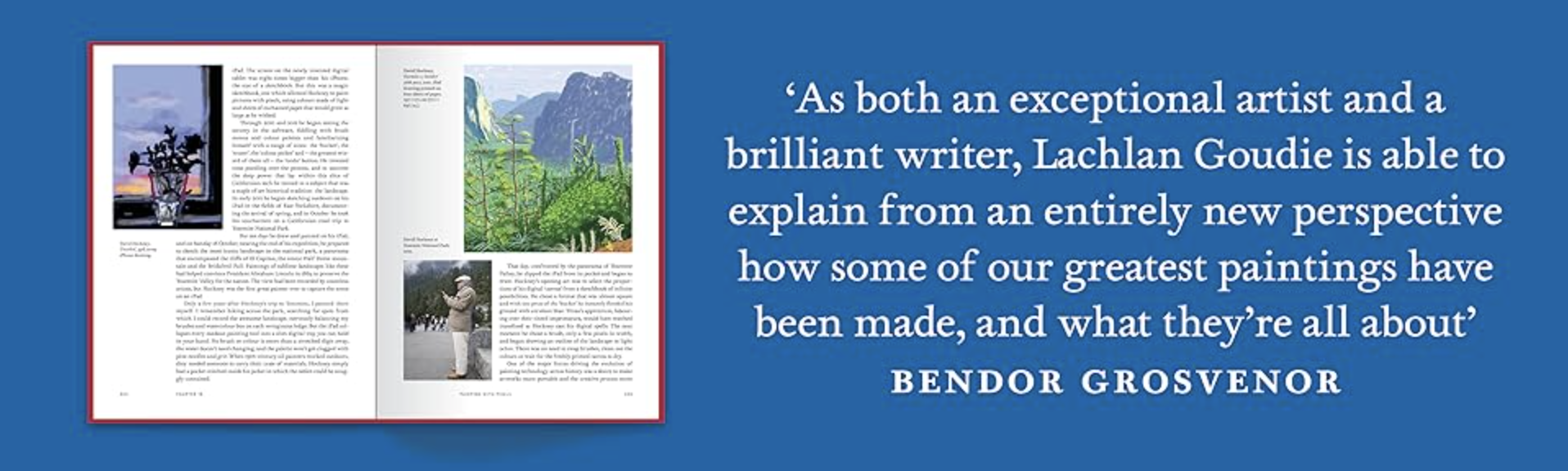
What matters is immediacy. The work is made quickly, sent quickly, and repeated. There’s no delay, no accumulation of material resistance. The act of looking and the act of making begin to collapse into one another. When Hockney moves to the iPad, the scale expands. The gestures become broader, the colour more saturated, the images more resolved. These are no longer sketches in any conventional sense. They are considered finished works and are moved into exhibition spaces accordingly. Goudie links this back to Hockney leaving East Yorkshire for California and the change in light that came with it. It doesn’t feel like a separate phase. More like something that’s carried through, just handled differently.
The comparison between digital colour and acrylic is precise. Both offer immediacy and intensity, but digital removes resistance entirely. There is no drying time and no physical limitation. Colour can be pushed, reworked, and undone without consequence. That alters the nature of decision-making.
In traditional painting, decisions accumulate and fix. In digital work, they remain provisional. The image is never entirely closed. Hockney’s current use of tools such as Procreate reflects this. Control increases, but the approach remains direct.
Goudie ends this chapter by suggesting the iPad won’t be the endpoint either, just another step. Things are already moving on, and painting isn’t tied to the same kind of space as before. The idea of a studio, or even a surface, feels less fixed than it used to. He doesn’t resolve that, and he shouldn’t.
Throughout the book, it becomes clear that painting has never been stable. It has always shifted with its materials. Each change of medium alters not only how painting is made but also what it can be. What stays with you is not a set of conclusions but a shift in attention. You begin to see differently. Edges, surfaces, transitions — places where something has been altered or left unresolved — begin to carry more weight. The book itself reflects that attention. It’s carefully made and rewards return. It isn’t something you read once and set aside. It holds you, and it continues to do so. That is where its value lies. It doesn’t attempt to close painting down. It resists that. Instead, it keeps it open, contingent, and dependent on material, time, and decision. In the end, it feels like a form of access. Not simplified, but direct.
It feels like a gift, actually — the kind you don’t just give but want to share. You read it, sit with it, and then find yourself wanting to talk about it with someone else, to go back over certain parts, to see what they make of it. It becomes less about the book itself and more about what happens around it — the conversations, the returning to it together, the sense that it keeps unfolding.
If you have enjoyed this review, you may also enjoy these ones too:
Death and Other Belongings by Will Green
Please support us
TheAppWhisperer has always had a dual mission: to promote the most talented mobile artists of the day and to support ambitious, interested viewers worldwide. As the years pass, TheAppWhisperer has gained readers and viewers and has found new venues for that exchange.
All this work thrives with the support of our community. Your support helps protect our independence, and we can keep delivering open, global promotion of mobile artists. Every contribution, however big or small, is valuable for our future.

Joanne Carter
Joanne Carter is a British photographer, photography journalist, editor and curator and the founder and editorial director of TheAppWhisperer.com, an independent international photography publication established in 2009.Her journalism, criticism and commentary have appeared in The Times, The Sunday Times, The Guardian, Financial Times, BBC, Vogue Italia, LensCulture, Popular Photography, Android Magazine, NikonPro, DPReview, Which Digital Camera and Which Camera. She has lectured internationally on photography and mobile art, served as a juror for international photography awards, and exhibited her own photographic work across the UK, Europe, South Korea and the United States.Alongside her editorial work, Joanne's photographic and postgraduate research explores death, grief, memory, representation and social inequality through contemporary photography, participatory practice and visual research methods, with the longer-term aim of developing this work through doctoral research.Through TheAppWhisperer, she continues to publish independent photography journalism spanning contemporary photographic practice, mobile imaging, photographic apps, computational photography and emerging imaging technologies.Joanne is available for editorial commissions, photography projects, judging, curatorial work, speaking engagements, consultancy and selected collaborations.