‘Impossible’ Interview with Manoj Jadhav
We’re delighted to be working closer with The Impossible Project team as we continue to branch out and expand our reach with all things related to mobile photography. Analog post-processing of mobile images is becoming more and more popular and we’re going to make sure our readers are fully briefed on this very exciting development.
The Impossible Project is in many ways leading the way, but there is also a growing community of mobile artists and photographers experimenting with other analog post processing techniques in an attempt to make their mobile images stand out even more, in galleries, magazines and the like and we have viewed some outstanding images and techniques.
A good deal of my formal photographic training (many years ago) was spent in a huge college darkroom and it is an area that I’ve always enjoyed, I think you will too. I also had a very close working relationship with Polaroid built up through my years as Technical Editor for various UK photography print magazines/titles.
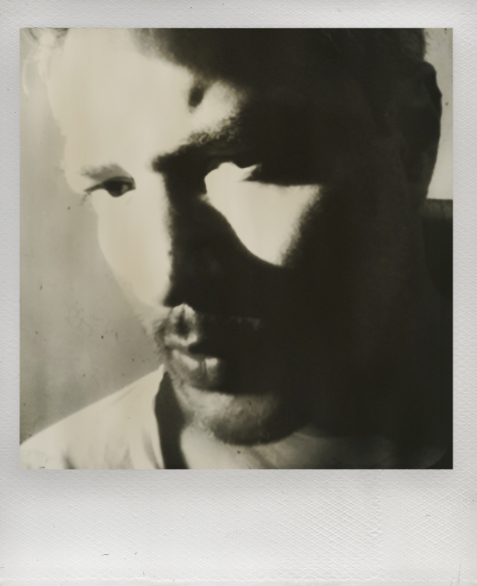
Today we are publishing the twelth of a series of ‘Impossible’ articles, this time with Manoj Jadhav, a professional photographer, artist and film maker living in Mumbai, India.
Manoj Jadhav
©Manoj Jadhav
How long have you been shooting Polaroid/Impossible film?
I was 10 years old when I first shot with a polaroid camera. It was my father’s new possession and I shot some images on our family holiday. As a kid it was truly magical to see photos appearing out of nowhere.
My real connection with Polaroid happened in 1992 when I was in my art college in Mumbai. While looking for some old film cameras I came across an used SX-70 in a repair shop. I asked the shop owner and he sold it to me because no one was buying these cameras anymore, finding SX-70 Polaroid film was almost impossible. After getting the camera I did a little modification and used it with Polaroid 600 films.
It has been almost 22 years since I got that first one and as time went by I’ve ended up buying many more Polaroid models.Shooting with instant films has always fascinated me. Even today, when I load a fresh pack of film in the camera, I get as excited as my first day of using it.
When Polaroid shut down I almost gave up on the idea of shooting with these cameras again. Then then one day I heard about The Impossible Project. I was excited to know someone was passionate enough to bring these films back to life again. I managed to get some of the first films they sold online and fell in love with it right way. I’ve been shooting
©Manoj Jadhav
What cameras do you use? What do you like about them?
I shoot with many different formats. Everything from plastic Holga to ultra-large format, wet plate wooden cameras. Analog cameras are my favorite. I learnt my photography using these and some of my best experiences are associated with film cameras.
I love the simplicity of old cameras.There’s always a personal connection with an analog image. One needs to physically participate in an image making process and what you create becomes as much part of you. I love this personal connection and control over creating an image.
This is also one of the reasons I like working with instant films. They give you similar freedom to control and manipulate the image as per your liking or style. My favorite instant film cameras are Polaroid SX-70 and Polaroid 180. I love the SX-70’s iconic design, simple control and portability. It’s an absolute must for every instant photography lover.
©Manoj Jadhav
Where do you shoot most often? And on what film(s)?
It depends on what I am shooting. I shoot in indoor studios and outdoor locations. I’m happy to shoot anywhere. I must say I have a special liking towards natural light.
My favorite instant films are Impossible Color & b&w emulsions. I also like Polaroid 55 and 100 films.
How would you describe your work? And who/what/where inspires you?
I would describe my work as portraits. People interest me. Every day life inspires me. I like to observe and understand how things influence us. I am particularly interested in understanding cultural identities and how religion, social class, culture, subculture, ethnicity, nationality, gender, manipulates one’s life.
I am curious about how we represent ourselves through the way we look, the way we dress up or live and celebrate everyday life with our unique individual choices. My work is a self expression of this understanding.
©Manoj Jadhav
Tell us a little about the four works you have chosen as your favourites?
It’s unfair to say any of my work as my favorite. They are all as much part of me as I am part of them.
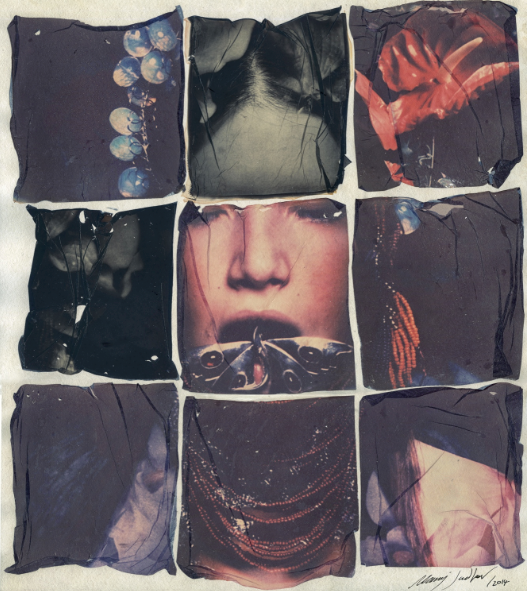
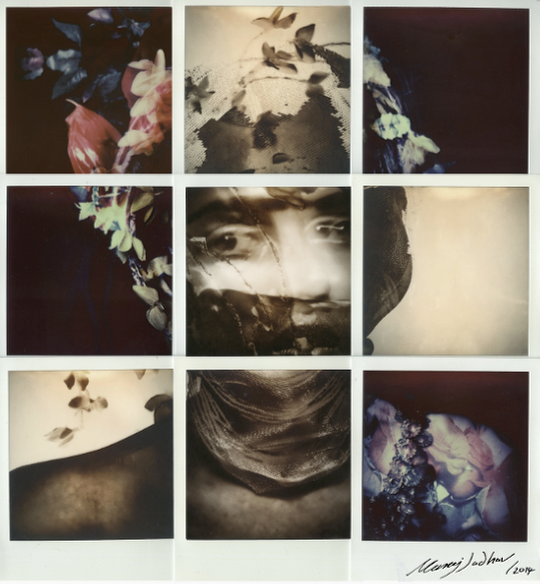
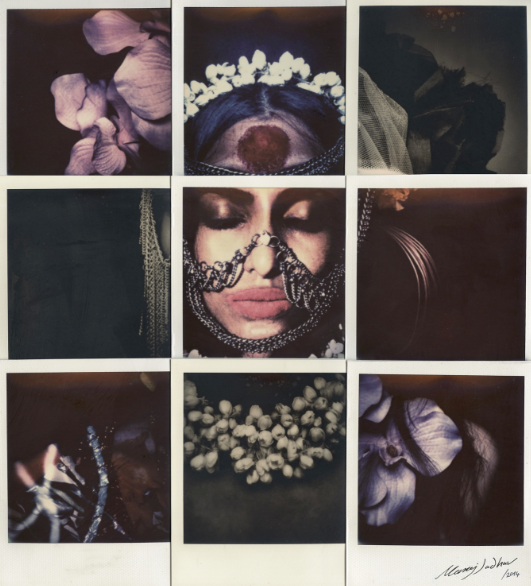
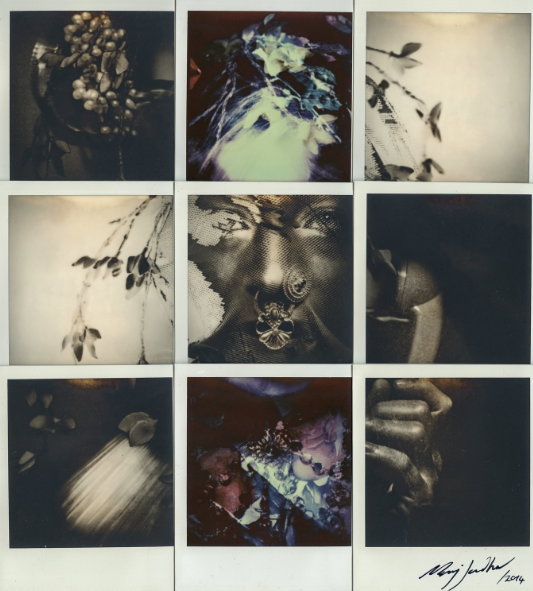
The works I am showcasing here are some of the recent ones from my ongoing project called ‘Portrait of a Culture’. These portraits are made up of several Impossible images. Each of the images is of a particular person and each of this person belongs to a particular culture, ethnicity, religion, nationality, gender, cast etc. These people are part of our every day life and from diverse cultures.
I wanted to juxtapose this linear diversity and recreate new identities. Create faces, portraits with no particular ethnicity, nationality, religion or cast. These are portraits of a unified culture. A happier and smaller world without a divide.
Do you have any helpful creative techniques or advice you would like to share?
There are so many things one can do with these films in terms of creative output and experimentation. The possibilities are endless. I don’t have particular advice for anyone other than to say just play with them like canvas and paints. Think beyond conventional photographic images and find yourself in it.
I don’t use any special techniques. Sometimes I like a little manipulation of images while they are developing. I also enjoy emulsion transfers. These are pretty simple basic techniques.
©Manoj Jadhav
Do you have any upcoming exhibitions/publications?
Yes. I am busy working on my new exhibition coming up later this year. It is the first of its kind in India, which will showcase experimental Polaroid art. Impossible has been a great supporter of my work and a perfect partner to collaborate this project with and launch it here. All the artworks are solely created using Impossible films. We will try and take these exhibition across few Indian cities so more people get to see this art form. This exhibit will also launch Impossible officially in India with its own retail space.
Who are your favorite photographers, living or dead?
I have always loved and admired works of Man Ray, Horst P Horst, Ansel Adams, Richard Avedon, Elliott Erwitt, Helmut Newton, Sebastiao Salgado & Paolo Roversi.
What are you hoping for from Impossible during the next year?
Firstly, we want to make these products available to as many Indian customers as possible. We will try and expand our retail space and also look in to starting online local sales. I am planning on creating workshops, collaborating with artists and students. I’m looking forward to larger participation from young upcoming talents and giving them opportunity to experiment with these new products. We also want to partner with art festivals, fashion events, photography exhibitions, music festivals.
I’m sure Impossible is going to be much popular and greatly loved in India.

Joanne Carter
Joanne Carter is a British photographer, photography journalist, editor and curator and the founder and editorial director of TheAppWhisperer.com, an independent international photography publication established in 2009.Her journalism, criticism and commentary have appeared in The Times, The Sunday Times, The Guardian, Financial Times, BBC, Vogue Italia, LensCulture, Popular Photography, Android Magazine, NikonPro, DPReview, Which Digital Camera and Which Camera. She has lectured internationally on photography and mobile art, served as a juror for international photography awards, and exhibited her own photographic work across the UK, Europe, South Korea and the United States.Alongside her editorial work, Joanne's photographic and postgraduate research explores death, grief, memory, representation and social inequality through contemporary photography, participatory practice and visual research methods, with the longer-term aim of developing this work through doctoral research.Through TheAppWhisperer, she continues to publish independent photography journalism spanning contemporary photographic practice, mobile imaging, photographic apps, computational photography and emerging imaging technologies.Joanne is available for editorial commissions, photography projects, judging, curatorial work, speaking engagements, consultancy and selected collaborations.
One Comment
Tracy Mitchell Griggs
Truly unique, creative, inventive, original. In short? Art at its best.