photograph a woman taking a photo with the Leica Pro app
App Art School,  Best Guides,  iPhone Apps,  News,  Photographic Practice,  Photography Apps

Best Camera Apps for Street Photography (2026): The Complete Guide

The Best Camera Apps for Street Photography (2026): The Complete Guide to Photographing the Decisive Moment

There is a peculiar irony at the heart of contemporary street photography. Never before have so many people carried cameras capable of producing extraordinary photographs, yet never before has it become so difficult to make images that feel genuinely observed rather than merely processed. Smartphones now perform astonishing feats of computational wizardry, blending exposures, removing unwanted objects, sharpening details that scarcely existed in the original scene and brightening shadows until every alleyway resembles a studio. The results are often technically impressive, but technical perfection has never been the ambition of street photography. If anything, the genre has traditionally found its power in uncertainty: a face half concealed by reflected light, the blur of someone stepping hurriedly into frame, or the awkward geometry of strangers who briefly occupy the same pavement before disappearing into different lives.

That tension between technological sophistication and photographic restraint has become increasingly significant as camera applications multiply. Every year promises another collection of revolutionary features, artificial intelligence and automated enhancements, yet many photographers continue to search for something rather simpler. They want an application that responds immediately when lifted from a pocket, offers sufficient control to avoid surrendering every creative decision to an algorithm and then quietly gets out of the way. Good street photography has always depended upon attention rather than technology, and the best camera apps recognise this by placing observation ahead of automation.

Choosing between them, however, has become considerably more complicated than selecting the one with the longest specification sheet. Some applications have been designed for photographers who approach the smartphone as though it were a professional camera, expecting manual control over shutter speed, focus, exposure and RAW capture. Others deliberately recreate the slower, more contemplative experience associated with analogue photography, encouraging careful composition rather than rapid bursts of images. A growing number now position themselves somewhere between those two traditions, combining computational intelligence with interfaces that remain reassuringly unobtrusive.

This guide is not simply a catalogue of features or another annual ranking assembled from marketing claims. Every application discussed here has been considered from the perspective of street photography itself: how quickly it responds, how naturally it encourages photographers to work, how convincingly it renders colour and monochrome, whether its controls become second nature after prolonged use, and, perhaps most importantly, whether it allows the photographer to remain engaged with the life unfolding around them rather than trapped inside a glowing rectangle of menus and settings. The finest camera app is rarely the one that does the most. More often, it is the one that asks least of the photographer while quietly expanding what becomes photographically possible.

How I Assessed These Camera Apps

Any article that claims to identify the “best” camera applications inevitably raises a simple question: best for whom? A landscape photographer working from a tripod, a wedding photographer needing rapid access to exposure compensation, and a documentary photographer wandering unfamiliar streets will all judge software according to entirely different criteria. Street photography, perhaps more than any other genre, places its own distinctive demands upon the tools we use, and those demands have shaped every recommendation in this guide.

It would have been easy simply to compare specification sheets. Most developers are eager to advertise manual exposure, RAW capture, focus peaking or computational enhancements, and there is certainly value in understanding which features each application offers. Specifications alone, however, reveal remarkably little about what it actually feels like to photograph with an application once you step into a busy street where light shifts unpredictably, pedestrians constantly interrupt compositions and opportunities appear and disappear in the space of a heartbeat.

The most successful street photography software is rarely the application with the longest list of features. More often, it is the application that disappears from conscious thought altogether. Good software becomes almost transparent, allowing the photographer to remain immersed in observation rather than repeatedly consulting menus, icons and technical settings. The relationship between photographer and camera should feel instinctive. Every unnecessary tap introduces hesitation, and hesitation is often enough to lose the photograph entirely.

For that reason, usability has been given greater weight than novelty throughout this guide. Applications that offered impressive technical capabilities but required excessive interaction scored less highly than those whose controls quickly became second nature. Street photography rewards familiarity. After several hours of shooting, the photographer should no longer need to think about the interface because attention belongs entirely to the people, architecture and fleeting relationships unfolding within the frame.

Image quality has also been assessed somewhat differently from the approach taken by many technology websites. Contemporary smartphone photography has become increasingly dominated by computational processing, producing images that are brighter, sharper and more saturated than the scene originally witnessed. These files often appear impressive when viewed briefly on social media, yet prolonged examination sometimes reveals an unsettling artificiality. Skin can lose its natural texture, shadows become uniformly illuminated and colours drift towards exaggeration rather than subtlety.

Street photography has traditionally embraced ambiguity rather than perfection. Garry Winogrand’s photographs are not celebrated because every highlight is perfectly controlled. Daidō Moriyama’s work is not revered because every shadow retains immaculate detail. Documentary photography has always accepted imperfection as part of visual truth, recognising that uncertainty often communicates experience more honestly than technical precision. Consequently, applications that preserved natural tonal relationships and avoided excessive computational intervention were consistently favoured throughout this assessment.

Responsiveness proved equally important. Every application was considered from the perspective of spontaneous photography rather than carefully constructed compositions. How quickly could the camera be launched? Were manual controls immediately accessible or hidden beneath multiple screens? Could exposure compensation be adjusted instinctively while continuing to observe the street? Did autofocus remain reliable under changing conditions? These seemingly small considerations accumulate over the course of an afternoon’s photography and ultimately shape both the experience of working and the photographs themselves.

Manual control remains valuable, although perhaps not always for the reasons commonly suggested. Many photographers assume manual settings exist primarily to demonstrate technical expertise, yet experienced street photographers frequently employ them to simplify decision-making rather than complicate it. Establishing exposure before entering a scene, selecting an appropriate focus distance or locking white balance can reduce uncertainty, allowing complete concentration upon timing and composition. Applications that made these adjustments both logical and unobtrusive were consistently more satisfying to use than those which buried essential functions beneath elaborate interface design.

Equally significant was the quality of each application’s RAW workflow. Smartphone sensors have improved dramatically over the past decade, and RAW capture now provides sufficient latitude for serious post-processing, particularly when working in difficult lighting where bright reflections coexist with deep shadow. Applications producing flexible, well-rendered RAW files naturally appealed to photographers accustomed to editing in Adobe Lightroom, Capture One or Darkroom, while software that relied primarily upon aggressive JPEG processing felt considerably less adaptable.

The recommendations that follow should therefore be understood less as an attempt to crown a single universal winner than as an exploration of different photographic philosophies. Some applications encourage restraint, others reward meticulous manual control, while several attempt to recreate the slower, more deliberate experience traditionally associated with analogue photography. None will transform an ordinary photograph into an extraordinary one. They merely provide different ways of engaging with the endlessly unpredictable theatre of public life.

That distinction is worth remembering before considering any software recommendation. The history of street photography has never been shaped by equipment alone. Henri Cartier-Bresson carried a Leica because it suited the way he wished to work, not because it guaranteed remarkable photographs. Vivian Maier remained largely unknown throughout her lifetime despite producing one of the twentieth century’s most extraordinary documentary archives. Garry Winogrand famously exposed thousands of rolls of film without seeing many of the images until years later. Their photographs continue to endure because of the intelligence, curiosity and patience they brought to the street rather than the cameras they happened to carry.

The smartphone has altered many aspects of photography, but it has not changed that fundamental truth. The best camera application is not the one that promises the greatest number of features or the most sophisticated artificial intelligence. It is the one that quietly supports your own way of seeing before withdrawing almost completely from conscious thought, leaving you free to notice the world as it unfolds.


Leica LUX Pro Manual Camera: Rediscovering the Discipline of Seeing

screenshots of Leica Lux app

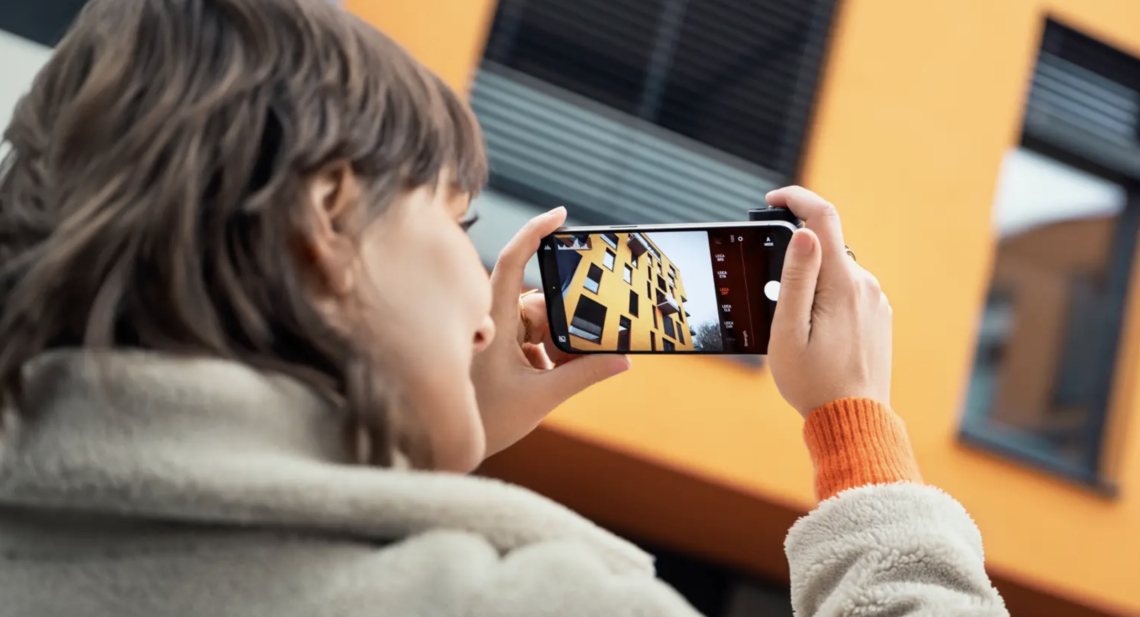
It is tempting to think of Leica LUX as little more than a smartphone application carrying one of photography’s most recognisable names. Leica has, after all, become one of those brands whose reputation extends far beyond the cameras themselves, symbolising a particular way of thinking about photography as much as a particular way of making it. Yet to dismiss Leica LUX as clever branding would be to misunderstand both the application and the philosophy that underpins it.

Leica has never competed by promising photographers the greatest number of features. For much of its history, the company has done almost the opposite. Its cameras have generally asked photographers to slow down, to trust their judgement and to accept responsibility for every decision made before pressing the shutter. That philosophy runs quietly throughout Leica LUX. Rather than overwhelming users with pages of technical options, it presents a remarkably calm interface that encourages concentration on the street rather than on the screen.

That distinction may sound subtle, but it becomes increasingly significant after an hour or two of walking through a city. Street photography is an exercise in sustained attention. The photographer is constantly reading the environment, noticing how light shifts across buildings, anticipating how strangers will move through the frame and recognising visual relationships that exist for only a fraction of a second. Every unnecessary glance towards a complicated interface interrupts that concentration. Leica LUX appears to understand this instinctively. Its controls remain accessible without insisting upon constant interaction, allowing the photographer’s awareness to remain directed outward instead of inward.

The application’s colour rendering is perhaps its greatest strength. Many contemporary smartphone camera apps seem anxious to demonstrate how much processing they can perform, producing images with aggressively bright skies, unnaturally vivid foliage and a degree of sharpening that often strips surfaces of their natural texture. Initially these photographs can appear impressive, particularly on small screens, but they frequently become less convincing the longer one looks at them. Leica LUX takes a noticeably different approach. Colours feel measured rather than exaggerated, highlights retain a gentler transition into shadow, and skin tones avoid the synthetic warmth that characterises much computational photography. The result is not dramatic in the conventional sense, yet it is remarkably persuasive because it feels closer to the experience of standing in the street itself.

This restraint is especially valuable for documentary work. Street photography has never depended upon spectacle alone. Some of the genre’s most enduring photographs derive their emotional force from ordinary moments observed with extraordinary sensitivity rather than from scenes of obvious visual drama. Excessive processing can easily distract from those quieter qualities, encouraging viewers to admire the software instead of the photograph. Leica LUX largely avoids that trap by producing files that remain open to interpretation rather than insisting upon a predetermined aesthetic.

Black and white photography has always occupied a special place within Leica’s history, and the monochrome rendering available within Leica LUX reflects that heritage with considerable sophistication. Rather than relying upon harsh contrast or artificially deep blacks, the application preserves a broad tonal scale that allows light to describe form gradually. Pavements glisten after rain without appearing metallic, faces retain subtle modelling, and architectural detail emerges naturally instead of being forced forward through excessive local contrast. The photographs invite careful viewing because they leave space for nuance, something increasingly uncommon in an age of algorithmically enhanced imagery.

Working with Leica LUX also encourages a slower rhythm of photography. That observation should not be mistaken for criticism. The application remains perfectly capable of responding quickly when required, but its overall design subtly discourages indiscriminate shooting. There is little sense of racing through hundreds of frames in the hope that one might succeed. Instead, the experience feels closer to carrying a traditional camera whose limitations encourage greater deliberation. Whether this influences the photographs themselves is impossible to measure objectively, yet many photographers would recognise the psychological shift immediately. When technology ceases to compete for attention, observation naturally occupies more of it.

There are, inevitably, limitations. Leica LUX is not intended to satisfy photographers who expect complete manual authority over every technical parameter. Those accustomed to controlling shutter speed, ISO, focus distance and exposure independently may find the application comparatively restrained, particularly when working in difficult lighting or pursuing highly specific visual effects. Nor is it presently available beyond the Apple ecosystem, which inevitably limits its audience despite the growing sophistication of Android photography.

These criticisms, however, arise largely because Leica LUX pursues different ambitions from applications such as Halide or ProCamera. Its objective is not to provide every conceivable tool but to refine the experience of photographing until technology becomes almost imperceptible. That is an entirely legitimate design philosophy, particularly for street photography, where excessive choice can become a surprisingly effective distraction.

It would therefore be misleading to recommend Leica LUX solely to photographers who admire the Leica name. Its real appeal lies elsewhere. It is for photographers who value subtle colour, thoughtful design and an interface that encourages prolonged observation rather than constant adjustment. In an era when many applications compete by adding ever more features, Leica LUX stands apart by recognising that the most useful tool is often the one that knows when to remain silent.

Verdict: Leica LUX is less concerned with reproducing the appearance of Leica photography than with encouraging the habits that have long defined it: patience, restraint and sustained attention. For street photographers who believe that seeing matters more than processing, it is one of the most satisfying camera applications currently available.


Halide Mark II: Precision Without Pretension
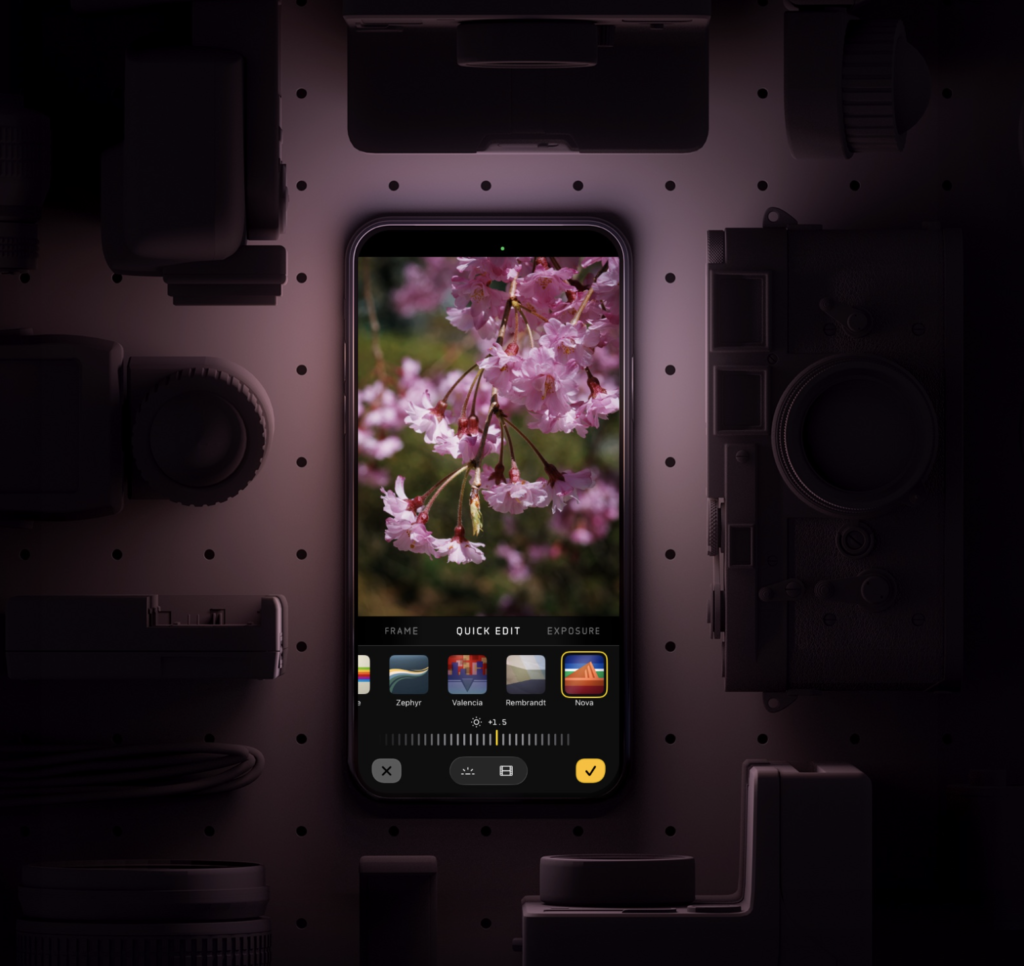
halide app pictured on a mobile phone

There is a tendency among photography software developers to confuse complexity with professionalism. Every new release promises additional controls, deeper menus and increasingly elaborate workflows, as though the accumulation of features alone were evidence of seriousness. Halide has always resisted that temptation. Although it offers one of the most sophisticated photographic experiences available on a smartphone, it rarely feels complicated. Instead, it reflects a principle that has long guided the design of good cameras: the controls you need should always be close to hand, while those you rarely use should never interrupt the act of making photographs.

That philosophy explains why Halide has earned such loyalty among photographers who move comfortably between smartphones and dedicated cameras. Rather than attempting to imitate a DSLR or mirrorless body, it acknowledges the strengths and limitations of the smartphone itself, building an interface that feels native to the device while offering a level of control that approaches far more expensive equipment.

The result is particularly persuasive in the context of street photography. Cities are visually unpredictable environments. A photographer may emerge from a dimly lit underground station into harsh midday sunshine before turning moments later into a narrow alleyway where reflected light softens every surface. Exposure changes constantly, often within a single block, and the camera application must adapt without demanding prolonged attention. Halide allows those adjustments to become almost instinctive. Exposure compensation is immediate, manual controls respond with reassuring precision, and transitions between automatic and manual operation feel entirely natural. The software behaves less like an application layered upon the phone than as though it were part of the camera itself.

Manual focus deserves special attention because it has become something of a forgotten discipline within smartphone photography. Modern autofocus systems are undeniably impressive, but experienced street photographers have long understood that autofocus is not always the fastest solution. Long before sophisticated tracking algorithms existed, photographers working with Leica rangefinders or the Ricoh GR often relied upon zone focusing, establishing a focus distance in advance so that every subsequent frame could be made without waiting for the camera to decide where sharpness should fall. The technique remains remarkably effective today, particularly in crowded streets where people move unpredictably through the frame.

Halide’s implementation of manual focus is among the finest currently available on any mobile platform. Focus peaking clearly identifies areas of sharpness without overwhelming the display, allowing photographers to work with confidence even when photographing rapidly. After a surprisingly short period, the process becomes almost subconscious. Focus is established before the decisive moment arrives, leaving composition and timing free from technological interruption.

Equally impressive is Halide’s treatment of RAW capture. It is easy to underestimate how far smartphone sensors have evolved during the past decade. Early mobile RAW files often offered little practical advantage over JPEGs, but contemporary devices produce remarkably flexible files capable of withstanding extensive post-processing. Halide takes full advantage of those advances. Highlight recovery remains convincing, shadow detail survives difficult lighting conditions with impressive integrity, and colour information retains a subtlety that provides considerable freedom during editing.

This becomes particularly valuable when photographing cities after rain, at dusk or beneath mixed artificial lighting. Urban environments rarely present photographers with balanced illumination. Sodium street lamps, LED advertising screens, reflected shop windows and deep architectural shadows often coexist within the same frame. JPEG processing inevitably makes interpretive decisions on behalf of the photographer, whereas RAW capture preserves the opportunity to revisit those decisions later with greater care and sensitivity. Halide recognises that distinction and treats the smartphone less as a computational device than as a genuinely capable photographic instrument.

The application’s visual design reinforces this impression. Modern software often mistakes visual excitement for usability, filling displays with coloured icons, animated transitions and decorative effects that compete for attention with the world beyond the screen. Halide adopts a markedly quieter approach. Controls remain elegantly understated, typography is restrained and nothing appears included simply to demonstrate technological sophistication. After prolonged use, the interface recedes almost entirely from conscious awareness, leaving the photographer free to concentrate upon gesture, light and composition rather than software.

Its greatest strength may also explain why it is not universally suitable. Halide assumes that photographers wish to participate actively in the process of making an image. It offers assistance where appropriate, but it rarely attempts to conceal photographic decisions beneath automation. Photographers unfamiliar with exposure, focus or RAW workflows may therefore find themselves wondering why they should choose Halide instead of the phone’s native camera application, particularly when the latter produces immediately polished JPEGs with little effort.

That question is entirely reasonable, yet it perhaps misunderstands what Halide offers. It is not attempting to replace computational photography with nostalgia, nor is it designed solely for enthusiasts who enjoy adjusting technical settings for their own sake. Its purpose is to preserve creative authorship. The application allows photographers to decide how a photograph should look rather than accepting a sequence of algorithmic assumptions made before the shutter has even been released. In that respect, it occupies an increasingly important place within contemporary photography, reminding us that convenience and authorship need not always be synonymous.

For street photographers who regard the smartphone as a serious creative tool rather than simply a convenient camera, Halide remains one of the most accomplished applications available. It combines technical sophistication with remarkable clarity of design, offering extensive manual control without ever feeling burdened by it. More importantly, it succeeds in the one respect that ultimately matters most: after a short period of use, the software all but disappears, leaving the photographer alone with the endlessly unpredictable theatre of the street.


Blackmagic Camera: What Cinematographers Can Teach Street Photographers
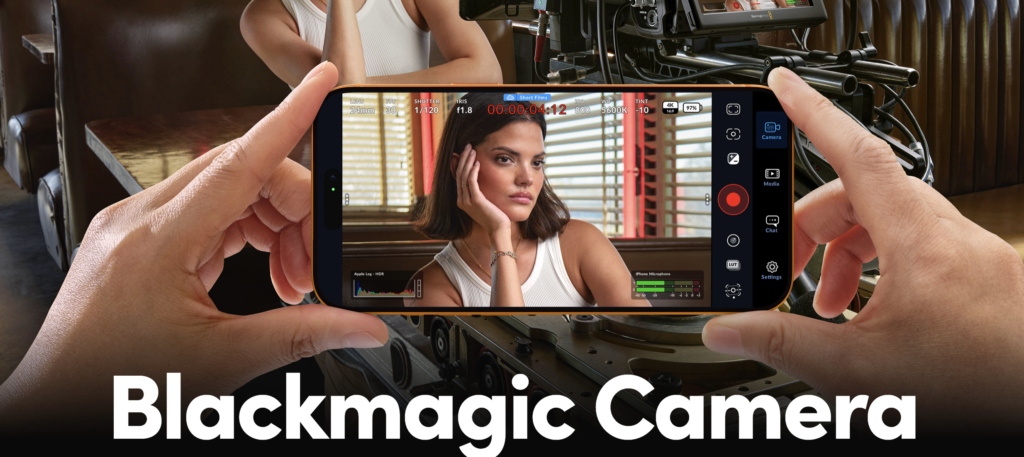
demonstration image of person using blackmagic camera app

At first glance, Blackmagic Camera appears to be an unlikely recommendation for street photography. The application was developed primarily with filmmakers in mind, extending the philosophy of Blackmagic Design’s cinema cameras to the smartphone. Its interface borrows heavily from professional video production, its controls reflect the language of cinematography rather than still photography, and much of its publicity naturally concentrates on filmmakers. It would therefore be easy to conclude that street photographers have little reason to pay attention.

That would be a mistake. One of the more interesting developments in contemporary photography has been the gradual convergence of still and moving image practices. Documentary photographers increasingly work across both disciplines, producing photographs, short films and multimedia essays within the same project. As that boundary has softened, the qualities that make a camera useful for filmmaking—clarity of interface, reliable manual control and predictable exposure—have become equally valuable for photographers working in rapidly changing environments.

The Blackmagic Camera app exemplifies this shift. Although it was never designed specifically for street photography, it possesses a disciplined simplicity that many dedicated photography applications would do well to emulate. The interface is unapologetically functional. Nothing flashes unnecessarily across the display, no decorative graphics compete for attention and every control appears to exist because it serves a practical purpose rather than because it enhances a marketing brochure. The overall impression is one of quiet competence. The application assumes its users wish to make deliberate creative decisions and trusts them to do so.

That sense of trust is surprisingly refreshing. Much contemporary smartphone photography has been built upon the assumption that the photographer should intervene as little as possible, allowing artificial intelligence to determine exposure, colour, sharpening and tonal balance before the image is even recorded. The Blackmagic Camera app moves in precisely the opposite direction. It assumes that photography remains an interpretative act and that creative responsibility ultimately belongs to the person holding the camera rather than the software running behind it.

For street photographers, this philosophy has practical consequences. Walking through an unfamiliar city demands constant adaptation. Light changes as streets narrow, buildings reflect unexpected colours and weather alters the atmosphere almost from one moment to the next. Applications that conceal exposure decisions behind layers of automation can leave photographers feeling strangely detached from the image-making process, whereas Blackmagic Camera invites them to remain actively engaged. Adjustments become deliberate rather than accidental, and the relationship between changing light and photographic response becomes considerably more intuitive.

Exposure controls are exceptionally well organised. Rather than scattering adjustments across multiple screens, Blackmagic presents them with an economy that reflects its professional origins. After only a short period of use, altering exposure compensation or locking settings becomes almost instinctive. More importantly, these adjustments rarely require the photographer to stop observing the street. The interface has clearly been designed by people who understand that technical controls are only useful if they remain secondary to the act of seeing.

There is also a psychological quality to the application that deserves mention, although it is difficult to quantify. Blackmagic Camera encourages a measured pace of working. The interface lacks the visual exuberance characteristic of many consumer photography applications, replacing it instead with an understated professionalism that subtly changes the rhythm of photography itself. One becomes less inclined to shoot indiscriminately and more inclined to wait, observe and respond with greater intention. Whether this arises from the application’s design or simply from the expectations users bring to it is impossible to determine, yet the effect is noticeable nonetheless.

That said, the Blackmagic Camera app is not without limitations when viewed purely as a still photography tool. Its heritage remains firmly rooted in cinematography, and this occasionally becomes apparent in the organisation of certain controls. Photographers seeking dedicated still-photography features such as advanced focus peaking, specialised photographic shooting modes or extensive image management may discover that applications like Halide or ProCamera provide a workflow more closely aligned with their needs. Blackmagic Camera occasionally asks photographers to think like filmmakers, an approach that some will find intellectually stimulating while others may regard as unnecessarily indirect.

Its greatest audience is, therefore, likely to be photographers who already move comfortably between still and moving images or those whose documentary practice increasingly encompasses both. For them, Blackmagic Camera offers an unusually coherent environment in which visual storytelling becomes the central concern rather than the distinction between photographs and video. That broader perspective feels increasingly relevant at a time when many documentary projects no longer fit neatly within the traditional boundaries of a single medium.

More importantly, Blackmagic Camera reminds us of something easily forgotten amid the rapid evolution of smartphone photography. Sophisticated technology need not be visually noisy. Professional software can remain elegant without becoming simplistic, and powerful tools need not advertise their complexity at every opportunity. In resisting the temptation to overwhelm users with unnecessary embellishment, Blackmagic has produced an application whose greatest achievement lies not in what it adds to photography but in what it quietly removes. Freed from distraction, the photographer is left to concentrate on the infinitely more difficult task of recognising significance within the ordinary flow of everyday life.

Viewed in that light, the Blackmagic camera app proves to be far more than a filmmaker’s utility adapted for smartphones. It is a thoughtful, disciplined photographic tool that deserves serious consideration from street photographers who value clarity, intentionality and creative control over spectacle. It may not be the obvious choice, but some of the most rewarding cameras rarely are.


ProCamera: The Mature All-Rounder That Rarely Lets You Down
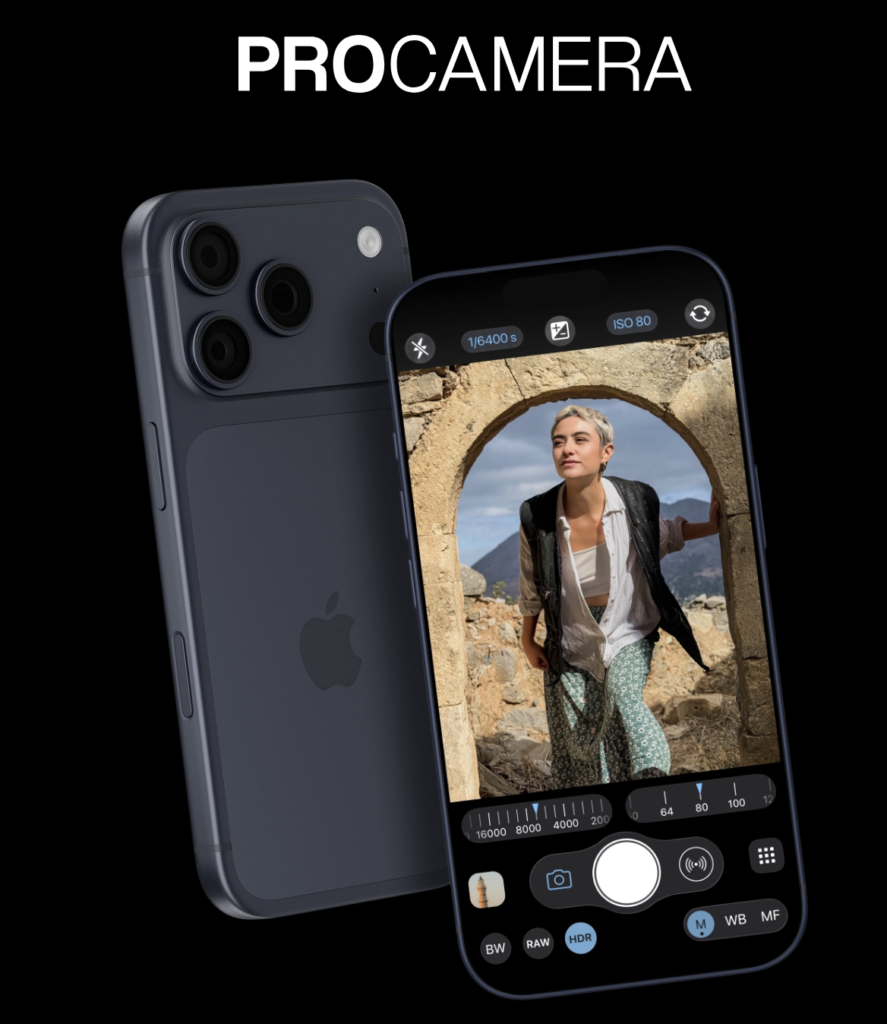
sample screen image of pro camera app

There is something reassuringly unfashionable about ProCamera. Unlike newer applications that arrive accompanied by promises of revolutionary artificial intelligence or cinematic innovation, ProCamera has spent years doing something considerably less glamorous: refining an already excellent photographic tool until it becomes almost invisible in everyday use. It has survived wave after wave of technological fashion not because it chases every new trend, but because it has consistently understood what photographers actually require when they step outside with a camera.

Longevity, in software, is not always a virtue. Some applications remain available long after innovation has passed them by, accumulating outdated interfaces and increasingly awkward workflows that betray their age. ProCamera has largely avoided that fate. Although it has evolved steadily over the years, its development has been characterised by careful refinement rather than wholesale reinvention. Existing users rarely feel abandoned by dramatic redesigns, while newcomers encounter an application whose confidence comes from maturity rather than novelty.

That maturity becomes apparent almost immediately when photographing in the street. The application launches quickly, responds predictably and presents its controls in a manner that feels logical rather than performative. Every adjustment appears to have been considered from the perspective of someone who genuinely expects to spend hours making photographs rather than simply demonstrating features during a five-minute product review.

This reliability should not be underestimated. Street photography depends upon repetition. Photographers often cover considerable distances during a single session, lifting the camera hundreds of times while waiting patiently for the occasional frame that successfully captures the relationship between people, place and time. Under those circumstances, even small frustrations become magnified. An awkward menu, an inconsistent exposure system or an unreliable focus mechanism gradually erodes confidence until attention shifts from observation towards managing the software itself. ProCamera rarely permits that to happen. It behaves with a consistency that encourages trust, and trust remains one of the most valuable qualities any camera can possess.

Manual controls have been integrated with considerable care. They remain immediately available without dominating the screen, allowing photographers to intervene whenever necessary while leaving automatic operation equally capable when circumstances demand speed above precision. This flexibility reflects the reality of contemporary street photography far more accurately than rigid philosophical positions about manual versus automatic shooting. Most experienced photographers move comfortably between the two approaches according to changing conditions, and ProCamera supports that fluidity without insisting upon one method over another.

RAW capture is predictably excellent, particularly for photographers who maintain an established post-processing workflow. Images retain generous dynamic range, highlights remain recoverable under demanding lighting conditions and colour information survives extensive adjustment without quickly deteriorating. Urban environments often contain a bewildering mixture of reflected daylight, artificial illumination and deep architectural shadow, and ProCamera preserves enough tonal information to allow thoughtful interpretation long after the photograph has been made.

The application’s approach to image processing also deserves recognition. Like several of the strongest applications discussed throughout this guide, ProCamera demonstrates admirable restraint. Rather than attempting to produce photographs that appear spectacular immediately after capture, it creates files that remain believable. Pavements continue to resemble pavements rather than polished stone; clouds retain their natural structure instead of dissolving into exaggerated drama, and skin maintains texture without becoming unpleasantly clinical. These distinctions may appear subtle in isolation, yet collectively they produce photographs that age considerably better than heavily processed alternatives.

Its greatest strength, however, lies not in any individual feature but in its balance. Leica LUX encourages a contemplative way of seeing. Halide appeals to photographers seeking uncompromising manual control. Blackmagic Camera borrows the disciplined language of professional cinematography. ProCamera occupies the ground between these positions with remarkable assurance. It neither romanticises analogue photography nor celebrates computational intervention. Instead, it quietly provides the tools required to respond intelligently to whatever the street presents.

That versatility inevitably comes with a minor compromise. Because ProCamera attempts to accommodate a broad range of photographic practices, it lacks the distinctive personality that characterises some of its competitors. Leica LUX possesses a recognisable visual philosophy. Halide has become synonymous with precision and craftsmanship. ProCamera is less immediately identifiable because it rarely imposes itself upon the photographer. Some users may interpret this neutrality as a lack of character, yet others will recognise it as one of the application’s greatest virtues. Good documentary photography has never depended upon software possessing a strong personality; if anything, the opposite is usually true.

Another consideration concerns value. ProCamera is a premium application, and, while its pricing remains entirely justifiable given the quality of its development, casual photographers who rely primarily upon automatic shooting may question whether the investment offers sufficient practical benefit over the native camera application already installed on their phone. The answer depends largely upon how photography fits within one’s life. Those who make only occasional snapshots may never exploit its strengths. Photographers who spend long afternoons wandering unfamiliar streets, however, are likely to appreciate the cumulative effect of an interface designed with unusual intelligence and restraint.

Perhaps that is ultimately the most appropriate description of ProCamera. It is an intelligent application. Not intelligent in the contemporary marketing sense of artificial intelligence or automated enhancement, but intelligent because its designers appear to have spent years observing how photographers actually work. Every decision reflects an understanding that software should reduce friction rather than introduce it, allowing the camera to become a transparent extension of the photographer’s attention.

Street photography has always rewarded patience over spectacle and consistency over novelty. ProCamera embodies those values quietly and without fanfare. It may never generate the excitement surrounding newer applications, yet excitement is rarely what serious photographers require from their tools. Reliability, subtlety and confidence prove considerably more valuable companions during a day spent walking the streets, waiting for ordinary life to reveal something unexpectedly extraordinary.
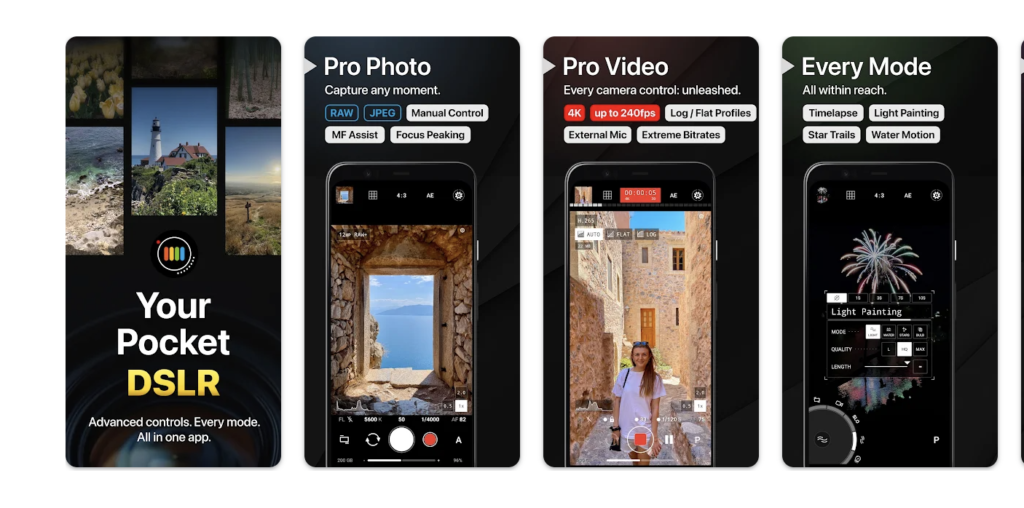

Reeflex Pro Camera: A Deliberate Rejection of Computational Excess

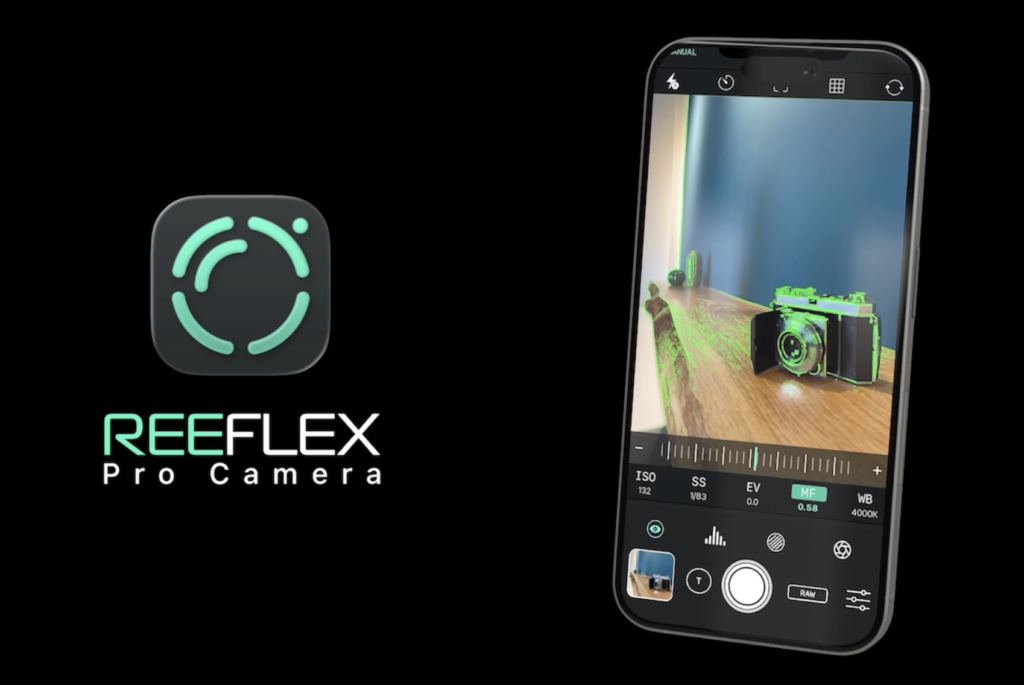
demonstration image of Reeflex Pro camera app

If there has been a defining trend in smartphone photography during the past decade, it has been the relentless advance of computational imaging. Manufacturers have become locked in a technological arms race, each promising brighter night photographs, sharper portraits and increasingly sophisticated artificial intelligence capable of transforming an ordinary snapshot into something that appears almost professionally produced. There is no question that these developments have expanded what smartphones are capable of achieving. They have also, perhaps unintentionally, encouraged a growing number of photographers to question whether photographic realism has been quietly sacrificed in pursuit of visual spectacle.

Reeflex Pro Camera has found its audience among those photographers. Rather than treating computational processing as the inevitable future of photography, Reeflex approaches image-making with considerably greater restraint. It assumes that photographers would prefer to make creative decisions themselves, preserving the integrity of the original scene rather than allowing software to reinterpret it before they have even viewed the photograph. That approach immediately distinguishes it from many mainstream camera applications, not because its photographs appear dramatically different at first glance, but because they continue to feel believable after prolonged examination.

Believability is an unusual quality to discuss in relation to camera software, yet it has become increasingly important. Contemporary smartphone photographs often possess an oddly synthetic appearance. Pavements seem unnaturally crisp, foliage acquires an almost metallic clarity and skies become saturated beyond anything witnessed by the eye. Initially these images appear vibrant, particularly when viewed briefly on social media, but their visual confidence can quickly become repetitive. Every photograph begins to resemble every other because the software has imposed a recognisable aesthetic before the photographer has had an opportunity to contribute one.

Reeflex resists that temptation. Colours remain controlled, contrast develops naturally and textures retain the small imperfections that make photographs feel connected to lived experience rather than digital optimisation. Brickwork continues to look weathered, reflections remain uncertain rather than perfectly defined and distant figures dissolve gently into the atmosphere instead of being aggressively sharpened. These characteristics may sound understated, yet they have profound implications for documentary photography. Street photography has always depended upon suggestion as much as description. Not everything within a frame needs to announce itself immediately, and Reeflex appears comfortable allowing ambiguity to remain where it belongs.

The application’s interface reflects the same philosophy. There is no obvious attempt to impress users with animated graphics or unnecessary complexity. Controls are presented with admirable clarity, responding quickly without encouraging constant adjustment. After only a short period of use, the mechanics of operating the application begin to recede from conscious thought, leaving observation to reclaim its proper place at the centre of the photographic process.

One particularly welcome aspect of Reeflex is the way it encourages photographers to trust exposure rather than endlessly correct it. Many smartphone applications behave as though every shadow should be illuminated and every highlight recovered, producing images that appear technically balanced but emotionally flat. Reeflex allows light to retain its expressive qualities. Deep shadow remains genuinely dark where darkness contributes to atmosphere, while bright highlights continue to describe sunlight rather than merely recording information. The photographs feel less engineered and more observed.

That distinction becomes especially noticeable during early morning or late evening, when cities reveal some of their richest visual possibilities. Long shadows stretch across pavements, artificial lighting begins to compete with natural illumination and reflections transform ordinary shop windows into layered compositions. Computational photography frequently struggles with these transitional moments because it attempts to equalise tonal relationships that are, by their very nature, unequal. Reeflex shows greater confidence in allowing those relationships to exist without excessive intervention.

This is not to suggest that the application rejects modern photographic technology altogether. RAW capture remains available for photographers who wish to retain maximum flexibility during editing, while manual controls provide sufficient authority over exposure and focus to satisfy those accustomed to working with dedicated cameras. The difference lies in emphasis. Reeflex regards these tools as opportunities for creative interpretation rather than mechanisms for correcting automated decisions already made by the software.

Its limitations are relatively modest but worth acknowledging. Photographers seeking an extensive ecosystem of advanced computational features may find the application comparatively conservative, while those accustomed to heavily processed JPEGs may initially perceive the photographs as quieter or less dramatic. That reaction is understandable because contemporary visual culture has gradually accustomed viewers to images whose colours, contrast and clarity exceed everyday experience. Reeflex asks photographers to recalibrate those expectations, valuing authenticity above immediate visual impact.

Such an approach inevitably appeals to a particular temperament. Street photographers who admire the work of Saul Leiter, Harry Gruyaert or Sergio Larraín have often been drawn not to technical perfection but to photographs that retain mystery, atmosphere and a sense of lived experience. Reeflex shares something of that sensibility. It understands that photography does not always need to explain everything. Sometimes its greatest achievement lies in preserving uncertainty.

In many respects, Reeflex represents a quiet act of resistance within contemporary smartphone photography. While much of the industry continues to pursue ever more elaborate computational intervention, this application reminds photographers that technology achieves its highest purpose not when it dominates the image but when it quietly supports the act of seeing. That philosophy feels particularly appropriate for street photography, where attention has always mattered more than perfection and where the richest photographs continue to emerge from observation rather than optimisation.


ProShot: Familiar Territory for Photographers Raised on Dedicated Cameras

image of four screens demonstration Pro Shot app on android

For photographers who have spent years working with DSLRs or mirrorless systems, the transition to smartphone photography can feel unexpectedly disorientating. The issue is not image quality. Modern smartphones are capable of producing photographs that would have seemed extraordinary only a few years ago. The greater challenge often lies in the experience of using them. Physical dials disappear, aperture rings are replaced by touchscreens and familiar relationships between shutter speed, focus and exposure become mediated through interfaces designed primarily for casual users. The result can leave experienced photographers feeling oddly disconnected from processes that have become second nature over decades of practice.

ProShot addresses this problem with unusual intelligence. Rather than pretending that smartphones should be operated exactly like traditional cameras, it borrows enough of their visual language to make experienced photographers feel immediately at home. Exposure settings are clearly presented, manual adjustments respond predictably and the overall workflow reflects an understanding of how photographers have historically interacted with their equipment. There is no attempt to imitate vintage cameras for nostalgic effect, nor does the application indulge in unnecessary visual ornamentation. Instead, it recognises that familiarity reduces cognitive effort, allowing photographers to spend less time learning software and more time making photographs.

This familiarity proves particularly valuable when working quickly. Street photography rarely provides opportunities to pause and reconsider technical decisions. Exposure must often be adjusted while continuing to walk, focus modified without breaking visual contact with the unfolding scene and compositions refined almost instinctively. ProShot’s interface supports precisely this kind of working practice. Controls remain consistently positioned, responses are immediate and little effort is required to locate essential functions even after prolonged periods away from the application.

Manual exposure is where ProShot demonstrates its greatest confidence. Many smartphone applications offer manual controls almost apologetically, as though expecting most users never to touch them. ProShot adopts a markedly different attitude. It assumes that photographers may wish to decide for themselves how light should be interpreted and provides direct access to those decisions without unnecessary complication. ISO, shutter speed, white balance and focus become integrated elements of a coherent workflow rather than isolated technical curiosities hidden behind secondary menus.

That confidence extends naturally into street photography. Cities rarely behave predictably, and photographers who understand exposure often prefer to anticipate changing conditions rather than react to them after the camera has already made its own assumptions. ProShot supports this proactive approach exceptionally well. Exposure can be established before entering a scene, allowing attention to remain fixed upon people, movement and composition rather than constantly evaluating whether the software has interpreted the light correctly.

Where ProShot differs from some of the more philosophically restrained applications discussed earlier is in its willingness to provide extensive technical authority without attempting to shape the photographer’s aesthetic. Leica LUX subtly encourages a particular way of seeing. Reeflex reflects a preference for natural rendering over computational intervention. ProShot remains comparatively neutral. It offers the tools but leaves interpretation almost entirely to the photographer, a quality that many experienced practitioners will regard as its greatest strength.

For photographers approaching smartphone photography from a long history of working with dedicated cameras, ProShot provides one of the smoothest transitions currently available. It neither patronises experienced users nor overwhelms newcomers with unnecessary complexity. Instead, it demonstrates a quiet respect for photographic knowledge, recognising that the best software often begins by trusting the person behind the camera.


Adobe Lightroom Camera: The Beginning of a Workflow Rather Than the End of One

image showing adobe camera app demonstration

Few companies have influenced digital photography as profoundly as Adobe. For more than three decades Lightroom and Photoshop have shaped the way photographers organise, edit and publish their work, becoming so deeply embedded within professional practice that many photographers scarcely remember what life looked like before them. It is therefore unsurprising that Adobe eventually extended this ecosystem to smartphone photography. What is perhaps more surprising is how successfully the Lightroom camera has evolved into a genuinely serious tool in its own right rather than merely acting as a convenient gateway to the desktop application.

That distinction deserves emphasis because the Lightroom Camera is often overlooked in discussions of mobile photography. Many photographers install Lightroom solely as an editing platform, rarely venturing beyond the Develop module and scarcely noticing that the application contains a capable camera. In doing so they miss one of its greatest strengths. Unlike many competing applications, Lightroom treats capture and post-production as parts of the same continuous photographic process rather than as separate activities connected only after the event.

For street photography, this continuity offers distinct advantages. Documentary work often involves extended periods of walking during which hundreds of images may be produced under constantly changing conditions. Being able to photograph, review, edit and organise those files within a single environment creates a workflow that feels remarkably coherent. Instead of exporting photographs between multiple applications, risking duplicate files and fragmented libraries, the photographer remains within one carefully integrated system from the moment the shutter is released until the final image is published.

This integration becomes increasingly valuable as projects develop over time. Street photography is rarely about isolated masterpieces. Most photographers gradually accumulate visual studies of particular neighbourhoods, recurring characters, architectural details or changing urban landscapes. Lightroom’s catalogue structure allows these relationships to emerge naturally, making it easier to revisit earlier work, identify patterns and build coherent bodies of photographs rather than disconnected individual images. The camera therefore becomes not simply a tool for recording the present but the beginning of a much larger documentary archive.

The quality of image capture is equally impressive. Adobe has resisted the temptation to produce aggressively processed files designed primarily for immediate online consumption. Instead, the Lightroom Camera produces images intended to withstand careful editing. RAW capture remains central to the experience, preserving tonal information that proves particularly valuable when photographing difficult urban lighting. Bright reflections from shop windows, deeply shadowed alleyways and mixed artificial illumination can all be interpreted with considerably greater subtlety during post-processing than would be possible using heavily processed JPEGs alone.

Manual controls have been implemented with similar intelligence. They remain accessible without dominating the interface, allowing photographers to intervene whenever necessary while retaining the option of automatic operation when speed becomes paramount. The balance feels carefully judged. Adobe appears to recognise that street photography rarely rewards rigid adherence to either manual or automatic techniques. Circumstances change too quickly for dogma to remain useful. Good software should accommodate both approaches with equal confidence, allowing photographers to decide how much control each situation genuinely requires.

The application’s colour rendering is intentionally restrained. Adobe understands that many photographers regard capture as the beginning rather than the conclusion of the creative process, and the files reflect that philosophy. Colours remain believable, contrast avoids unnecessary exaggeration and sharpening is applied with sufficient discretion to preserve flexibility during subsequent editing. The photographs arrive not as finished statements but as carefully prepared negatives awaiting interpretation, an approach that aligns closely with traditional photographic practice.

This does, however, reveal the application’s principal limitation. Lightroom Camera assumes that editing forms an integral part of photography. Photographers seeking beautifully finished JPEGs immediately after capture may find alternative applications more satisfying because Adobe deliberately avoids making many of those interpretative decisions automatically. The software expects photographers to complete the process themselves. For some, this represents welcome creative freedom. For others, particularly those wishing to share photographs immediately, it may feel unnecessarily demanding.

Cost is another consideration. Although Lightroom itself offers considerable functionality without charge, many of its most powerful features remain tied to Adobe’s subscription model. Photographers already committed to the Creative Cloud ecosystem are unlikely to hesitate, since the camera integrates seamlessly with tools they already use every day. Those who prefer one-off purchases or wish to avoid ongoing subscriptions may understandably view this commitment less favourably, particularly when several excellent alternatives are available.

Yet these reservations should not obscure the application’s considerable strengths. Lightroom Camera is not attempting to compete by offering fashionable filters or increasingly elaborate computational effects. Its ambition is altogether more practical. It seeks to create an efficient, dependable environment in which photographs can move naturally from capture to publication without unnecessary interruption. That ambition may sound modest, yet it addresses one of the most persistent frustrations of contemporary digital photography: the fragmentation of the photographic process across multiple applications, devices and storage systems.

For photographers engaged in long-term documentary work, that coherence becomes increasingly valuable. The strongest street photography rarely emerges from isolated afternoons spent wandering unfamiliar cities. It develops gradually through repeated observation, careful editing and the patient construction of visual narratives extending over months or even years. Lightroom Camera supports precisely this way of working. It encourages photographers to think beyond individual images and towards projects, archives and sustained engagement with place.

In that respect, Adobe has achieved something rather more significant than simply adding another camera application to an already crowded marketplace. It has produced a tool that recognises photography as a continuous practice rather than a series of disconnected technical tasks. For street photographers who already regard editing as inseparable from observation, Lightroom Camera offers one of the most complete photographic workflows currently available on any smartphone.


Hipstamatic: Why Imperfection Still Matters

demonstration image of Hipstamic app

Few photography applications have enjoyed the cultural influence of Hipstamatic. Long before smartphone photography acquired its current technical sophistication, Hipstamatic demonstrated that people were willing to embrace the limitations of mobile cameras if those limitations produced images with character. At a time when most software developers were striving for greater sharpness, cleaner files and ever more accurate colour, Hipstamatic took an almost heretical approach. It introduced unpredictability. Different lenses altered contrast, films shifted colour, light leaks appeared unexpectedly and photographs frequently emerged looking less like digital files than rediscovered negatives from an old shoebox.

It would be easy to dismiss this as nostalgia, and indeed Hipstamatic has often been criticised for reducing analogue photography to little more than a collection of visual effects. Such criticism, however, overlooks a more interesting question. Why have generations of photographers continued to admire work that is technically imperfect? Robert Frank’s The Americans contains blurred frames, uneven exposures and compositions that frequently ignore conventional rules of photographic balance. Daidō Moriyama’s photographs embrace grain, high contrast and visual instability with extraordinary confidence. Saul Leiter allowed reflections, condensation and colour casts to obscure rather than clarify his subjects. None of these photographers pursued technical perfection because perfection was never the point.

Street photography has always occupied an uneasy relationship with precision. The most compelling images often arise because the photographer responded immediately rather than waiting for ideal conditions. Motion blur records movement rather than eliminating it. Deep shadow conceals as much as it reveals. Reflections fracture the picture plane until certainty becomes impossible. These qualities are not failures of technique. They are reminders that photography remains an interpretation of experience rather than an objective description of reality.

Hipstamatic understands this better than many applications built upon considerably more advanced technology. Its simulations are not valuable because they imitate particular films with forensic accuracy. They are valuable because they encourage photographers to relinquish a degree of control. Selecting a lens and film combination before walking into the street creates a subtle psychological commitment. Instead of endlessly adjusting colour afterwards, the photographer accepts certain visual constraints in advance and works creatively within them. This is remarkably similar to loading a roll of Kodak Tri-X or Fujifilm Provia into a film camera. Once the choice has been made, the task becomes one of observation rather than perpetual optimisation.

There is something unexpectedly liberating about this limitation. Contemporary digital photography often encourages the illusion that every decision can be postponed until later. White balance may be altered indefinitely, colours endlessly refined and contrast adjusted without apparent consequence. While this flexibility is undeniably useful, it can also become creatively exhausting. Hipstamatic reverses that logic by inviting photographers to commit themselves before they begin. The application does not eliminate creative choice; it merely relocates it to an earlier stage of the photographic process.

The resulting photographs possess a visual confidence that derives not from technical perfection but from coherence. Colours relate naturally because they belong to the same chosen palette; grain contributes atmosphere rather than appearing as digital noise, and imperfections become part of the image’s visual language instead of technical flaws requiring correction. Some combinations inevitably prove more successful than others, yet that unpredictability forms part of the application’s enduring appeal. Street photography itself has always involved embracing uncertainty. Hipstamatic simply extends that uncertainty into the photographic process.

There are, of course, legitimate reservations. Photographers engaged in documentary projects requiring rigorous factual representation may reasonably question whether simulated film stocks risk aestheticising the subject matter. A photograph intended as visual journalism carries different responsibilities from one produced as personal expression, and software that deliberately alters colour or contrast should always be employed with those distinctions in mind. Hipstamatic works best when its interpretative character is understood rather than concealed. It is a creative instrument, not a neutral recording device.

For photographers exploring the expressive possibilities of the street, however, Hipstamatic remains remarkably relevant. It serves as a reminder that photography’s history has never been driven solely by improvements in technical quality. Some of the medium’s most enduring work continues to resonate precisely because it resists polish. Dust, blur, flare and grain have long been accepted as part of photography’s vocabulary. Hipstamatic does not merely imitate those characteristics. It asks photographers to reconsider why they mattered in the first place.


NOMO CAM: Slowing the Photograph Down

screenshots of four images demonstrating Nocam app

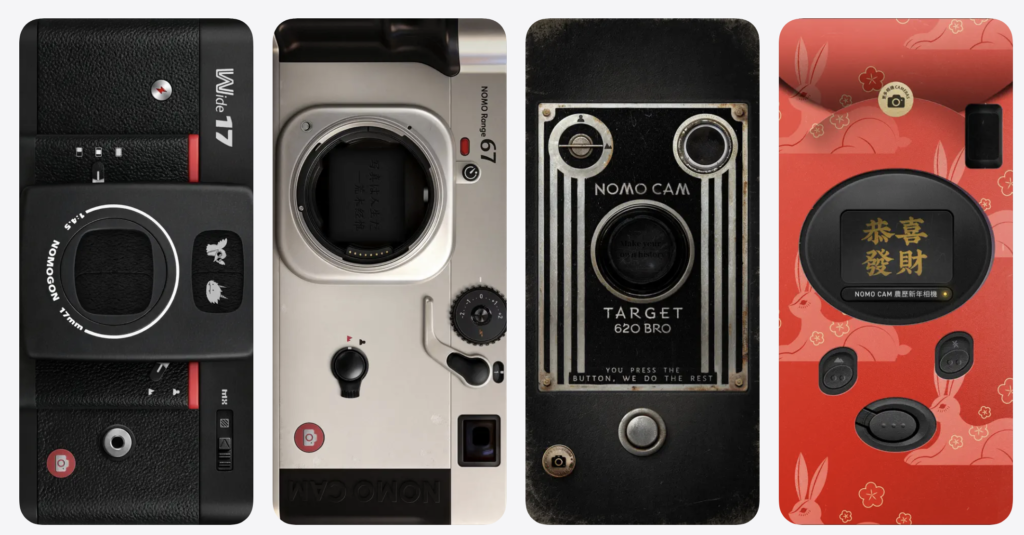
Where Hipstamatic celebrates the visual language of analogue photography, NOMO CAM is more interested in recreating something less tangible: the experience of using older cameras. It is a subtle distinction, but an important one. Many applications can reproduce the colours of expired film or the softness of vintage lenses. Far fewer attempt to recreate the patience, anticipation and uncertainty that accompanied photography before every image appeared instantly on a screen.

Those old disciplines have largely disappeared. Digital photography has accustomed us to immediate confirmation. We photograph, review, delete and repeat, often within a matter of seconds. The process is extraordinarily efficient, yet efficiency is not always conducive to attentive seeing. Knowing that every photograph can be checked immediately encourages a form of restless perfectionism in which photographers become preoccupied with correcting minor imperfections rather than remaining engaged with the world around them.

NOMO CAM gently disrupts that cycle. Many of its simulated cameras ask users to work within constraints that would have been entirely familiar to previous generations of photographers. Frame counts become finite, visual rendering varies according to the chosen camera and, in some instances, the photograph is not revealed immediately after it has been taken. These are small interventions, yet they fundamentally alter the rhythm of photography. Instead of constantly evaluating what has just been captured, attention returns to what might happen next.

This slower pace sits surprisingly comfortably alongside street photography. The genre has often been described as spontaneous, but genuine spontaneity is built upon prolonged observation rather than frantic activity. The photographer waits, watches and gradually becomes sensitive to the rhythms of a particular place. Light changes almost imperceptibly, pedestrians establish recurring patterns, and visual relationships begin to reveal themselves only through patient attention. NOMO CAM supports this contemplative approach because it discourages the compulsive review of every frame. The camera becomes a companion to observation rather than a distraction from it.

The simulations themselves are generally handled with considerable taste. Rather than overwhelming photographs with exaggerated artefacts, NOMO favours subtle shifts in colour, contrast and texture that suggest the character of older photographic processes without descending into caricature. The strongest results emerge when the application is treated not as a novelty but as a genuine creative limitation. Choosing a particular camera becomes analogous to selecting a specific film stock before leaving home. Each decision shapes the visual language of the work that follows.

Some photographers will understandably question the value of such simulations when dedicated editing software offers almost limitless flexibility afterwards. Yet this criticism overlooks the psychological dimension of photographic choice. Deciding in advance how one intends to work often produces more coherent photographs than postponing every decision until later. Constraints encourage consistency, and consistency has always been one of the defining characteristics of successful photographic projects.

NOMO CAM is therefore less about recreating the past than about recovering habits of attention that contemporary digital culture has gradually eroded. It reminds photographers that the quality of observation frequently matters more than the speed of technology and that patience remains every bit as valuable in 2026 as it was when photographers waited days, rather than seconds, to discover whether they had made the photograph they imagined.

For street photographers seeking a quieter, more reflective relationship with smartphone photography, NOMO CAM offers something increasingly uncommon. It asks not how quickly an image can be produced, but how thoughtfully it can be made.


Why Many Street Photographers Are Turning Away from AI Photography

Artificial intelligence has become one of the defining technologies of contemporary photography, yet its rapid adoption has produced an unexpected reaction. While manufacturers continue to promote increasingly sophisticated computational imaging, a growing number of documentary and street photographers have begun moving in the opposite direction, searching instead for applications that preserve uncertainty rather than eliminating it.

This movement should not be mistaken for technological conservatism. Few serious photographers would argue that smartphones have not become remarkably capable cameras, nor would many wish to return to the technical limitations of the earliest mobile devices. The debate is not really about technology at all. It concerns authorship. Increasingly, photographers are asking where the creative act begins and ends when software assumes responsibility for so many interpretative decisions before the shutter has even been released.

Computational photography operates through a series of judgements. Multiple frames are combined into a single image, shadows are brightened, highlights reconstructed, colours enhanced, noise reduced and sharpness selectively increased. None of these processes is inherently problematic. Every photograph has always involved interpretation, whether through the choice of film stock, darkroom printing or digital editing. The difference lies in timing. Traditional photography invited interpretation after the photographer had made the picture. Contemporary computational photography often performs that interpretation before the photographer has even seen the image.

For some forms of photography this represents an extraordinary achievement. Family photographs taken in difficult lighting, holiday snapshots made quickly from moving vehicles or portraits captured at night all benefit enormously from computational assistance. Millions of people now make photographs that would once have been technically impossible, and that democratisation should be welcomed rather than dismissed.

Street photography, however, asks rather different questions. Much of the genre derives its emotional force from incompleteness. Shadows conceal information rather than revealing it. Rain softens detail instead of sharpening it. Bright reflections obscure faces, while movement dissolves figures into abstraction. These ambiguities are not technical shortcomings requiring correction. They often constitute the very substance of the photograph itself, allowing viewers to participate imaginatively rather than receiving every visual answer in advance.

When software automatically removes these ambiguities, something more subtle than image quality begins to change. The photograph may become clearer while simultaneously becoming less interesting. Every shadow lifted, every edge sharpened and every colour intensified nudges the image towards a visual language that values description above interpretation. The result is often technically impressive but emotionally predictable.

This helps explain the renewed interest in applications that emphasise manual control or restrained processing. Halide, Reeflex, Leica LUX and several others are not attempting to recreate analogue photography simply for nostalgic reasons. Instead, they recognise that photographers may wish to preserve the complexity of the original scene rather than replacing it with computational certainty. The objective is not imperfection for its own sake but authenticity of experience. Cities rarely present themselves with perfectly balanced exposure or immaculate colour harmony. They are visually chaotic places where light collides with architecture, weather and movement in endlessly unpredictable ways.

Photography has always involved deciding how much of that complexity to preserve. There is another reason why this discussion has become increasingly significant. Artificial intelligence has altered not only the appearance of photographs but also the pace at which they are made. Modern smartphones encourage extraordinary efficiency. Cameras recognise faces automatically, predict exposure, identify subjects and increasingly anticipate what kind of photograph the user intends to make. These developments reduce technical barriers, yet they also risk reducing the photographer’s attentiveness. If software continually predicts the image we are trying to produce, there is less incentive to observe carefully in the first place.

Street photography has traditionally resisted precisely this form of certainty. The greatest practitioners have always approached the street with curiosity rather than expectation. Garry Winogrand famously remarked that he photographed to discover what something looked like photographed. The statement is often quoted because it captures something fundamental about the medium. Photography was not, for Winogrand, the confirmation of an idea already formed. It was a method of inquiry.

Artificial intelligence, by contrast, frequently works through prediction. It analyses patterns, anticipates outcomes and optimises images according to previous examples. These are extraordinarily powerful computational abilities, yet they sit uneasily beside a genre whose defining characteristic has always been openness to surprise.

None of this suggests that artificial intelligence has no place within photography. On the contrary, many photographers will continue to rely upon computational tools throughout both capture and editing, often with remarkable results. The issue is not whether AI should exist but whether photographers remain conscious of the decisions it is making on their behalf. Creative authorship has always involved choosing not only what to include within the frame but also what to leave unresolved. If software quietly resolves every uncertainty before the photographer has an opportunity to respond, authorship gradually becomes a shared responsibility between human intention and algorithmic prediction.

Street photography deserves a more thoughtful conversation than simple enthusiasm or outright rejection. The future almost certainly lies somewhere between those positions. Artificial intelligence will continue to improve, yet there will remain photographers who value ambiguity over optimisation, observation over automation and interpretation over prediction. Their preference is not a rejection of technological progress. It is a reminder that photography has always been as much about how we see as about what our cameras can record.

The Ethics of Street Photography in the Smartphone Age

Long before smartphones became capable of producing remarkable photographs, street photography occupied uncertain ethical territory. The legal questions have always been comparatively straightforward in many countries. Ethical questions rarely are. They resist definitive answers because they concern judgement rather than legislation, asking photographers to consider not simply what they are permitted to do but what they ought to do.

That distinction has become considerably more significant as smartphones have transformed photography into one of the defining social behaviours of the twenty-first century. Cameras no longer belong primarily to journalists or enthusiasts. They are carried by almost everyone, and photographs can be published globally within seconds of being made. The consequences of pressing the shutter have therefore expanded far beyond the moment of exposure itself.

Street photographers have often defended their work by arguing that public space necessarily entails public visibility. There is truth in that observation. Cities have always been places where strangers observe one another, and photography has formed part of that visual culture since the nineteenth century. Eugène Atget wandered the streets of Paris documenting a disappearing city. Henri Cartier-Bresson photographed ordinary life with extraordinary sensitivity. Joel Meyerowitz, Garry Winogrand and Vivian Maier all produced bodies of work that depended upon photographing people who had never consciously agreed to become subjects.

Yet none of these photographers worked within an environment where every image could be uploaded instantly to multiple social platforms, analysed by facial recognition systems or shared indefinitely beyond the photographer’s control. Contemporary street photography exists within a profoundly different technological landscape, and that difference inevitably alters the ethical conversation.

The question is no longer whether photographs may be made in public. It is whether every photograph that can be made ought to be published. That distinction matters because publication changes the nature of the photograph. An image quietly held within a long-term documentary archive occupies a different ethical space from one uploaded immediately for entertainment or online attention. Context becomes increasingly important. Why was the photograph made? What does it communicate? Does it illuminate something meaningful about public life, or does it merely expose an individual’s vulnerability because the technology made doing so easy?

These questions have no universally satisfying answers, yet they have always separated thoughtful documentary practice from visual opportunism. The strongest street photographers rarely hunt for humiliation. They are generally interested in human behaviour rather than human embarrassment. Compassion frequently sits beneath their work, even when humour is present. Winogrand’s photographs reveal the peculiar choreography of American public life without descending into cruelty. Vivian Maier observed strangers with extraordinary curiosity but remarkably little judgement. Saul Leiter often photographed people through windows, rain or reflections, allowing atmosphere to soften identity rather than exposing it.

Smartphones introduce another layer of complexity because they are inherently discreet. Their familiarity allows photographers to work with a degree of invisibility that would once have required considerably smaller cameras. This can be creatively liberating, permitting more natural observations of everyday life, but it also demands greater self-awareness. Just because subjects remain unaware of the camera does not relieve photographers of responsibility for how those images are later used.

The camera application itself becomes unexpectedly relevant within this discussion. Applications that encourage rapid bursts of photographs, continuous shooting and aggressive computational optimisation subtly reinforce a culture of accumulation, suggesting that quantity matters more than reflection. Others, particularly those designed around slower workflows and manual control, encourage photographers to pause before making each exposure. Technology cannot determine ethics, but it can influence behaviour, and behaviour inevitably shapes photographic practice.

Perhaps the most useful ethical principle remains surprisingly simple. Before pressing the shutter, ask whether the photograph is motivated by curiosity or exploitation. Curiosity seeks understanding. Exploitation seeks attention. The distinction is rarely visible in the technical qualities of the image, yet viewers often recognise it instinctively.

Street photography has survived repeated ethical debates because, at its best, it continues to reveal something truthful about public life that might otherwise remain unseen. The responsibility lies not merely in making those photographs but in making them with sufficient empathy that their subjects remain recognisably human rather than becoming anonymous material for visual consumption.


Which Camera App Should You Choose?

By this point, readers may reasonably expect a definitive recommendation. After several thousand words examining interfaces, colour science, RAW workflows and photographic philosophy, surely one application must emerge as the clear winner.

The difficulty is that street photography has never rewarded uniformity. Photographers differ not simply in technical preference but in temperament. Some respond instinctively to structure, preferring manual exposure, deliberate focus and carefully controlled tonal relationships. Others work almost entirely by intuition, allowing circumstance to dictate both composition and exposure. Some return repeatedly to the same neighbourhood over many years, gradually constructing long-term documentary projects, while others travel continuously, using photography as a way of understanding unfamiliar cities. It would be peculiar if all these approaches demanded identical software.

Leica LUX remains the strongest choice for photographers who value simplicity above abundance. It strips away unnecessary distraction, producing an experience that feels unusually calm in an era dominated by technological excess. Photographers drawn towards black and white work, understated colour and careful observation will almost certainly appreciate its philosophy, even if they occasionally wish for greater technical flexibility.

Halide continues to set the benchmark for photographers seeking uncompromising manual control. It is the application that most convincingly bridges the gap between smartphone photography and dedicated cameras, providing sophisticated exposure tools without overwhelming the user. Photographers already comfortable with RAW workflows will discover an application capable of remarkable subtlety.

ProCamera occupies perhaps the broadest middle ground. It combines reliability, flexibility and maturity in a way that makes it difficult to criticise and even more difficult to outgrow. It is the application I would recommend to photographers uncertain where to begin because it accommodates changing ambitions remarkably well. As skills develop, the software develops with them rather than becoming restrictive.

Reeflex Pro Camera appeals to a more specific audience, yet one that appears to be growing steadily. Photographers who have grown weary of aggressive computational processing and increasingly artificial image rendering will appreciate its commitment to preserving the visual complexity of the original scene. Its photographs possess an honesty that rewards prolonged viewing rather than immediate online impact.

ProShot remains particularly attractive to photographers migrating from traditional camera systems. Its interface acknowledges decades of photographic practice instead of assuming every user approaches the smartphone without previous experience. Familiarity becomes an unexpected creative advantage because technical decisions require so little conscious effort.

Adobe Lightroom Camera is perhaps the most sensible choice for photographers whose work naturally extends into substantial editing afterwards. The application integrates seamlessly into one of the most sophisticated photographic ecosystems available, transforming the smartphone into the beginning of a coherent workflow rather than an isolated capture device.

Hipstamatic and NOMO CAM occupy rather different territory. Neither should be dismissed simply because they employ simulation. Their value lies less in recreating analogue aesthetics than in encouraging photographers to embrace creative limitations that digital photography often removes. Used thoughtfully, they remind us that constraints frequently stimulate rather than inhibit imagination.

Perhaps that observation brings us back to where this article began. Street photography has never depended primarily upon technology. Cameras matter because they influence how we work, yet they cannot substitute for curiosity, patience or sensitivity. The finest application is therefore not necessarily the one capable of the greatest technical achievement. It is the one that aligns most naturally with the photographer’s own way of seeing.

Modern smartphones offer remarkable possibilities, but they remain only tools. The decisive moment still belongs to the photographer who notices it before everyone else has walked past.

Photography Begins Long Before the Shutter

Every generation believes it is witnessing the greatest technological revolution photography has ever experienced. Glass plates gave way to roll film. Rangefinders yielded to SLRs. Film surrendered, reluctantly at first, to digital sensors. Smartphones have now become the cameras most people carry every day, and artificial intelligence increasingly participates in the act of making photographs itself.

Yet amid these continual transformations, one aspect of photography has remained remarkably stable. Great photographs have never depended primarily upon equipment. They emerge because someone noticed what others overlooked, waited a fraction longer than everyone else, or recognised significance in an ordinary moment that would otherwise have passed unnoticed.

The applications discussed throughout this guide differ enormously in their philosophy. Some prioritise technical precision, others embrace simplicity, while several deliberately resist the increasingly interventionist tendencies of computational photography. None, however, possesses the ability to create curiosity, empathy or patience. Those qualities remain stubbornly, reassuringly human.

Perhaps that is why street photography continues to matter. It reminds us that cities are not simply collections of buildings but theatres of human behaviour, where strangers briefly intersect before disappearing into lives we shall never fully understand. Cameras merely allow us to witness those encounters with greater attentiveness. The best applications quietly support that process, then step aside.

Technology will continue to evolve. New sensors will appear, artificial intelligence will become more sophisticated and software developers will undoubtedly promise yet another generation of revolutionary photographic tools. The decisive moment, however, will remain exactly where it has always been: not inside the camera, but in the photographer’s ability to recognise that something ordinary has become, for an instant, extraordinary.

Camera AppBest ForPlatformRAWManual ControlsOur Verdict
Leica LUX – Pro Manual CameraDocumentary & street photography, Leica-inspired colouriPhone★★★★☆Beautiful colour science, elegant interface and one of the most enjoyable shooting experiences available.
Halide Mark IIProfessional photographersiPhone★★★★★Outstanding manual controls, superb RAW workflow and exceptional image quality.
Blackmagic CameraPhotographers and filmmakersiPhone & Android★★★★★A disciplined interface with excellent exposure tools and professional-grade control.
ProCameraAll-round street photographyiPhone★★★★★The most balanced choice, combining simplicity, reliability and powerful manual controls.
Reeflex Pro CameraNatural-looking photographsiPhone★★★★★Restrained image processing makes it ideal for documentary and street photography.
ProShotDSLR and mirrorless usersiPhone & Android★★★★★A familiar interface with excellent manual exposure and focus controls.
Adobe Lightroom CameraRAW capture & editing workflowiPhone & Android★★★★☆Perfect for photographers already using Lightroom as part of their editing workflow.
HipstamaticCreative street photographyiPhoneLimited★★★☆☆Film-inspired shooting that encourages experimentation and visual storytelling.
NOMO CAMFilm simulation & slower photographyiPhone & AndroidLimited★★★☆☆Encourages a slower, more deliberate photographic approach with convincing analogue-inspired rendering.

Support TheAppWhisperer

If you’ve found this article useful and would like to support independent photography journalism, please consider making a small donation to TheAppWhisperer.

Since 2009, TheAppWhisperer has published thousands of interviews, reviews, opportunities, and essays dedicated to photography and mobile art, remaining free to read for everyone. Every contribution helps support the time, research, and editorial work that goes into producing and preserving this archive.

Your support helps keep thoughtful photography writing alive.

Donate here

Joanne Carter is a British photography journalist, editor, curator, and the founder of *TheAppWhisperer.com*, one of the world’s leading platforms dedicated to mobile photography and art. Since its launch in 2009, TheAppWhisperer has become an international hub for artists of all levels to discover, learn, exhibit, and engage with contemporary photographic practice.Built on principles of inclusivity, accessibility, and artistic excellence, Joanne has spent almost two decades championing mobile photography as a serious artistic medium. Through interviews, critical essays, exhibitions, competitions, and education, she has helped shape and document the evolution of mobile art on a global scale.Her work has taken her internationally, lecturing on photography and mobile art at institutions and events including the Museum of Art in Seoul, South Korea, alongside appearances in the UK and Europe. She has served as a juror for international photography and mobile art awards across Portugal, Canada, the United States, South Korea, Italy, and the UK.Joanne is also the founder of *TheAppWhispererPrintSales.com*, one of the first online galleries dedicated exclusively to collectible mobile art, connecting artists with collectors across Europe, the United States, and Asia.Before founding TheAppWhisperer, Joanne worked extensively in print journalism and photographic publishing, including roles at a paparazzi photo agency and as deputy editor of a leading photography magazine. Her freelance journalism, criticism, and commentary have been published widely in both the UK and the US, with bylines in *The Times*, *The Sunday Times*, *The Guardian*, *Popular Photography*, *NikonPro*, *DPReview*, *Which?*, *Vogue Italia*, *LensCulture*, the *BBC*, and more recently, the *Financial Times*, where her published letters on photography continue to contribute to wider conversations around the medium.Alongside her editorial and curatorial work, Joanne’s own photographic practice has been exhibited internationally across the UK, Europe, South Korea, and the United States. Her work increasingly explores themes of grief, loss, death, memory, and the body.Her current research interests centre on grief, death, and poverty, with forthcoming postgraduate study leading towards doctoral research in these areas.Joanne is currently developing new long-form writing and photographic projects and is available for commissions, editorial projects, speaking engagements, and collaborations.Contact: joannetheappwhisperer@gmail.com)

Leave a Reply

Your email address will not be published. Required fields are marked *

This site uses Akismet to reduce spam. Learn how your comment data is processed.