AI and Photography Interview Series: Bonobo Stone on Authenticity, Evolution and Modern-Day Cave Painting
Introduction
There are few artists embracing artificial intelligence as unapologetically as Bonobo Stone. While much of the conversation surrounding AI focuses on questions of authenticity, copyright and creative ownership, Stone approaches the technology from an entirely different perspective—not as a replacement for artistic practice but as a rich source of raw material to be transformed through collage, experimentation and human imagination.
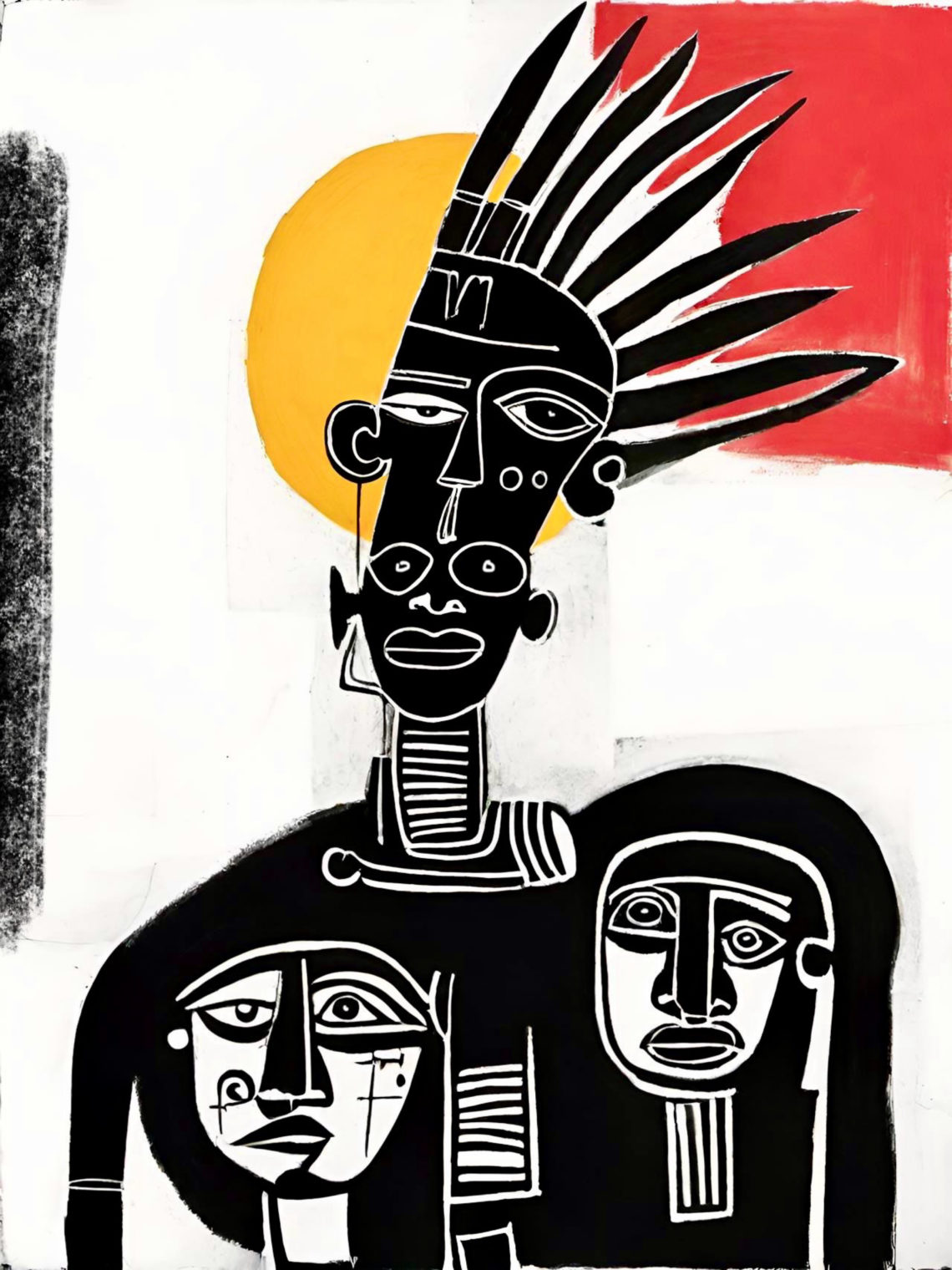
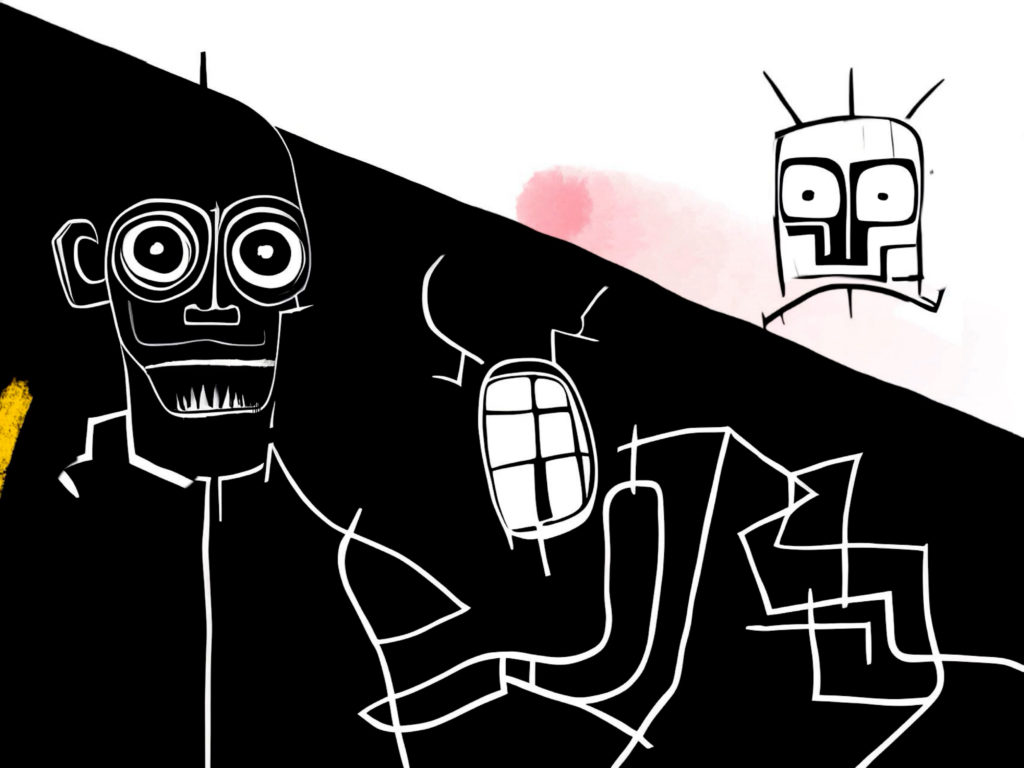
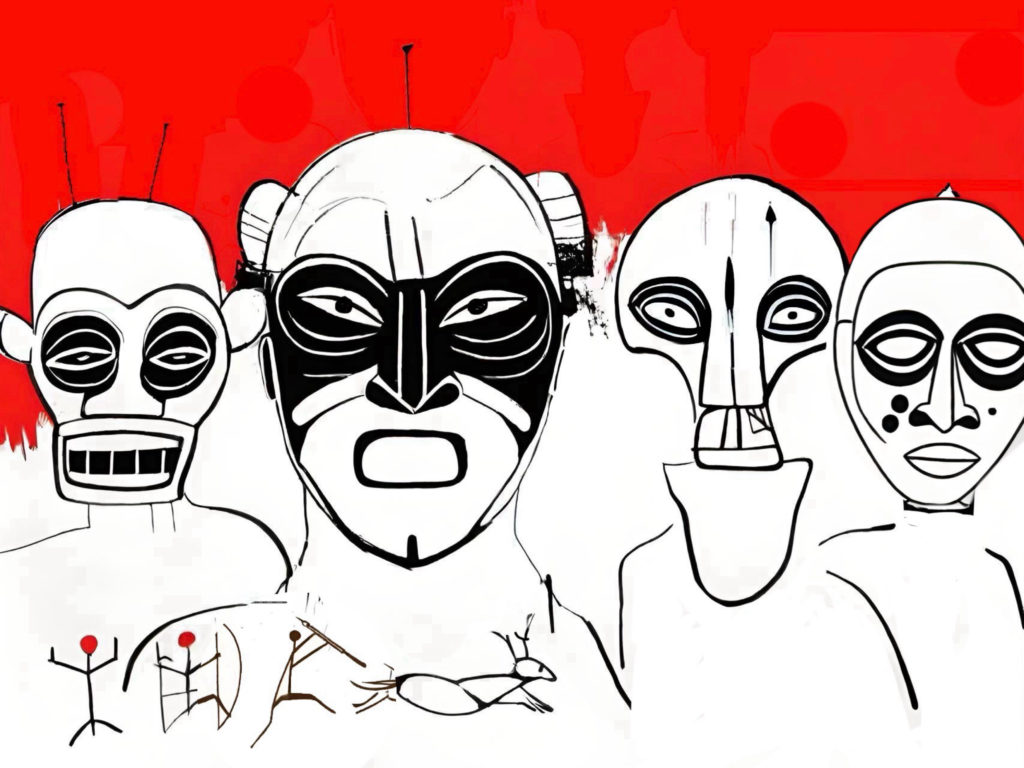
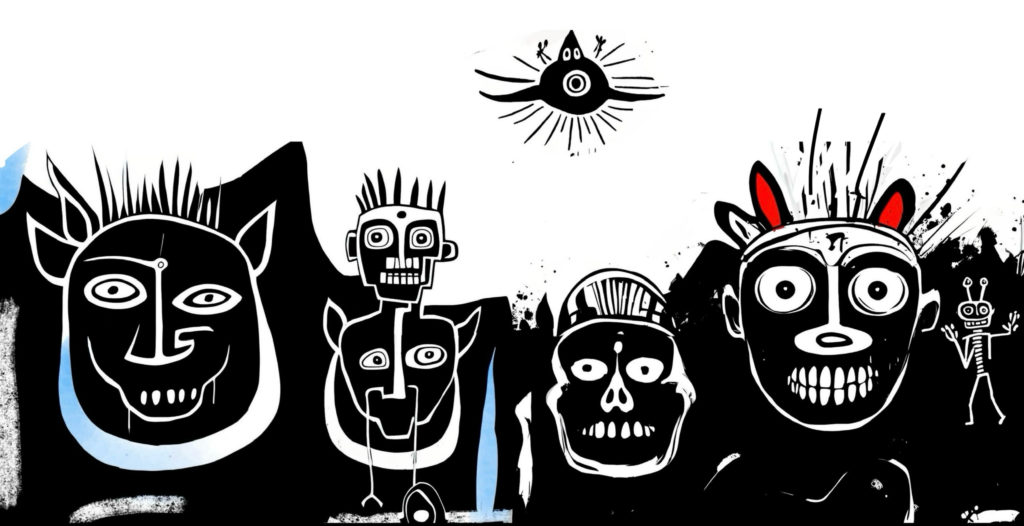
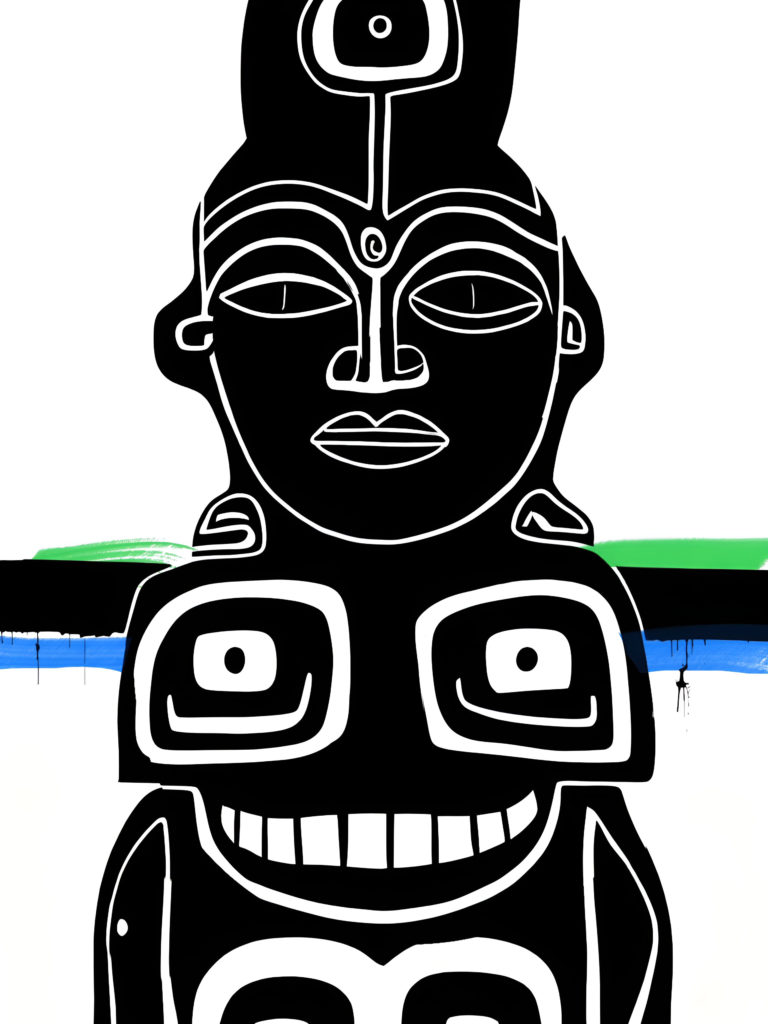
The works accompanying this interview reflect that philosophy. Combining bold black-and-white forms with echoes of cave painting, ritual masks, symbolic portraiture and contemporary graphic design, Stone creates images that feel both ancient and futuristic. AI serves as the starting point rather than the destination; generated elements are cut apart, layered, erased, painted over and reconstructed into compositions that become distinctly his own. He describes this evolving practice as “modern-day cave painting.”
In this interview for TheAppWhisperer’s AI and Photography Interview Series, Bonobo Stone discusses why he believes authenticity is rooted in artistic intent rather than technology, why he sees AI as a natural evolution of collage, and why history suggests that every major technological shift in art is initially met with resistance before eventually finding its place within creative practice.
Whether readers embrace AI or remain deeply sceptical of its role in photography and digital art, Stone offers a perspective that is both considered and refreshingly candid. His responses remind us that the debate surrounding artificial intelligence is not simply about software or algorithms but about how artists choose to use new tools to express enduringly human ideas.
Interview with Bonobo Stone
JC- When did AI first begin influencing your creative workflow, either directly or indirectly?
BS – As a collage/mixed media artist, the increasing disappearance of print media has made finding collage material difficult to find. AI frees me to create collage material in abundance. So, I have embraced the technology from its genesis. It has become a source of raw collage material that I cut and paste together in an app called Union.
JC – Do you see AI as a creative collaborator, a technical tool, or something more disruptive to photographic practice?
BS – For me it’s a technological tool. AI expands my creativity, though I understand the fear…
For a long time I worked as a journalist, until the rise of the internet put newspapers out of business. Since then, I have worked in marketing, but the consequences of AI technology are such that this type of work is also beginning to disappear. It would be easy for me to condemn the technology. But rather than adopting a defensive Luddite stance, I want to embrace progress.
I agree that the technology is disruptive. But it is not a death rattle… it’s a rebirth.
JC – Has AI changed the way you think about authenticity within photography and mobile art?
BS – No. I have always been a collage, mixed-media artist. What I like about AI is how it pumps out collage material. The prompted material is never the final product. Independent of the AI tools, I cut and paste countless elements together, finger-paint in colour and erase away errors to create a final product. My form of collage is the inevitable direction 21st-century mixed media is heading.
If an artist embraces AI and simultaneously adds his or her style to the model, it can result in art that is even more authentic… and evolutionary. Because in the end, art should speak to the epoch we are living through—and like it or not, the technology is here to stay.
Authenticity is a state of mind… not a tool.
JC – Many smartphones now apply heavy computational processing automatically. Do you feel photographers still fully control the image-making process?
BS – Robert Mapplethorpe snapped the photos, but his film was processed by master developer Tom Baril, whose darkroom prowess determined the final tone and the quality of light and shadow in Mapplethorpe’s photography. So this idea about control is arbitrary.
My opinion is this: if everyone is using the same tool, the artists who excel are the ones who have mastered the tool on a consistent basis. The cream always rises to the top, while the slop sinks to the bottom.
JC – Have you ever felt conflicted about using AI-assisted editing tools within your own work?
BS – Absolutely not. I am grateful for the opportunities tech has provided me. Some people enjoy trying to make me feel conflicted, but I refuse to feel ashamed for expressing myself and being true to my creative calling.
JC – Do you think audiences should always be informed when AI has been used within an artwork or photographic image?
BS – If it makes people happy, why not? Although personally I think ‘digital’ is sufficient. Computer art is computer art whether an AI is involved or not.
JC – Are you concerned that AI-generated imagery may overwhelm or devalue slower, more personal photographic practices?
BS – I don’t know. Were painters concerned that film would overwhelm slower-moving painting practices after the camera was invented? Traditional artists once feared the camera and dismissed it as an art form. Photography is now regarded as high art. Did the invention of electric grinders devalue sculpture that was chiselled by hand? I think the exact opposite happens. Handmade is a powerful selling point. History tends to repeat itself…
JC – How do you think AI is affecting ideas surrounding memory, truth, and documentation within photography?
BS – Line up seven photos chronologically: 1897, 1923, 1946, 1967, 1981, 2013, 2026… The advances can’t be ignored. It’s evolution. AI is simply the next step. Whether we like it or not, it’s here.
JC – In your opinion, can AI-generated images carry the same emotional weight as photographs connected to lived human experience?
BS – It’s art. The question strikes me as a tad reductionist. Why is art created with the assistance of an AI not human? If it inspires an emotional reaction, then it’s art. Creation is a human experience. When an artist yearns to create, the importance is not the finished product but the expression and its reception… What separates undeveloped creativity from mature craft is devotion. Amateurs will make AI slop, but those who have mastered the tool will create work that speaks to the heart and soul of what it is to be human. TOOLS DON’T MAKE ART, PEOPLE DO.
JC – Have developments in AI changed the way you archive, edit, or curate your own images?
BS – I am into tech, so yes. As digital artists and photographers, we all benefit from computers organising our output.
JC – Do you believe younger photographers entering the field now will define creativity differently from previous generations?
BS – Isn’t that what art is all about? Art is about evolution. From cave painting to AI, art is never static. History reminds us that the emerging impressionists were despised by the established French culture of the time.
JC – Has AI influenced the way you think about authorship and ownership within digital art?
BS – When I create collage material, I like to use cave painting as a prompt. So, no, I do not worry about authorship. I understand how people fear that AI is abusing the copyright of established creators. Ergo, I go back to the genesis of human consciousness. I feed photographs and previous-made, failed collages into an AI and prompt it to transform the images into cave paintings. The AI never produces exactly what I want. However, there are elements that I start to blend together to create an entirely new tableau. It’s why I like to call my latest work “modern-day cave painting”.
JC – What ethical responsibilities do artists and platforms have when publishing AI-generated imagery?
BS – In my opinion, the ethics of making art centres around one idea: be true to yourself. That is the ultimate ethos. AI is simply a tool. Nothing more. The people who are the most upset about the technology often have no idea how the technology works. I can only speak for myself, but making art is not a one-prompt-and-done process many people imagine it to be… I can’t tell you how many times I have been accused of plagiarism, laziness, fraud, etc. when some people discover I use an AI to generate collage material. As soon as they hear “AI,” they close off, and my process is disregarded.
JC – Are there aspects of human experience that you believe AI will never convincingly replicate visually?
BS – Creativity. AI can only replicate; it can’t push the envelope in terms of imagination, spirituality, and innovation.
JC – Looking ahead five years, what excites or worries you most about the future relationship between AI and mobile photography?
BS – I do not worry about it. I find a lot of this apprehension is history repeating. Progress often meets resistance. What excites me is the freedom. In my case the line between painting and photography is disappearing, and that excites and inspires me.
My Reflections on Bonobo Stone’s Views on AI and Photography
One aspect of this conversation that particularly resonated with me is the distinction between AI as a source material and AI as a finished artwork. That distinction often becomes blurred in public debate, yet for collage artists especially, the history of assembling, appropriating, cutting, and recontextualising imagery stretches back well before the arrival of generative AI. In many respects, the technology simply introduces another archive from which visual fragments can be drawn.
I was also struck by Stone’s repeated insistence that “tools don’t make art; people do.” Whether discussing computational photography, darkroom printing, or artificial intelligence, he consistently returns to the belief that craft, vision, and sustained creative practice ultimately matter more than the technology itself. It’s an argument rooted less in novelty than in the long history of artistic evolution.
Not everyone will agree with the more uncompromising positions expressed here—particularly regarding disclosure, copyright, or the role of AI within contemporary practice—and that is precisely why these conversations remain important. As AI becomes increasingly embedded within photographic workflows, nuanced discussion is far more valuable than entrenched positions.
Perhaps most compelling is the way these works themselves complicate easy assumptions. Their bold graphic forms, references to cave painting, ritual masks, and symbolic figures feel simultaneously ancient and contemporary. They suggest that rather than replacing human creativity, AI can become one component within a much broader, deeply personal artistic language.
As with every interview in this series, my intention is not to arrive at definitive answers but to document how artists are thinking through one of the most significant technological shifts photography has experienced since the advent of digital imaging. The diversity of responses continues to reveal that there is no single future for AI and photography—only many different ways of engaging with it creatively, critically, and ethically.
Read More from our AI and Photography Series
This interview forms part of my ongoing AI and Photography series at TheAppWhisperer, where I invite artists, photographers, and image-makers to reflect on how artificial intelligence is reshaping creativity, authorship, truth, and visual culture.
. Jane Schultz – ‘The imperfect human hand may become the most radical artistic gesture of all”
• Rita Colantonio — “The Integrity of the Fine Artist Must Be Preserved”
https://theappwhisperer.com/2026/05/the-integrity-of-the-fine-artist-must-be-preserved-rita-colantonio-on-ai-and-photography/
• Dan Marcolina — Between Photography and AI: A Conversation with Dan Marcolina
https://theappwhisperer.com/2026/06/between-photography-and-ai-a-conversation-with-dan-marcolina/
• Michelle Sank — Michelle Sank on AI, Photography, Truth and Authenticity
[Michelle Sank]
. Gianluca Ricoveri – AI and Photography: Gianluca Ricoveri on Truth, Memory and Presence
https://theappwhisperer.com/2026/06/ai-photography-gianluca-ricoveri-truth-memory-presence/
Together, these interviews form an evolving archive of artistic thought at a moment when photography is being fundamentally redefined. As this series grows, so too does the urgency of the questions it asks.
Support TheAppWhisperer
If you’ve found this article useful and would like to support independent photography journalism, please consider making a small donation to TheAppWhisperer.
Since 2009, TheAppWhisperer has published thousands of interviews, reviews, opportunities, and essays dedicated to photography and mobile art, remaining free to read for everyone. Every contribution helps support the time, research, and editorial work that goes into producing and preserving this archive.
Your support helps keep thoughtful photography writing alive.

Joanne Carter
Joanne Carter is a British photographer, photography journalist, editor and curator and the founder and editorial director of TheAppWhisperer.com, an independent international photography publication established in 2009.Her journalism, criticism and commentary have appeared in The Times, The Sunday Times, The Guardian, Financial Times, BBC, Vogue Italia, LensCulture, Popular Photography, Android Magazine, NikonPro, DPReview, Which Digital Camera and Which Camera. She has lectured internationally on photography and mobile art, served as a juror for international photography awards, and exhibited her own photographic work across the UK, Europe, South Korea and the United States.Alongside her editorial work, Joanne's photographic and postgraduate research explores death, grief, memory, representation and social inequality through contemporary photography, participatory practice and visual research methods, with the longer-term aim of developing this work through doctoral research.Through TheAppWhisperer, she continues to publish independent photography journalism spanning contemporary photographic practice, mobile imaging, photographic apps, computational photography and emerging imaging technologies.Joanne is available for editorial commissions, photography projects, judging, curatorial work, speaking engagements, consultancy and selected collaborations.


You May Also Like
One Comment
Bonobo Stone
Thank you Joanne. I am deeply grateful to you for your on-going support of my work. You are a digital art titan and will be long celebrated as a 21st century Gertrude Stein for your patronage and attention you have provided digital’ artists such as my self. I am forever in your debt!